Half-term Saturday, Halloween and a steam day at Didcot Railway Centre, so off we went. You get in through the subway at Didcot Parkway station and come out in a proper 1930s Great Western engine yard. It was one of those crisp, bright autumn days, perfect for photos, and I took a lot of them.
I've grouped them below roughly in the order we walked round, with a bit about what everything is. If I've got anything wrong, do let me know!
The yard and the coal stage
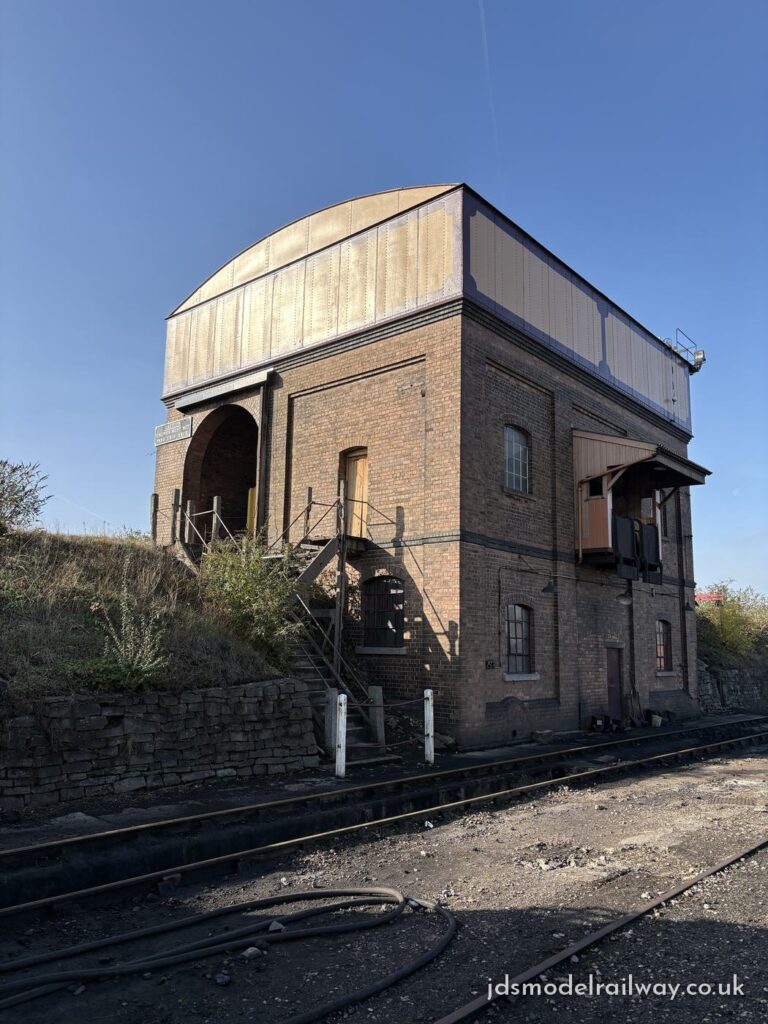
The first thing you see is the coal stage, a big brick building with a water tank on the roof. It's worth a proper look.
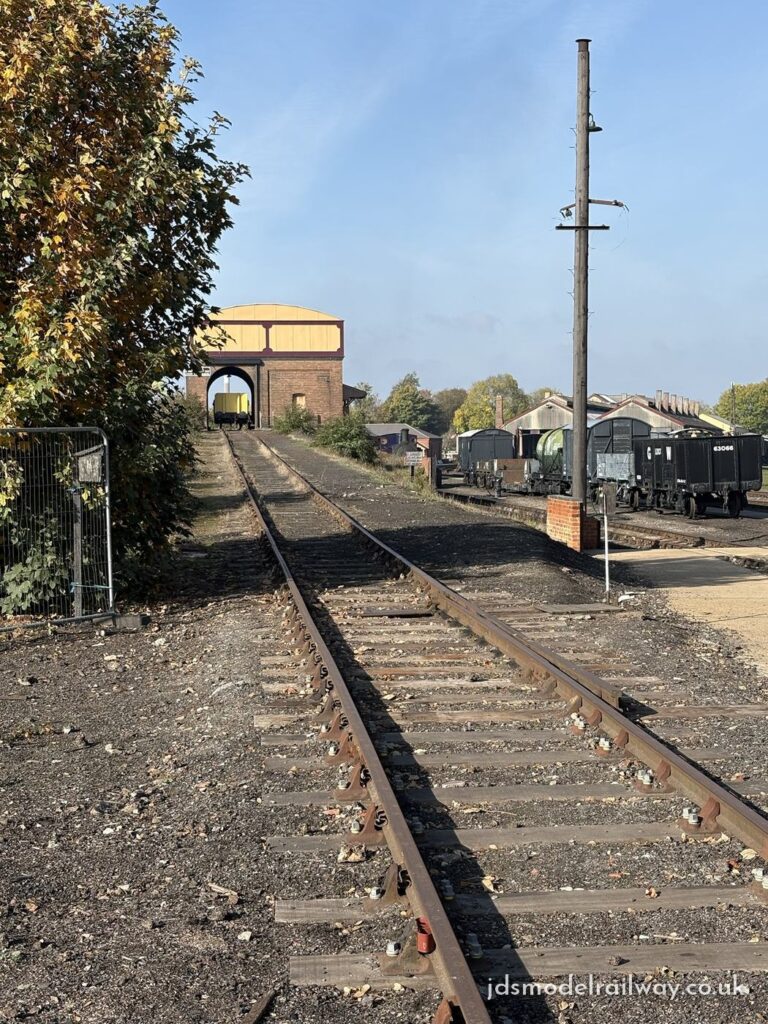
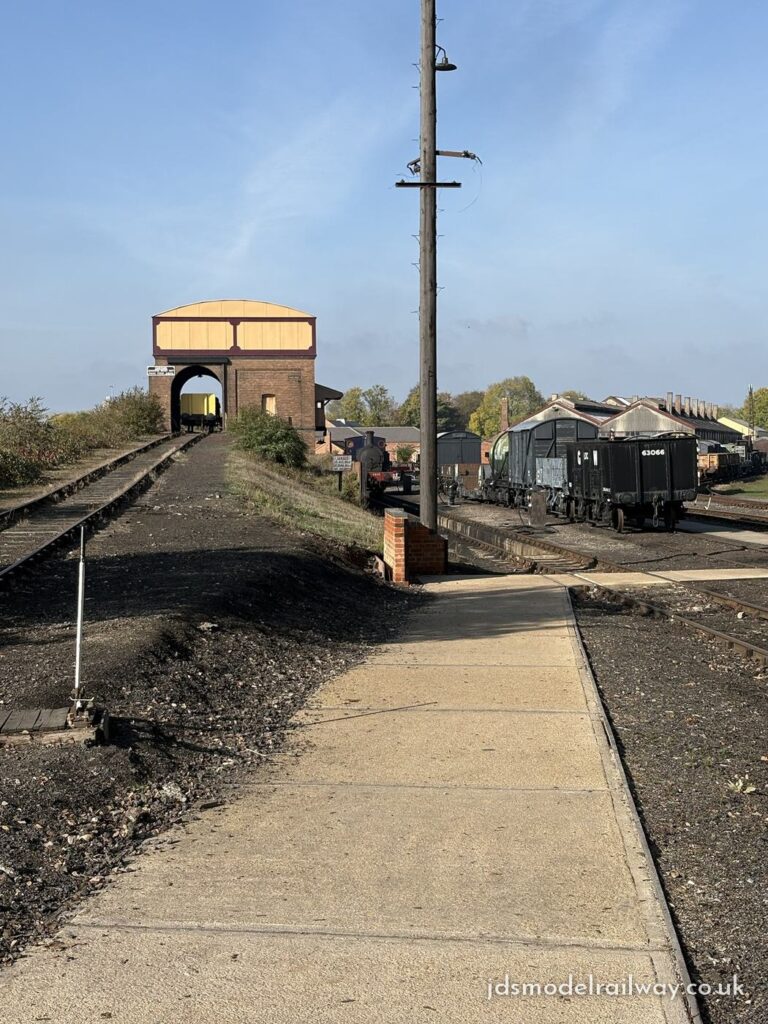
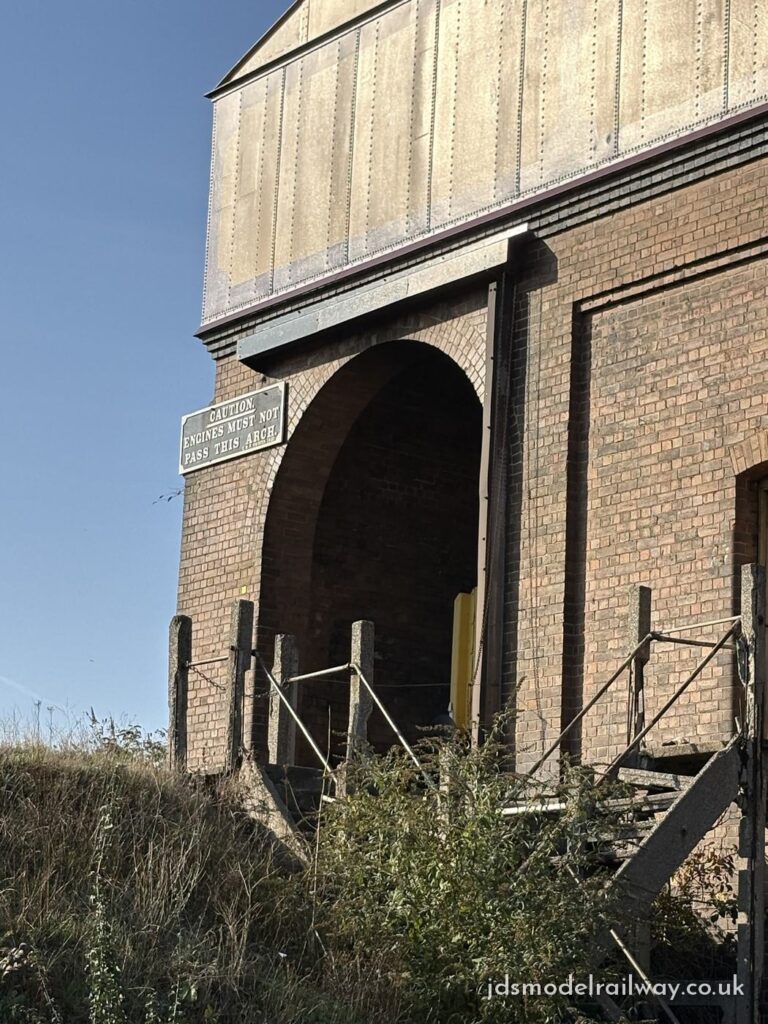
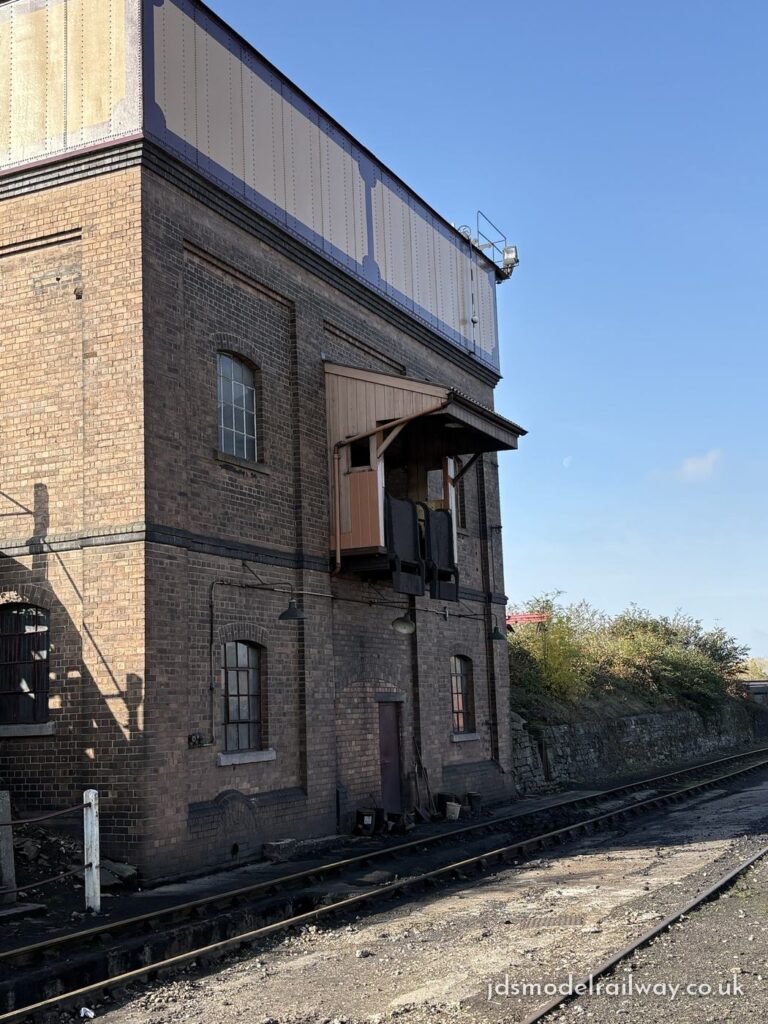
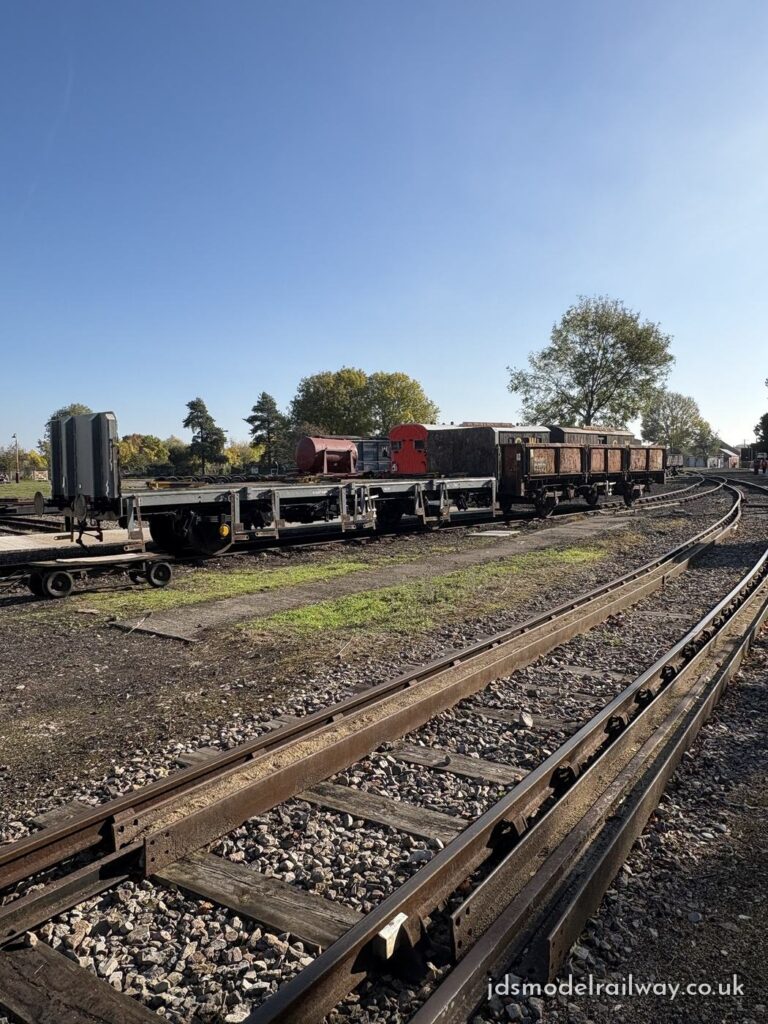
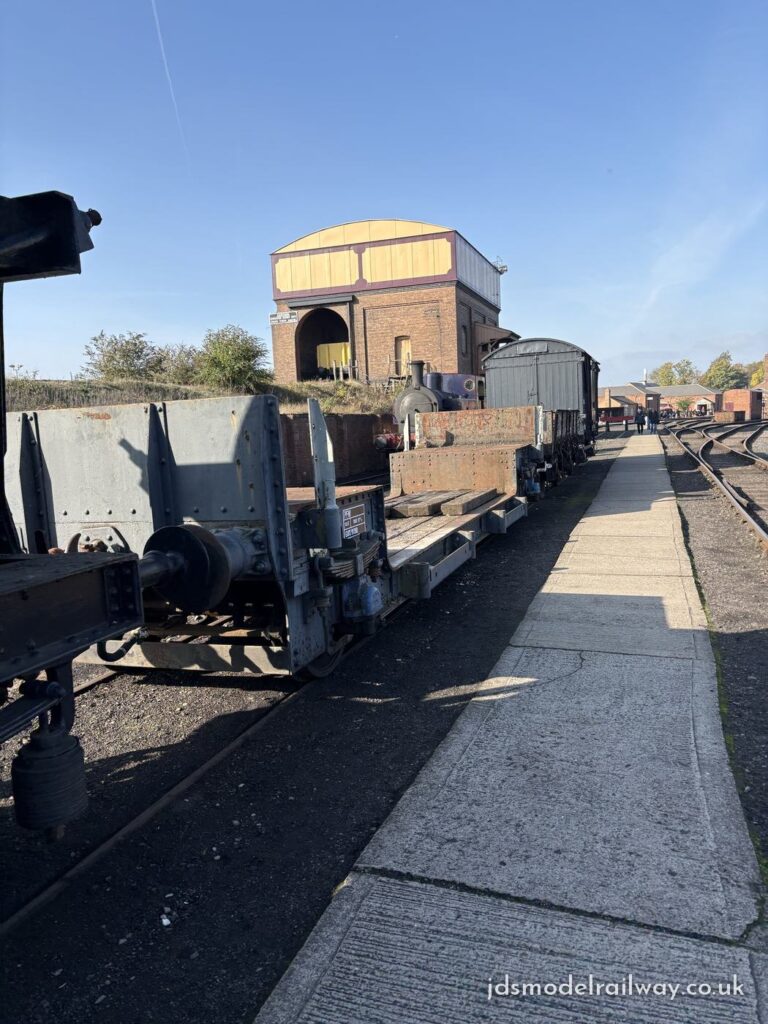
The line up to the coal stage. Loaded coal wagons are pushed up this slope and in through the arch at the top.The coal stage from the footpath, with a rake of Great Western wagons parked alongside.The coal stage itself. The Great Western built it in 1931 and it's now Grade II listed. The tank on top holds over 74,000 gallons of water, which is piped down to the water cranes in front of the engine shed."Caution. Engines must not pass this arch." Only the coal wagons go up here. The coal is unloaded inside.The business side. Coal is loaded into half-ton tubs inside, wheeled out under that little canopy and tipped straight into an engine's bunker or tender. Some of the original tubs are still used.Pointwork in the yard, with a line of wagons waiting in the sidings.
King George
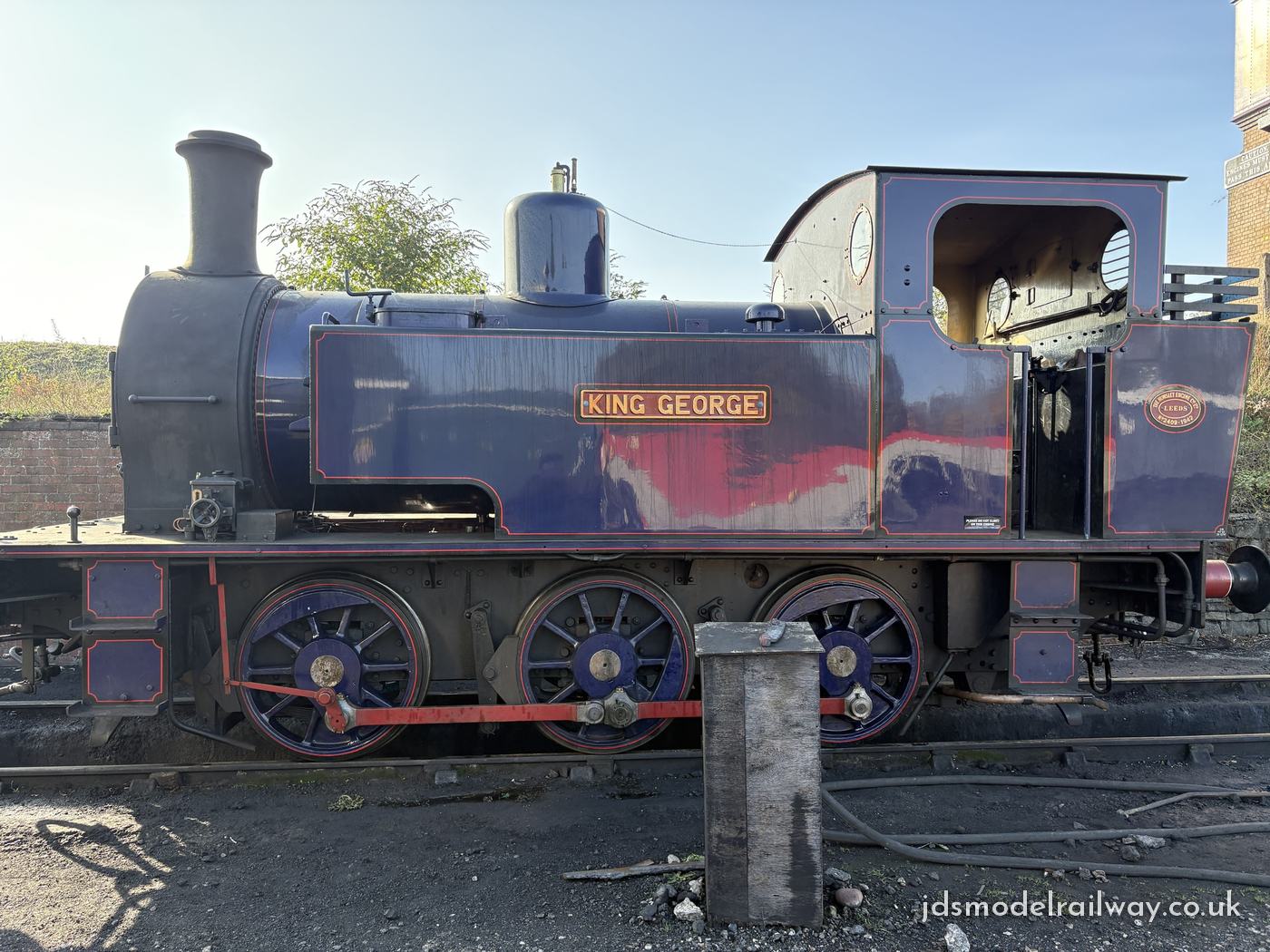
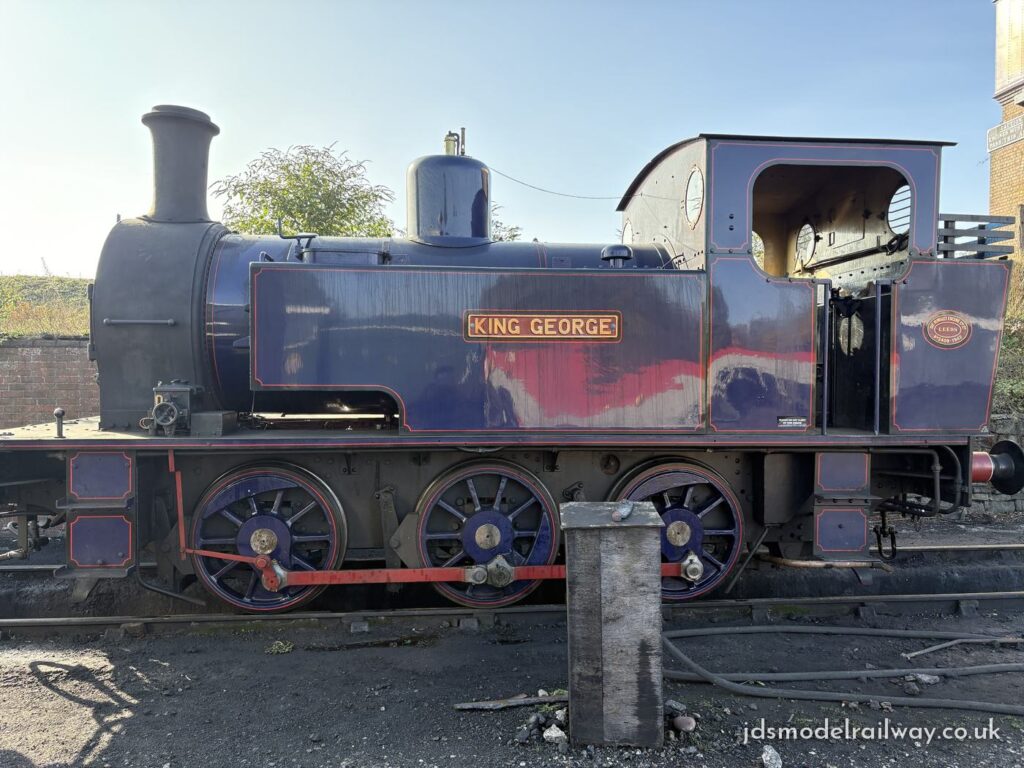
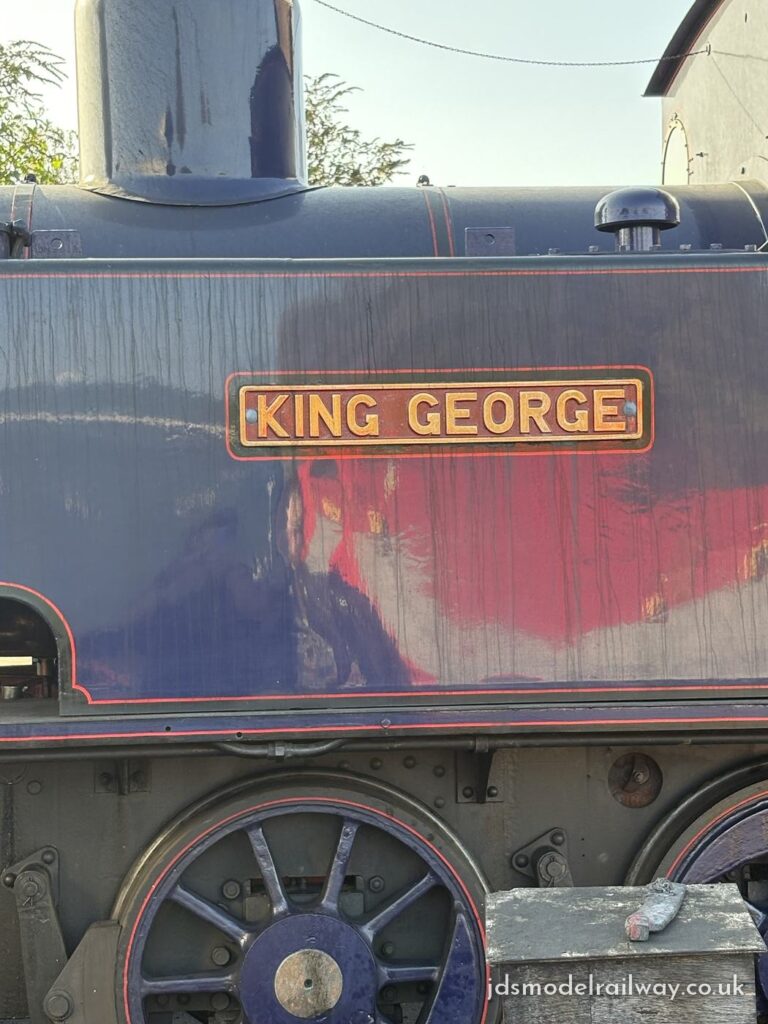
The engine in steam when we got there was King George, in a deep blue with red lining that really glowed in the sun.
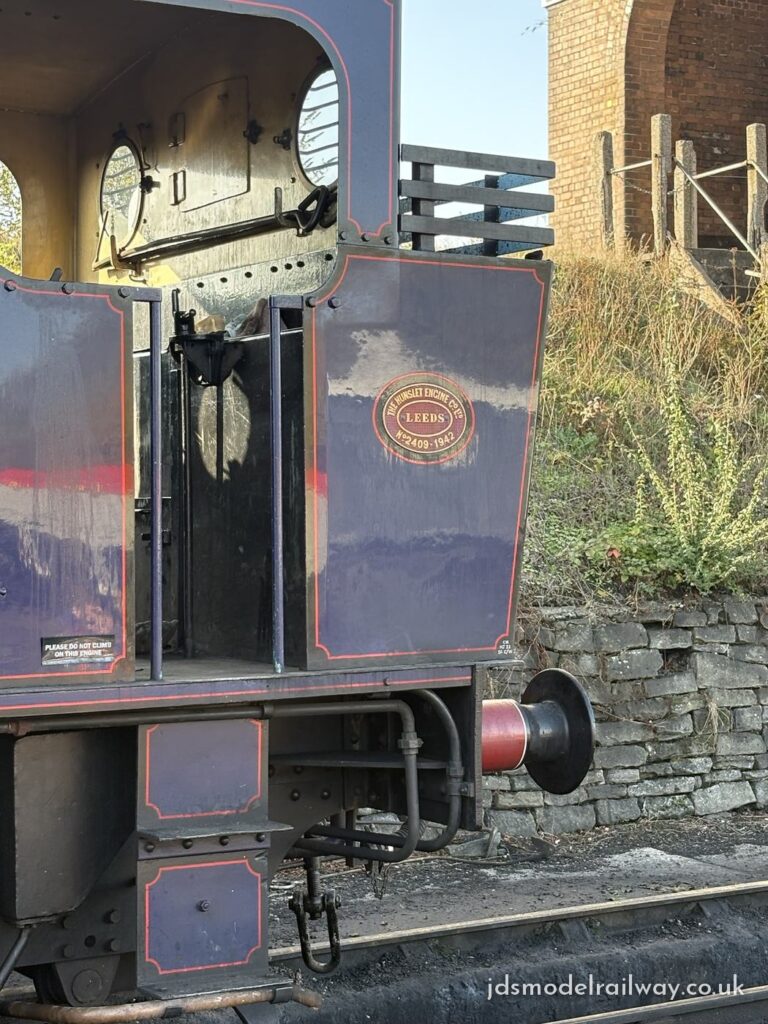
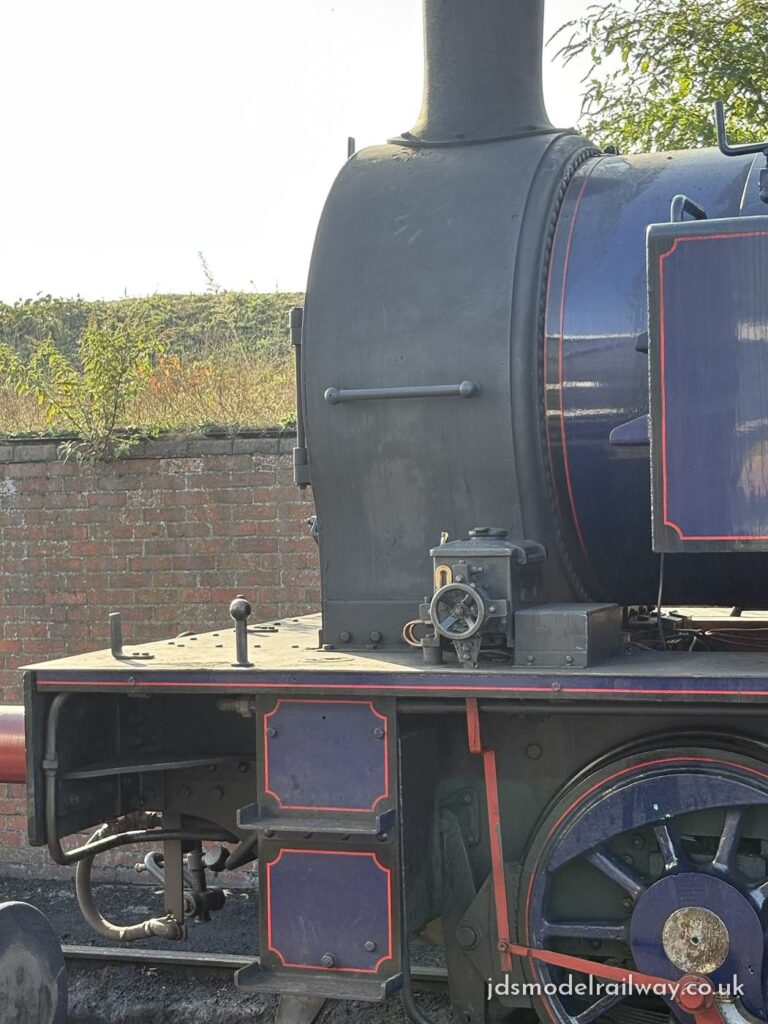
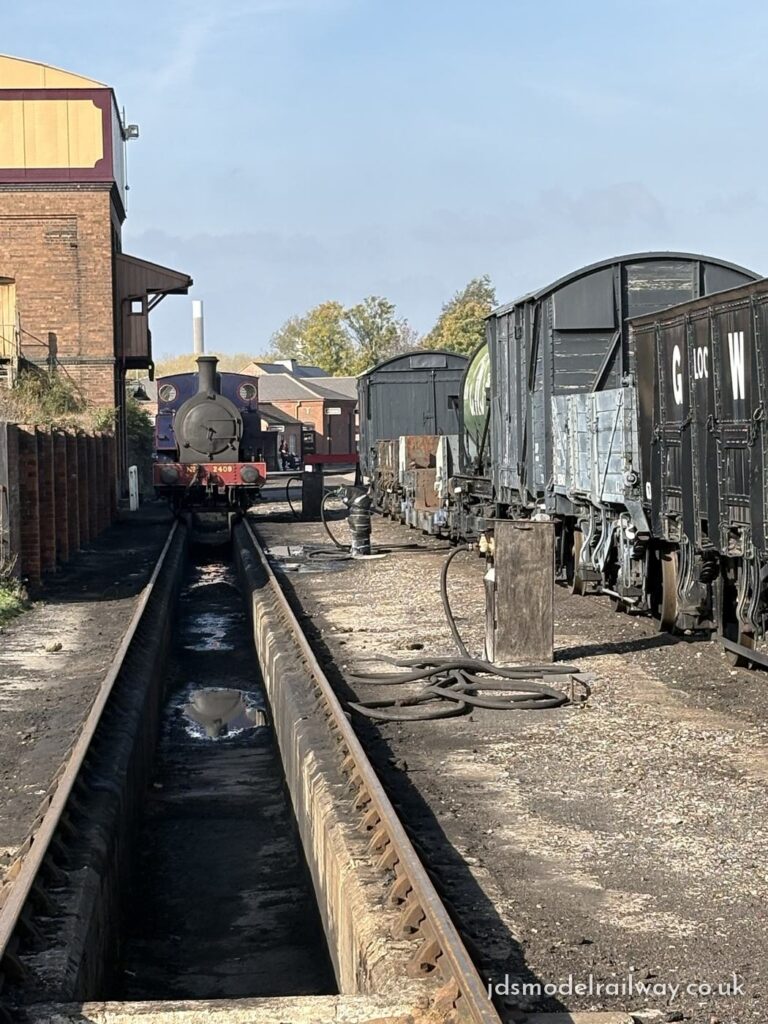
King George, an 0-6-0 tank engine built by Hunslet of Leeds in 1942. It spent its working life at Nottinghamshire collieries (Linby, Bestwood and Gedling), came close to being scrapped in 1980, and has been back in steam at Didcot since 2022.The nameplate, with the yard reflected in the paintwork.The Hunslet works plate on the cab: No. 2409, built 1942.The front end. King George was a saddle tank at one time, and the parts to turn it back into one have been kept, so it may not always look like this.King George at the end of the inspection pit, where the crew can get underneath to oil round and check things over.
The engine shed and the turntable
The engine shed is the heart of the place. Most of the doors were open, so you could see right in.
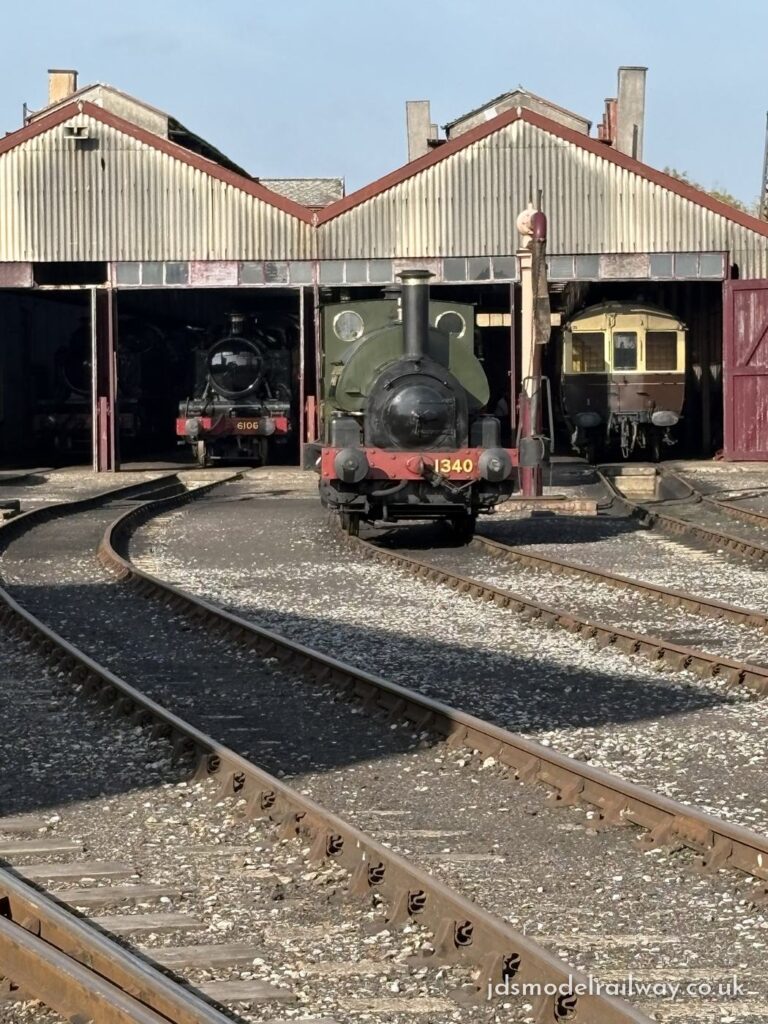
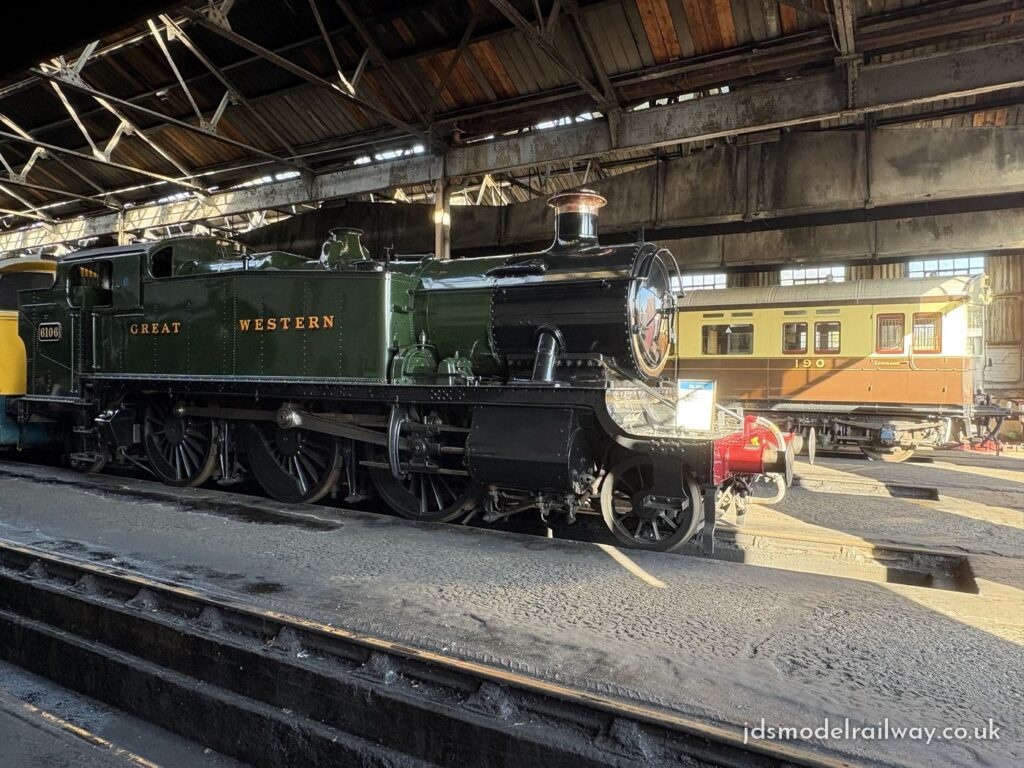
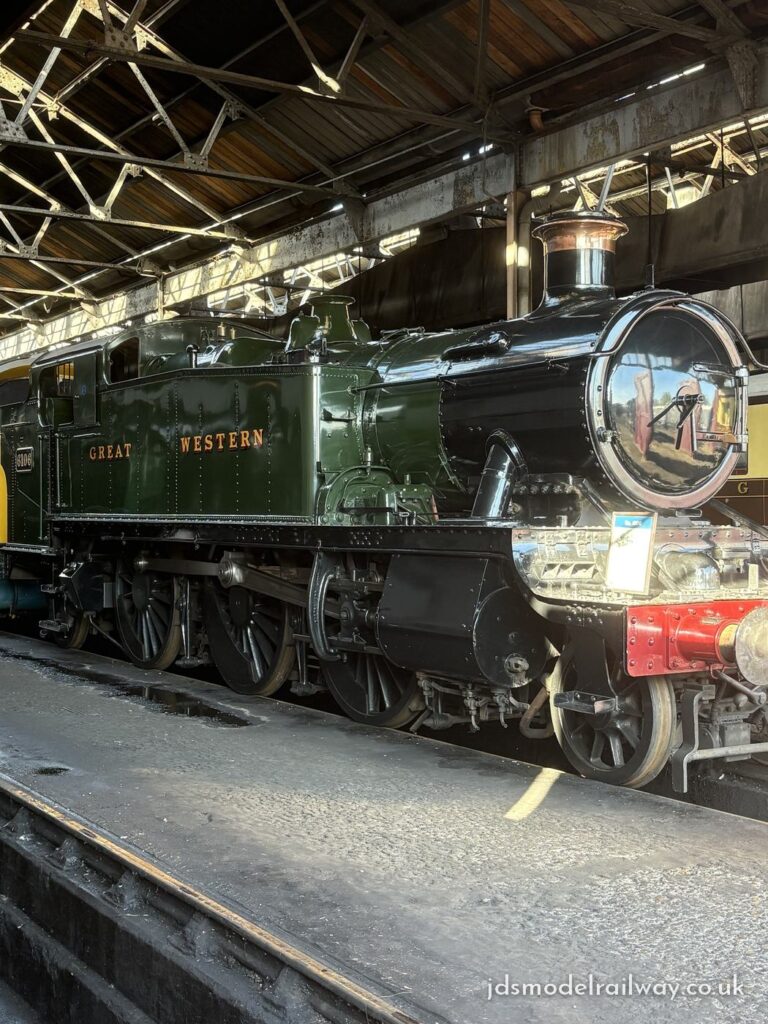
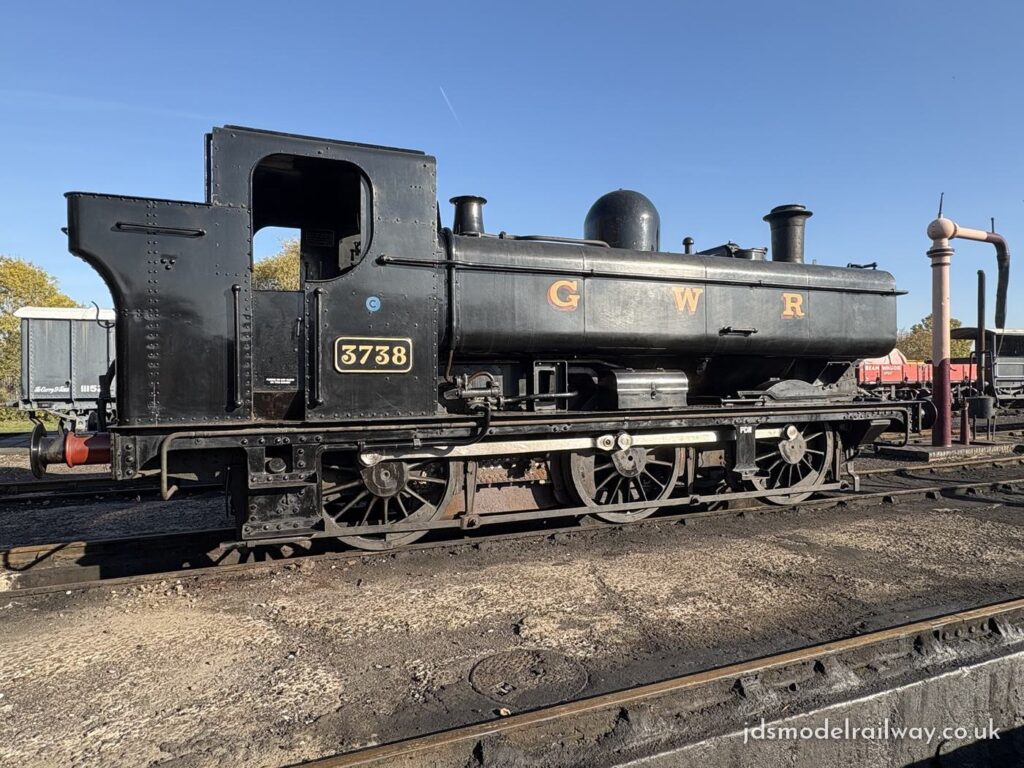
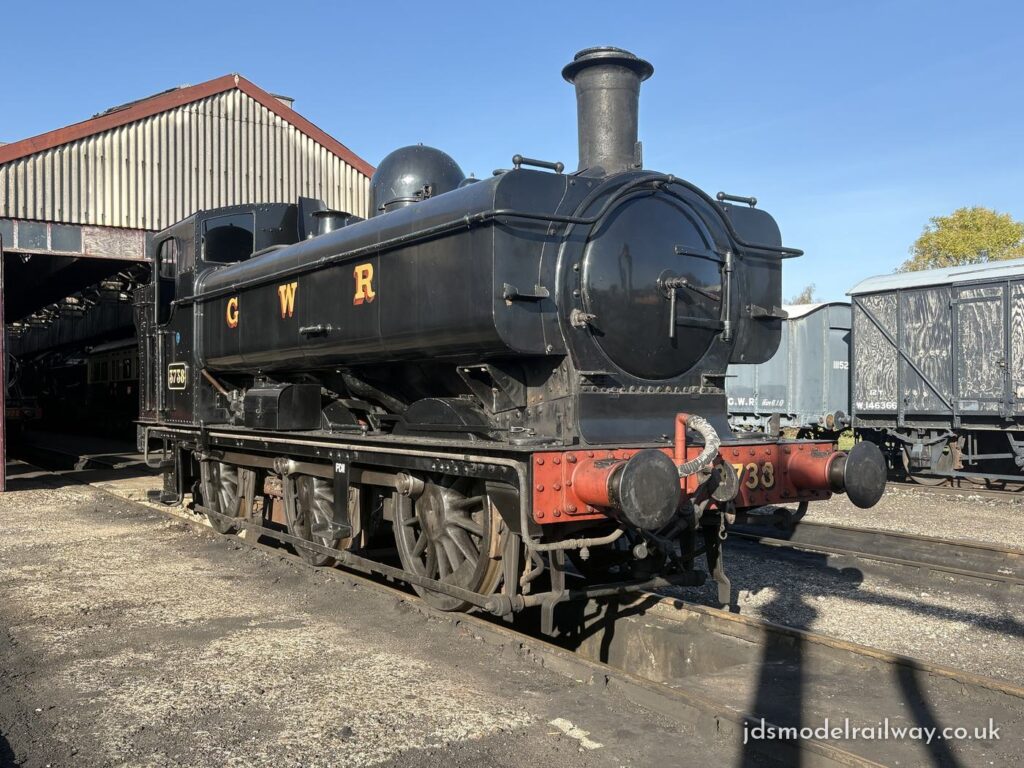
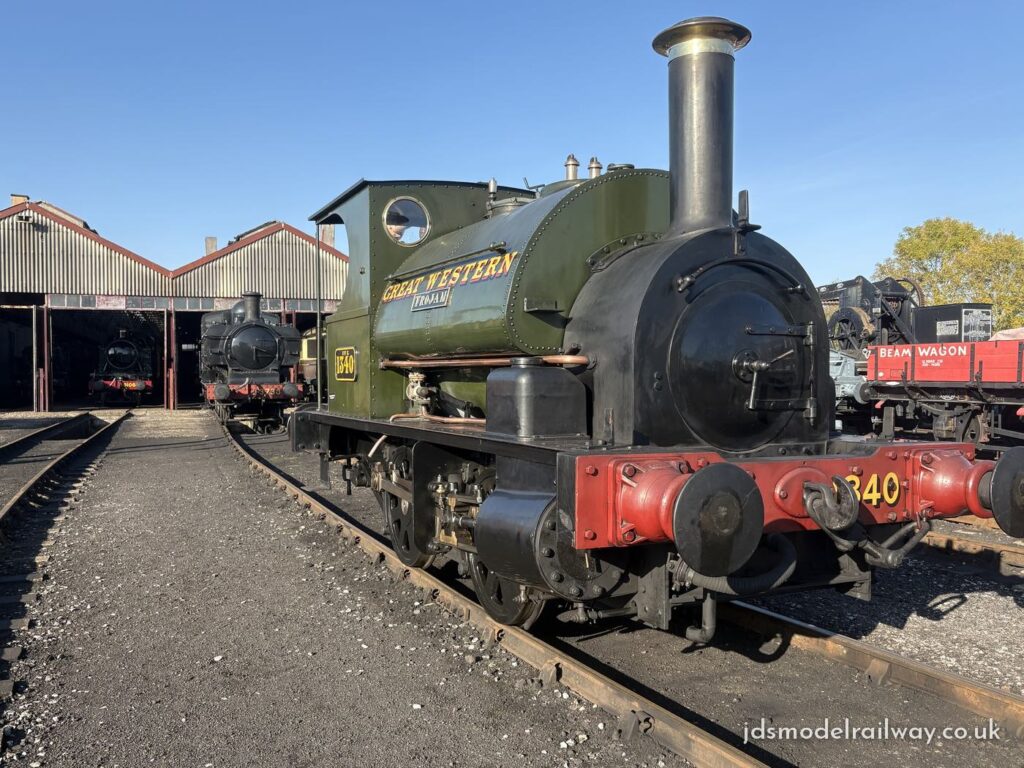
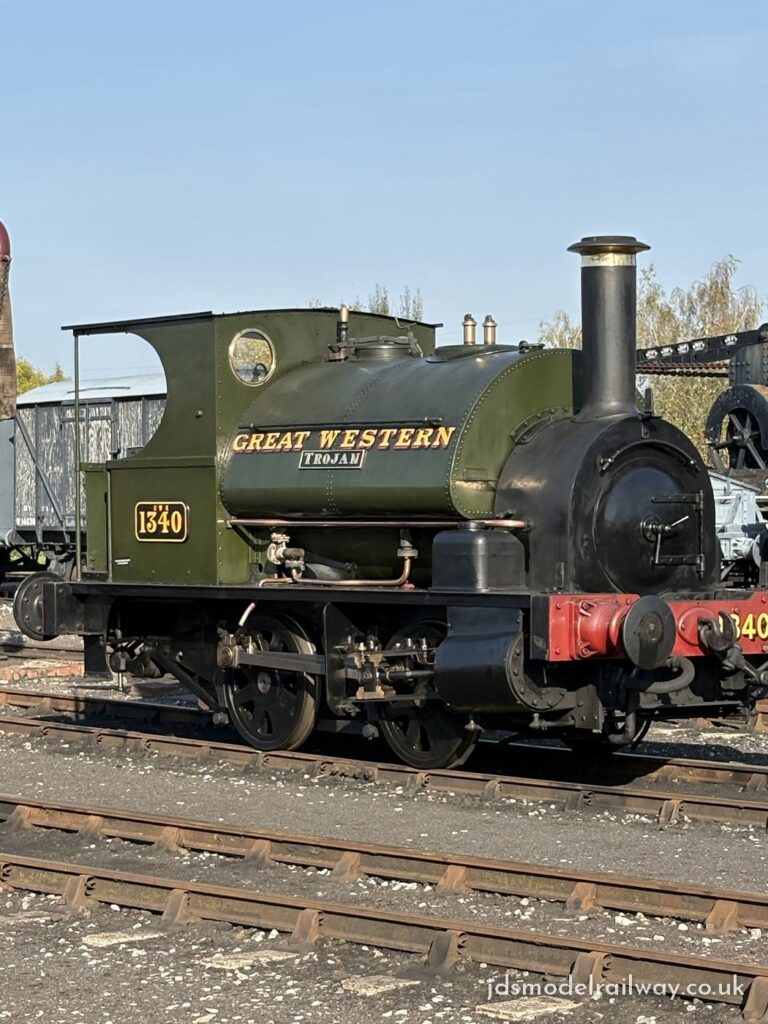
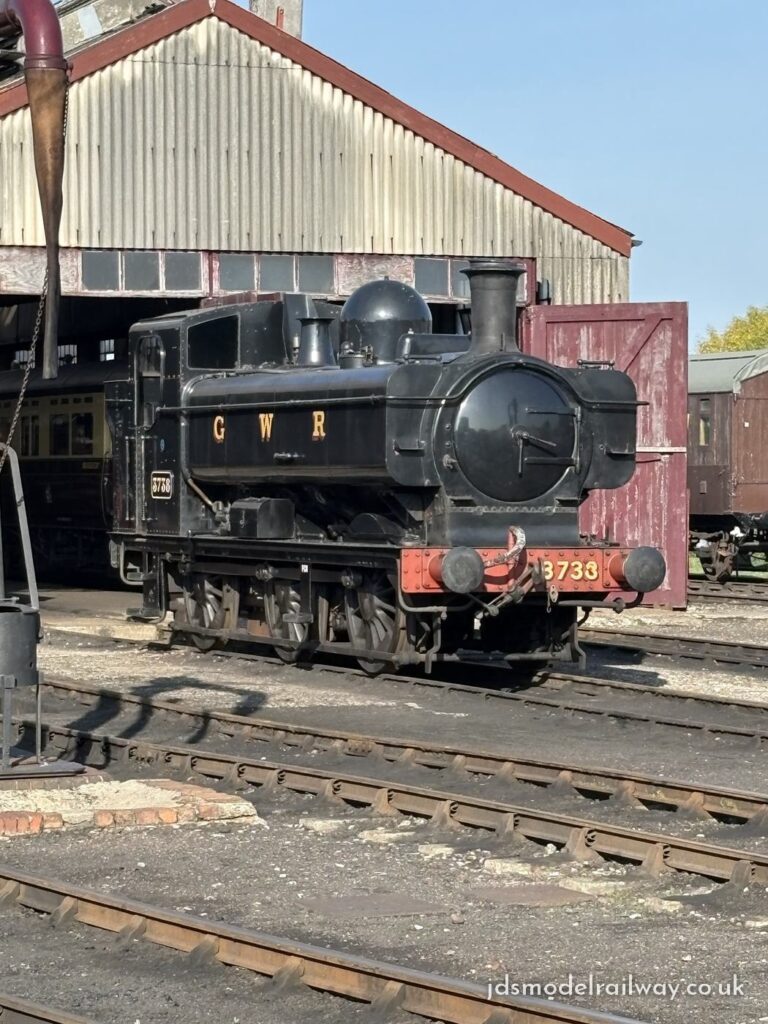
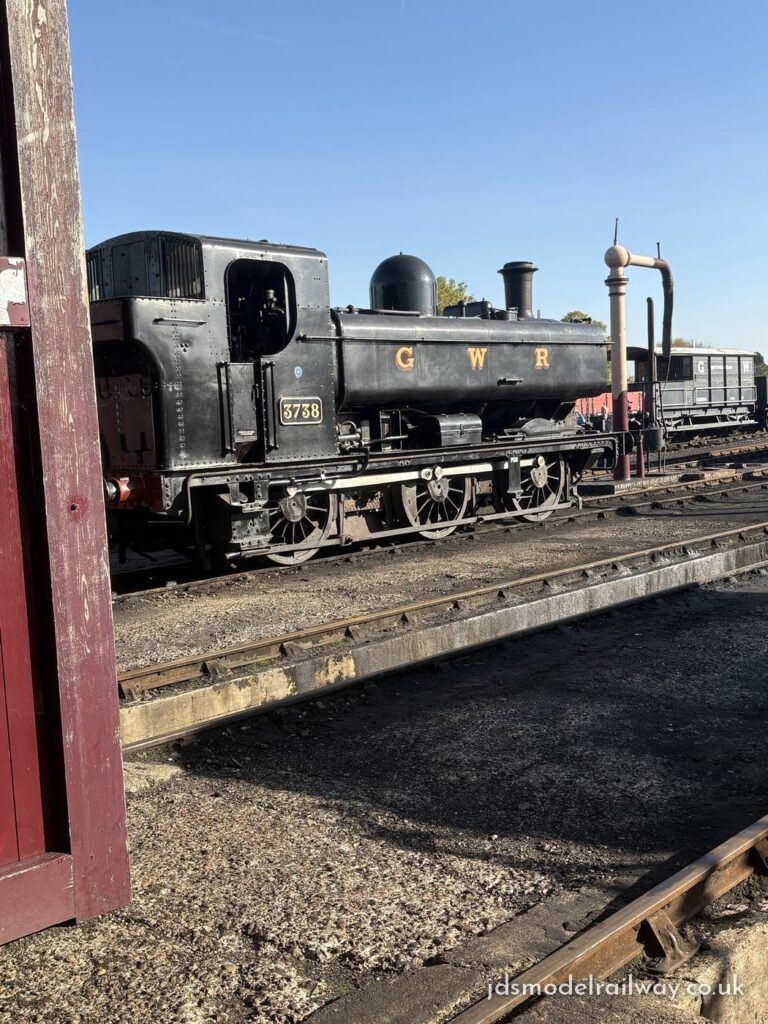
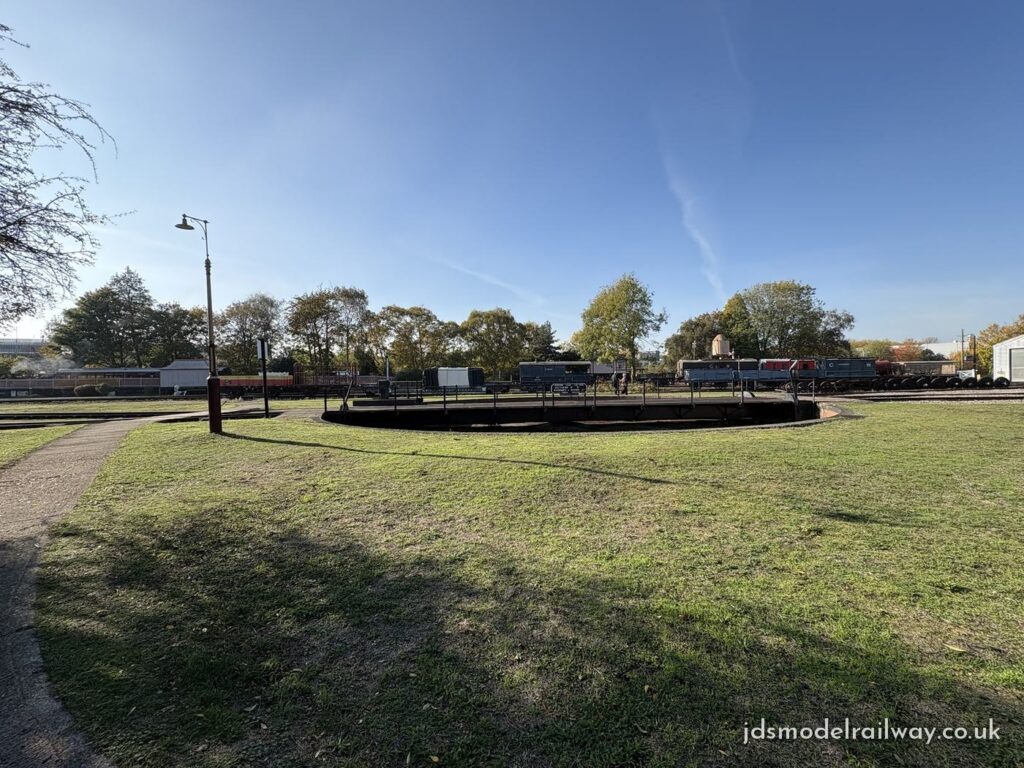
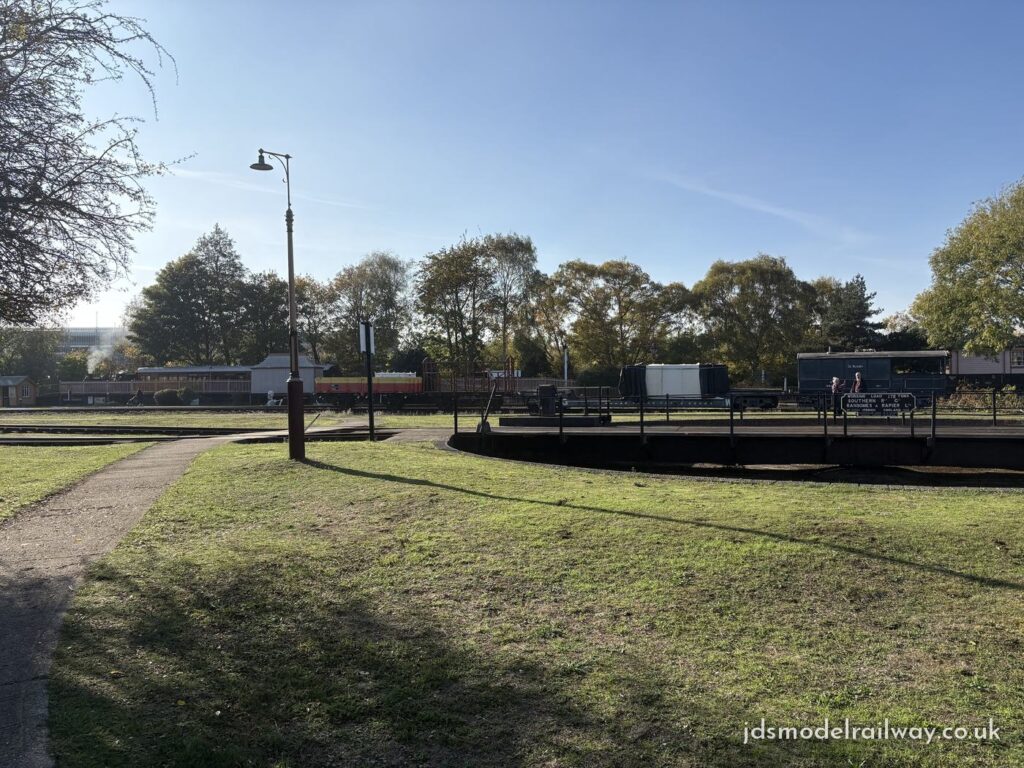
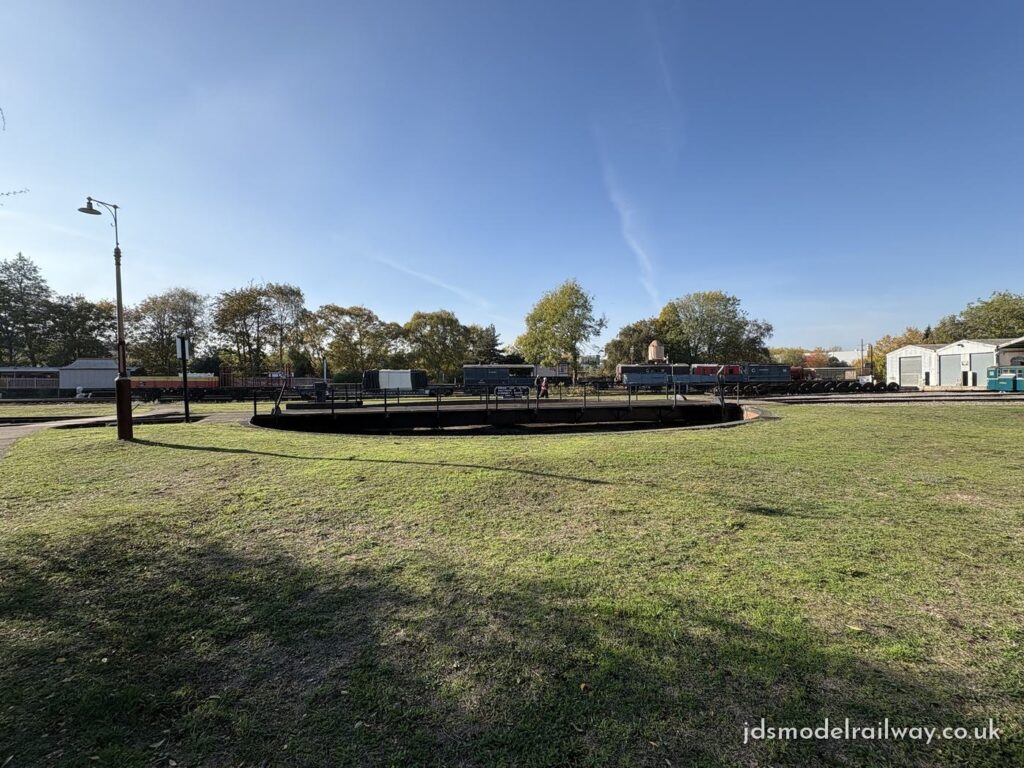
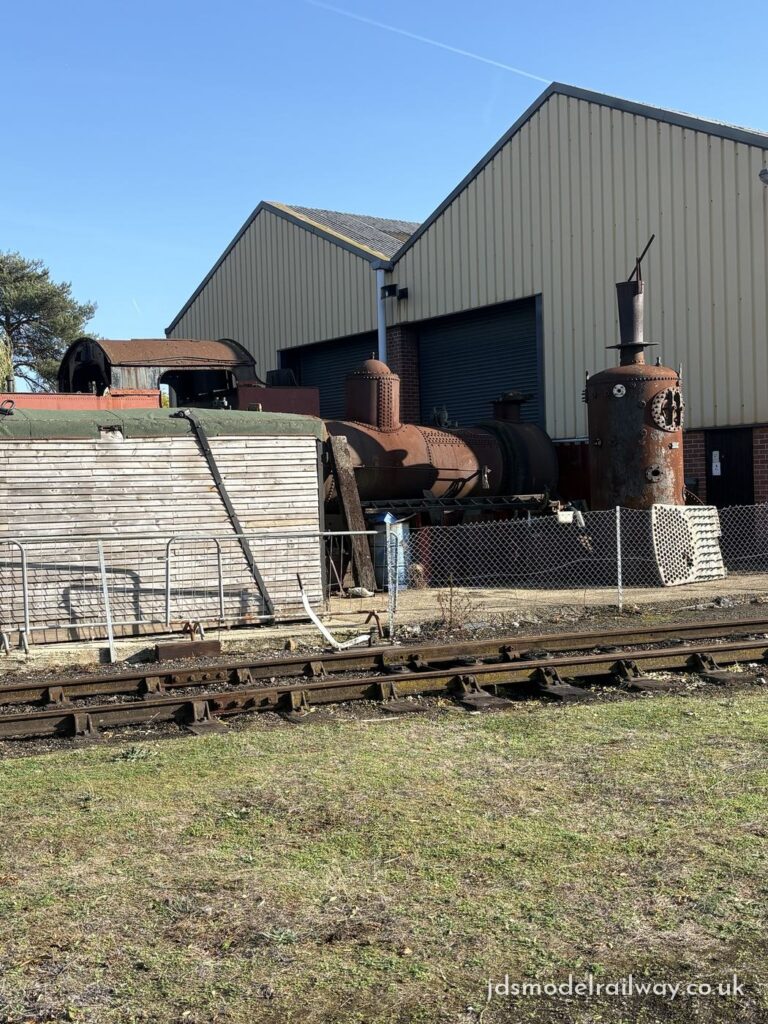
The engine shed, with Great Western engines old and new. In the left road is 6106, a big Prairie tank from 1931. In the middle, little 1340 Trojan is out front, and one of the streamlined diesel railcars is on the right.6106 in the shed, with auto trailer 190 behind. It's one of the Great Western's big Prairie tanks, built in 1931 for London suburban trains, and it's absolutely gleaming.6106 from the front. You could see your reflection in that smokebox door.3738 out in the sunshine by the water crane. GWR in big shaded letters on the tanks.3738 from the front, outside the shed.Trojan again, with 6106 and 3738 peeping out of the shed behind.1340 Trojan. It was built by Avonside of Bristol in 1897 for the docks at Newport and joined the Great Western in 1923, when the Alexandra Docks Railway was taken over. It later spent years at collieries. Today it's the oldest working ex-GWR engine.3738, one of the classic Great Western pannier tanks, built at Swindon in 1937. Over 860 of these 57xx engines were built, and they did a bit of everything.3738 again, by the water crane, with a Toad brake van in the background.The turntable, a 70-footer, big enough for the largest tender engines. It was built by Ransomes & Rapier of Ipswich for the Southern Railway at Southampton Docks and now sits in the Great Western's original 1932 pit. It's still turned by hand.The maker's plate on the turntable reads "Working load 175 tons, Southern Rly Co, Ransomes & Rapier Ltd, Ipswich". Behind it is a Toad brake van lettered for St Blazey in Cornwall.One more of the turntable, with the sidings beyond.Round the back of the works were boilers and parts waiting their turn for overhaul. Steam engines take years to rebuild, and a lot of it happens right here.
Inside the engine shed
Round the back, the shed is packed with engines on display, and you can get right up close.
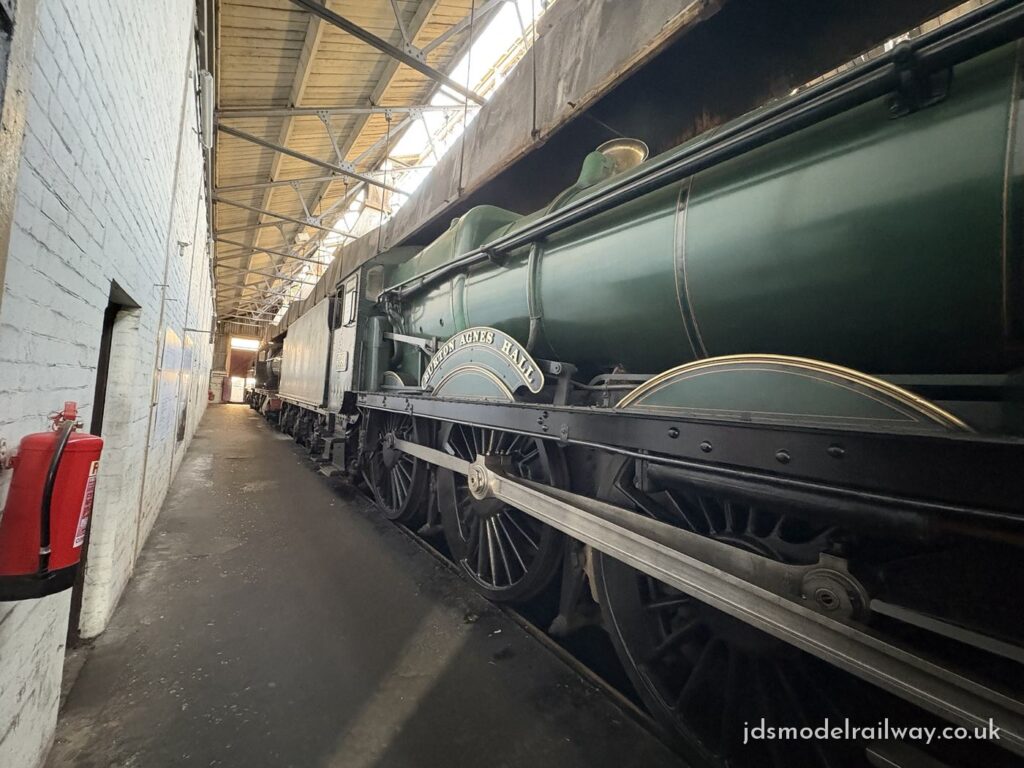
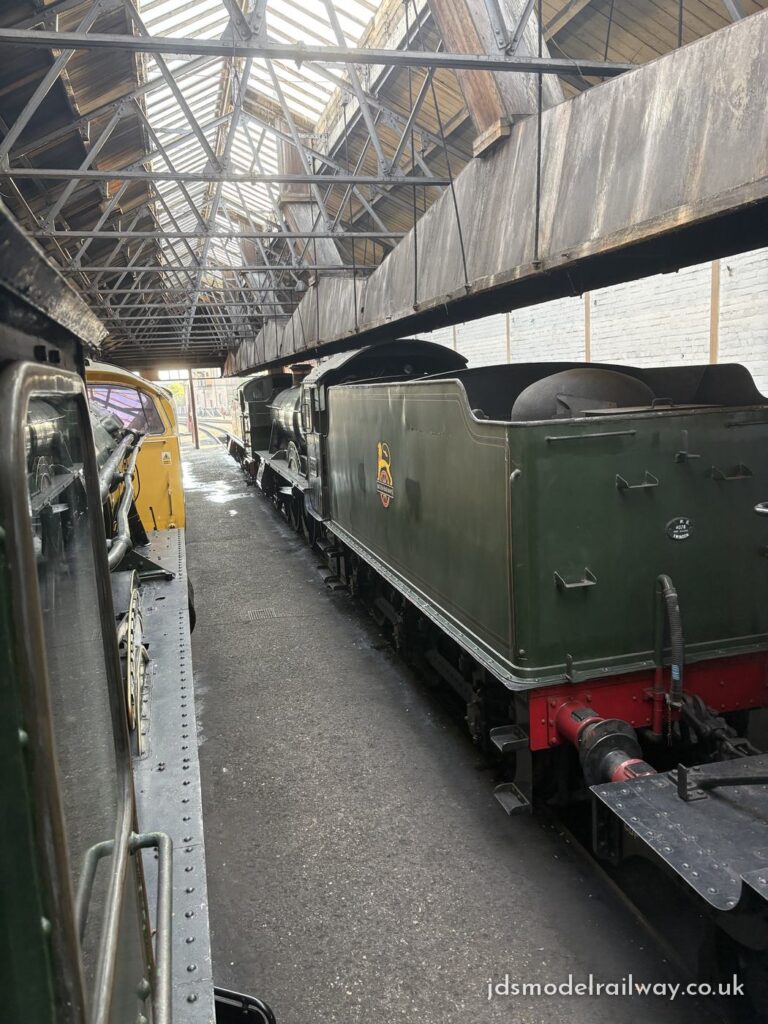
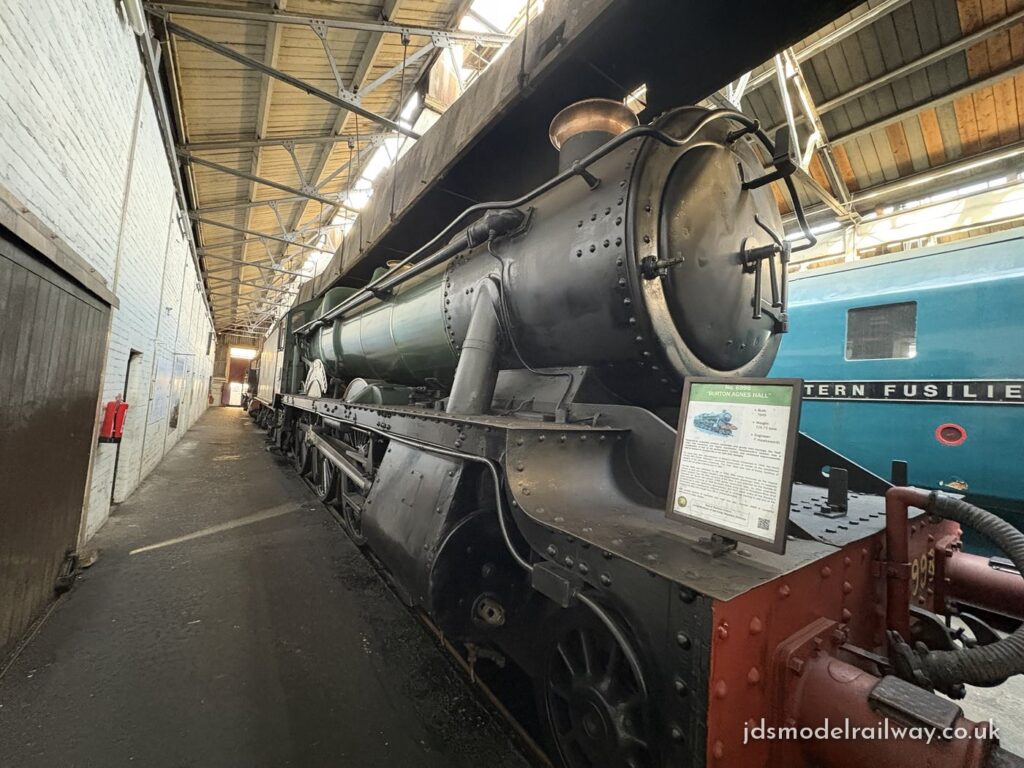
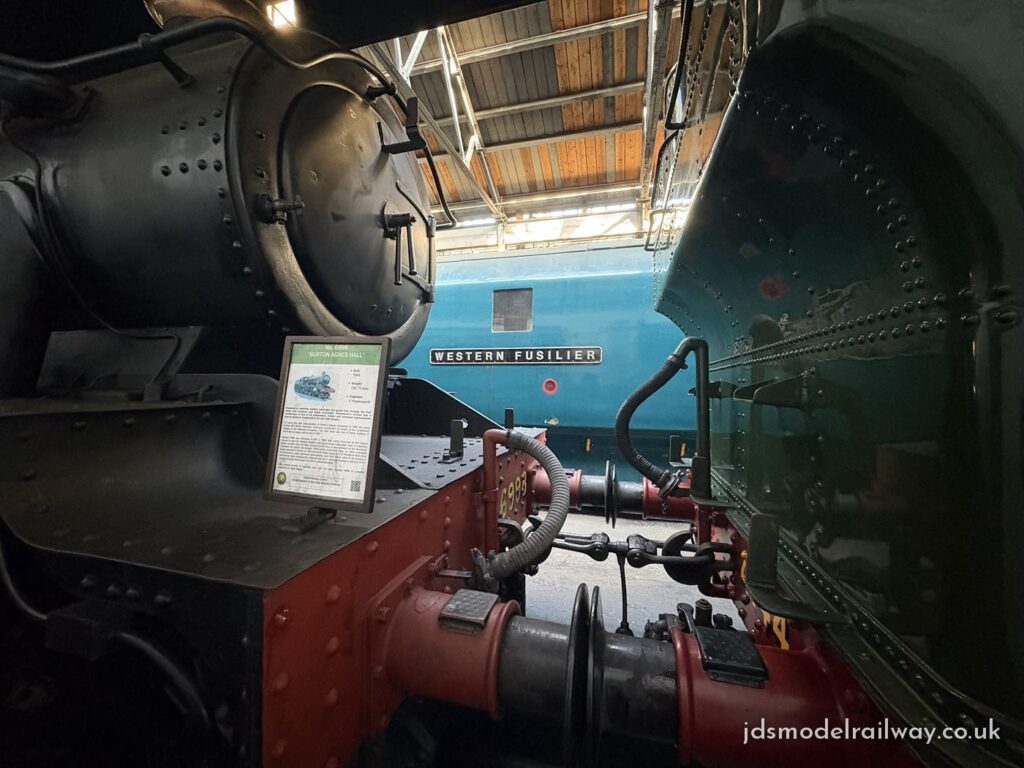
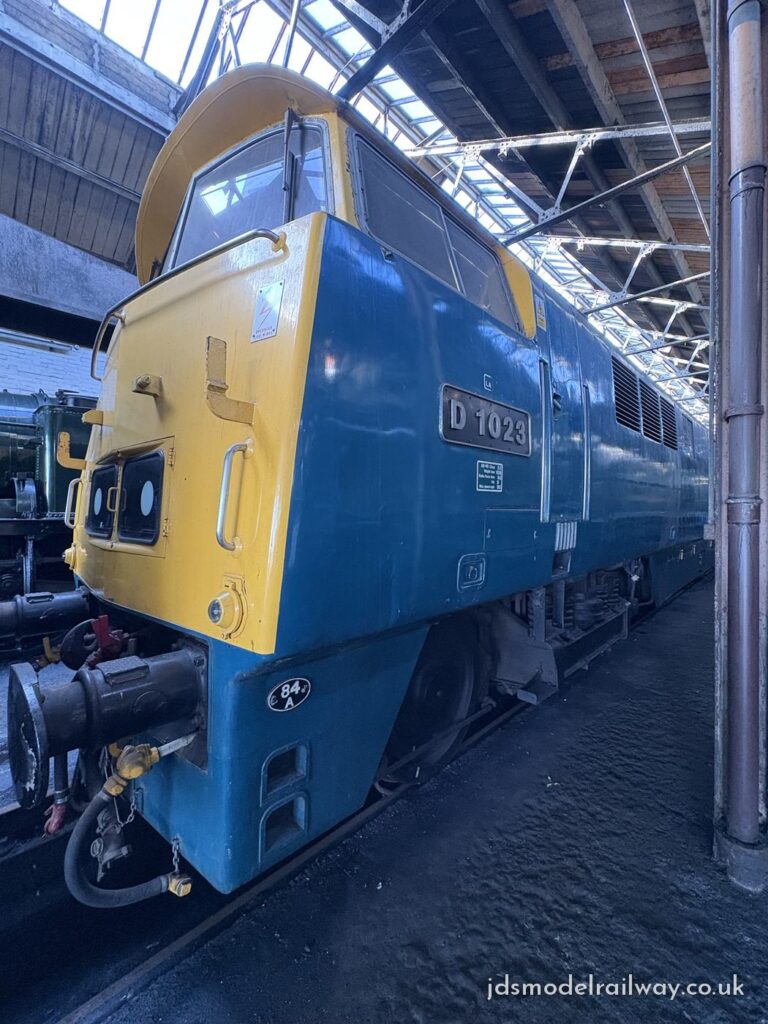
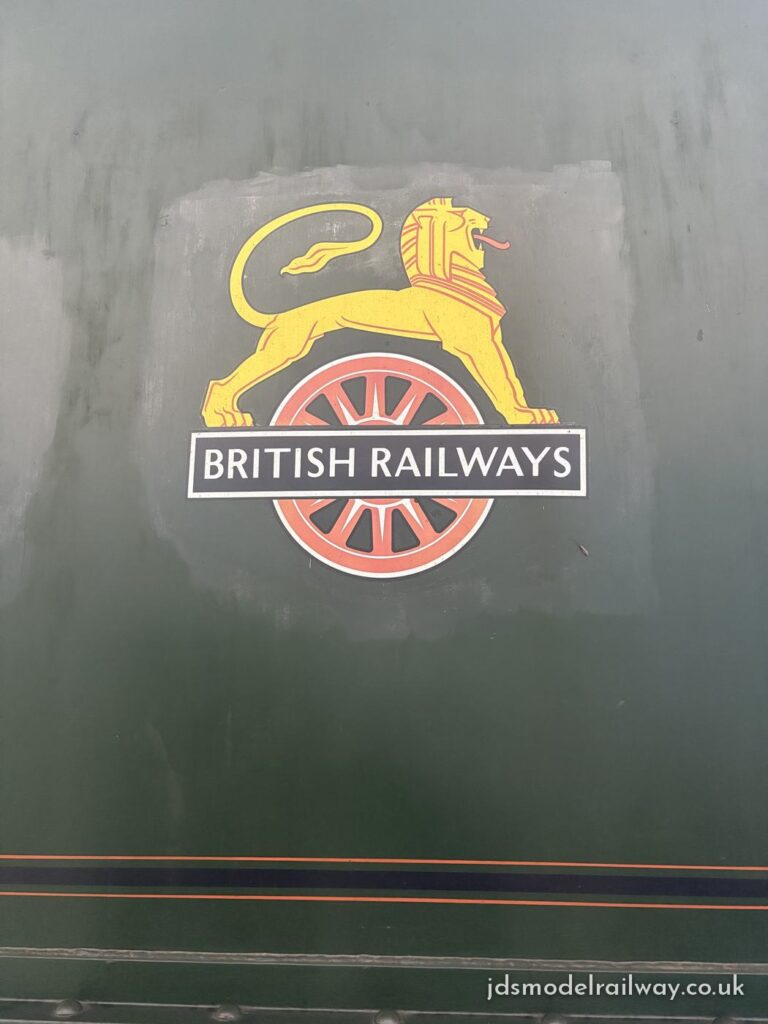
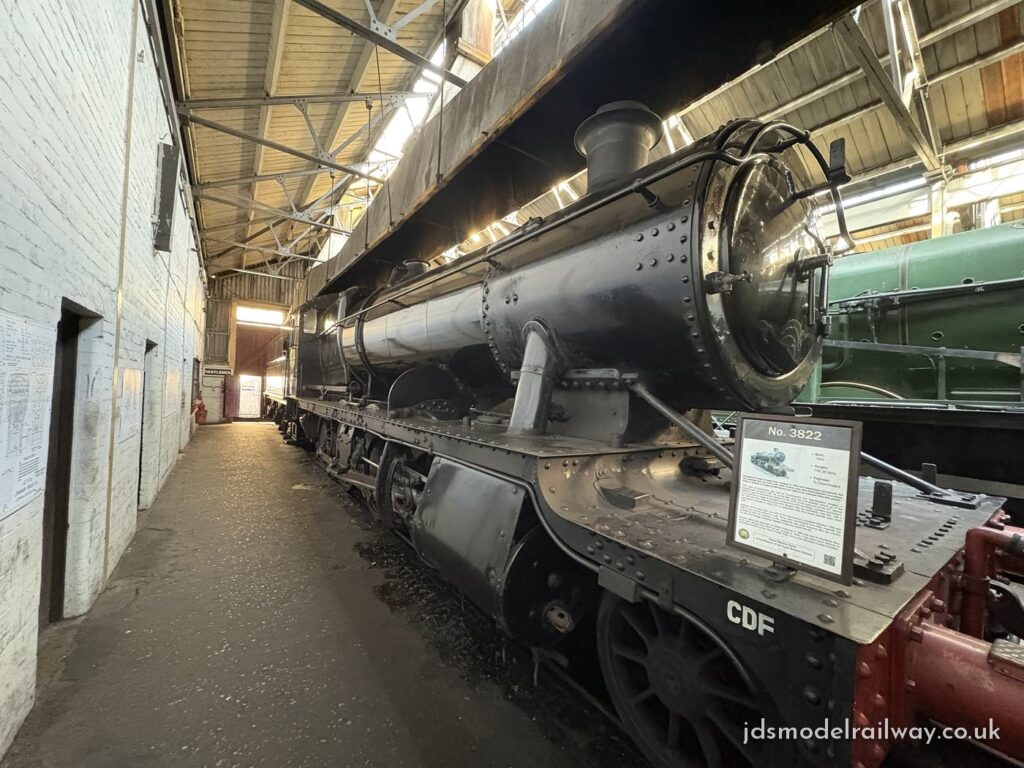
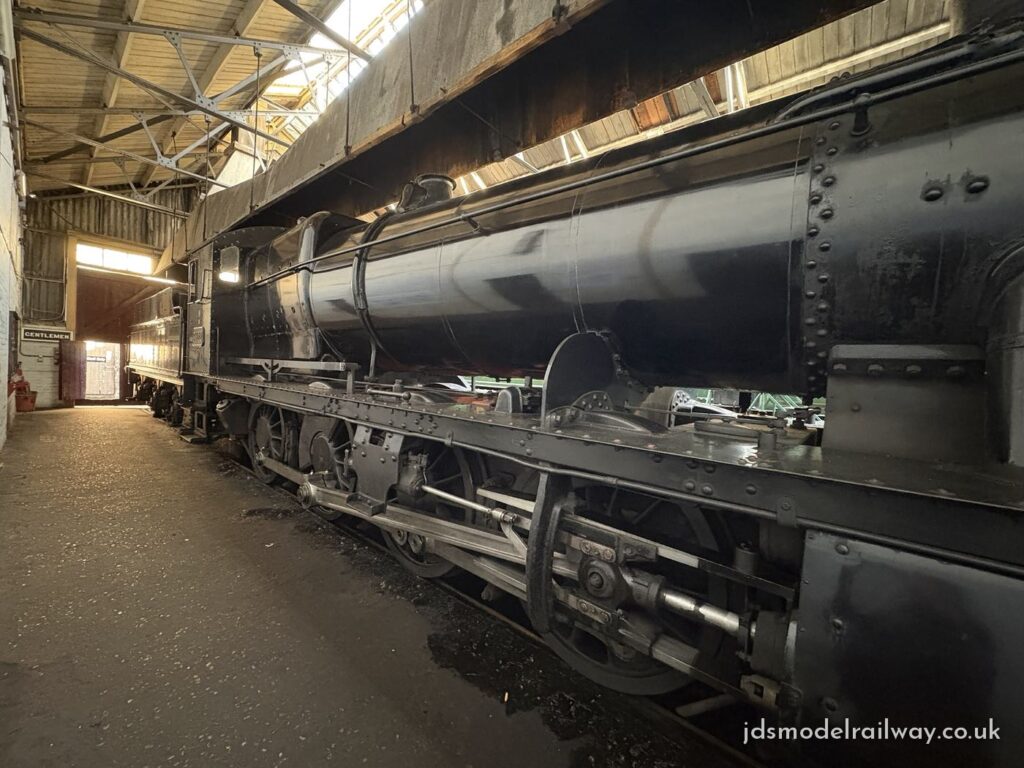
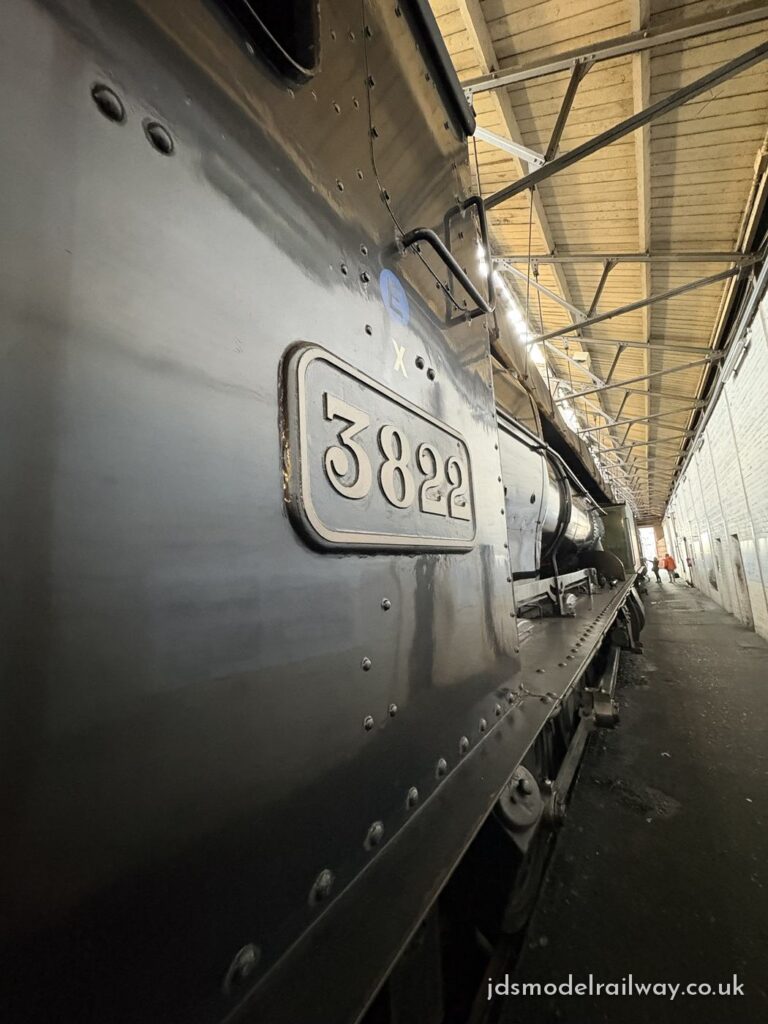
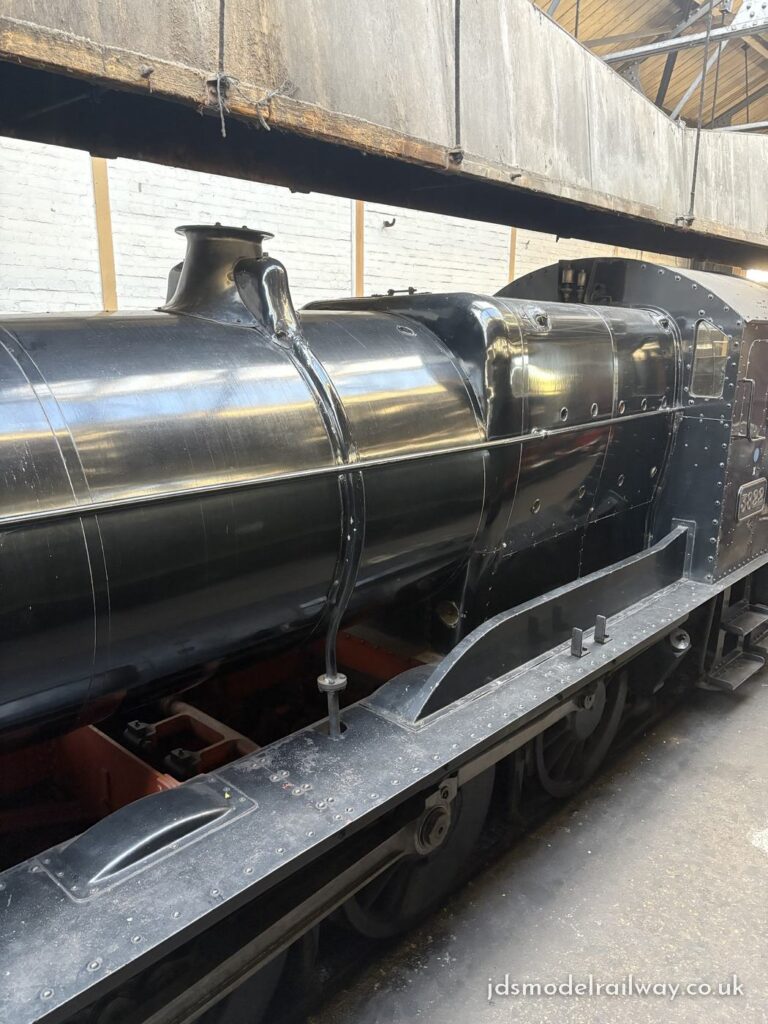
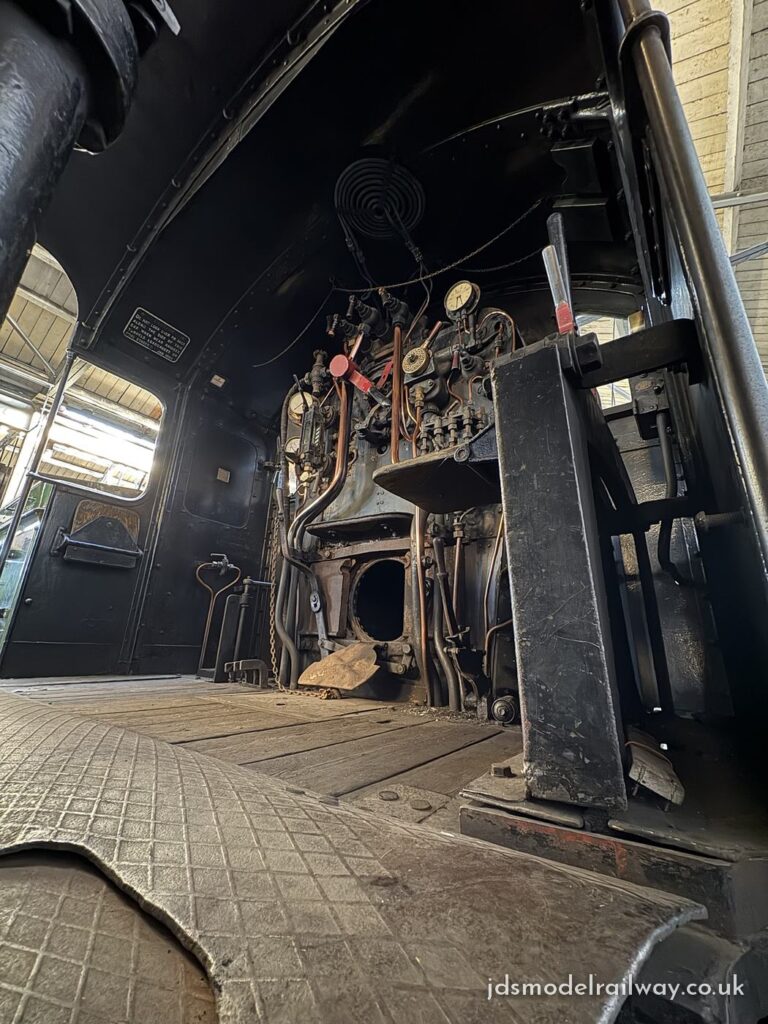
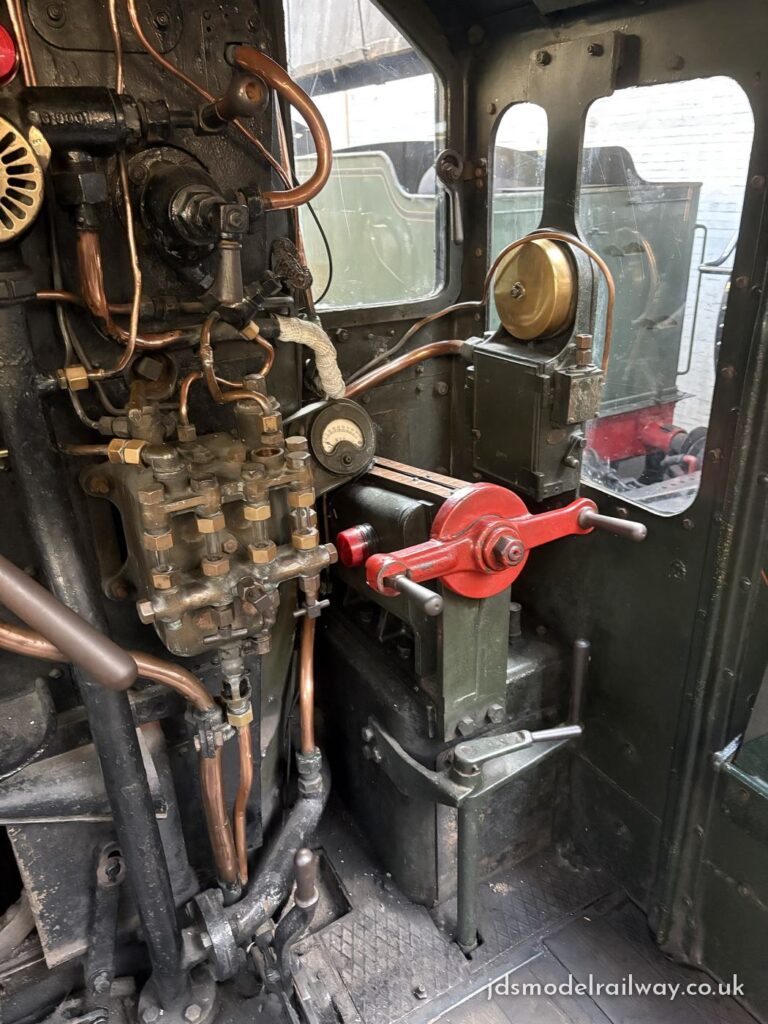
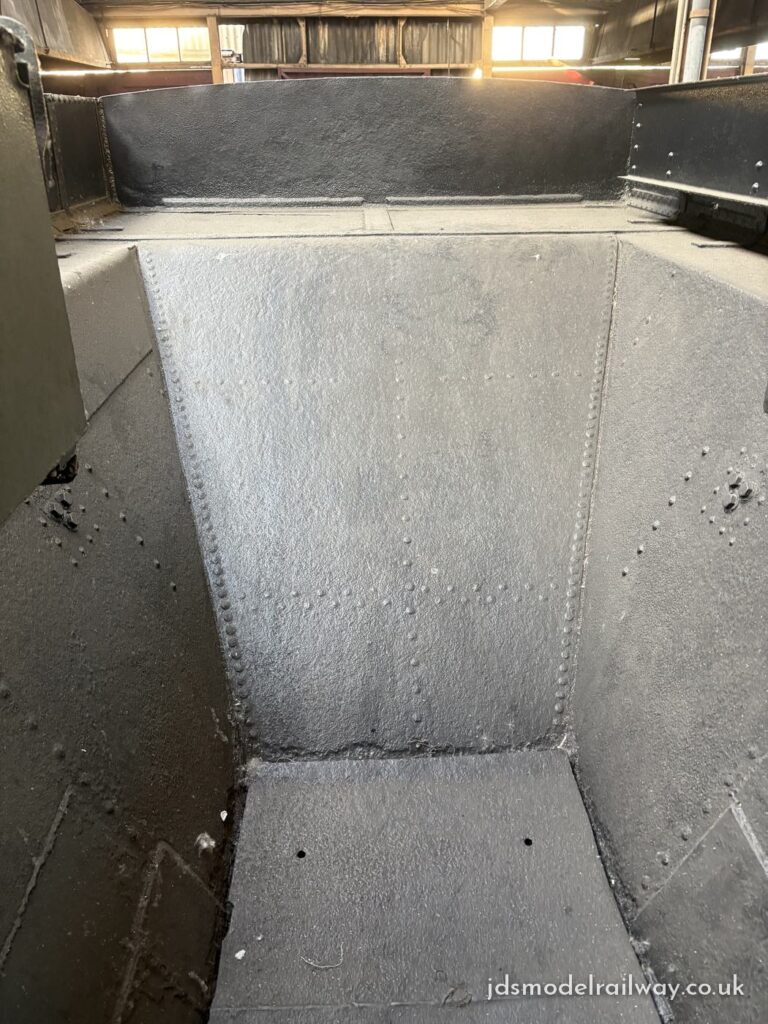
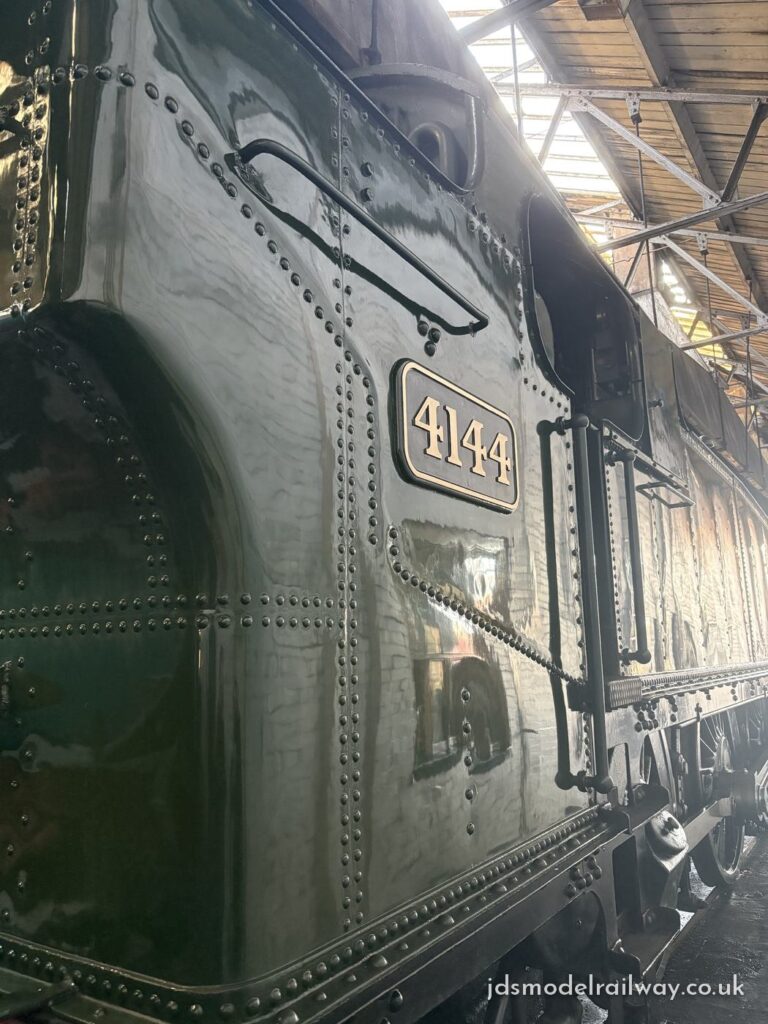
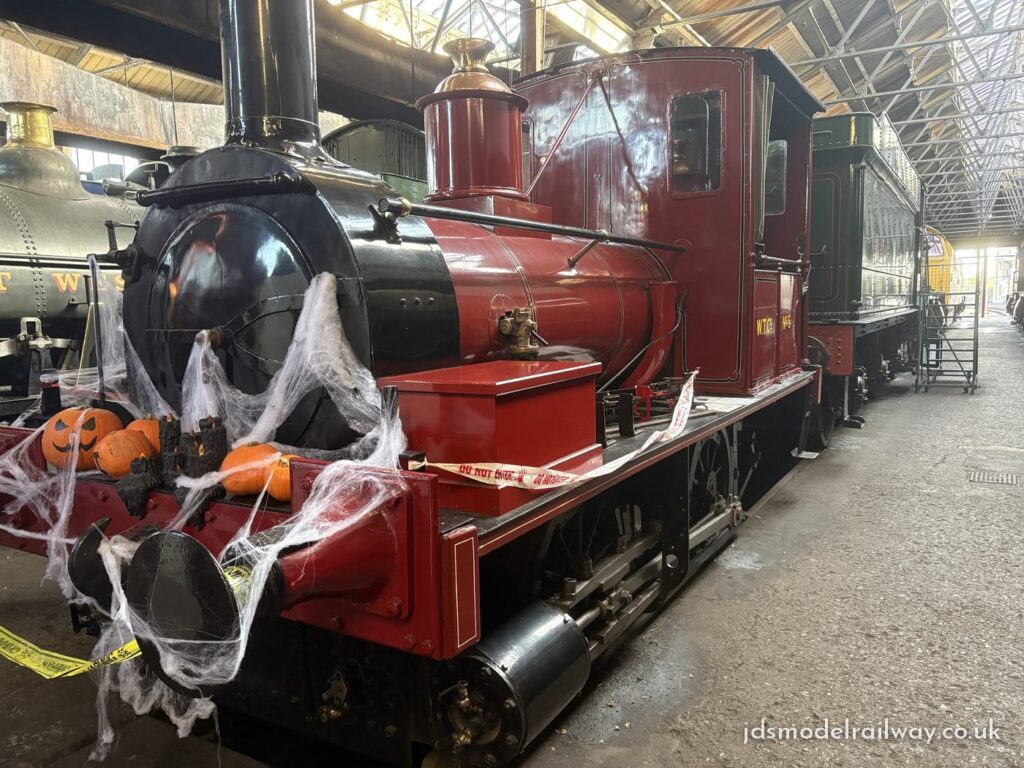
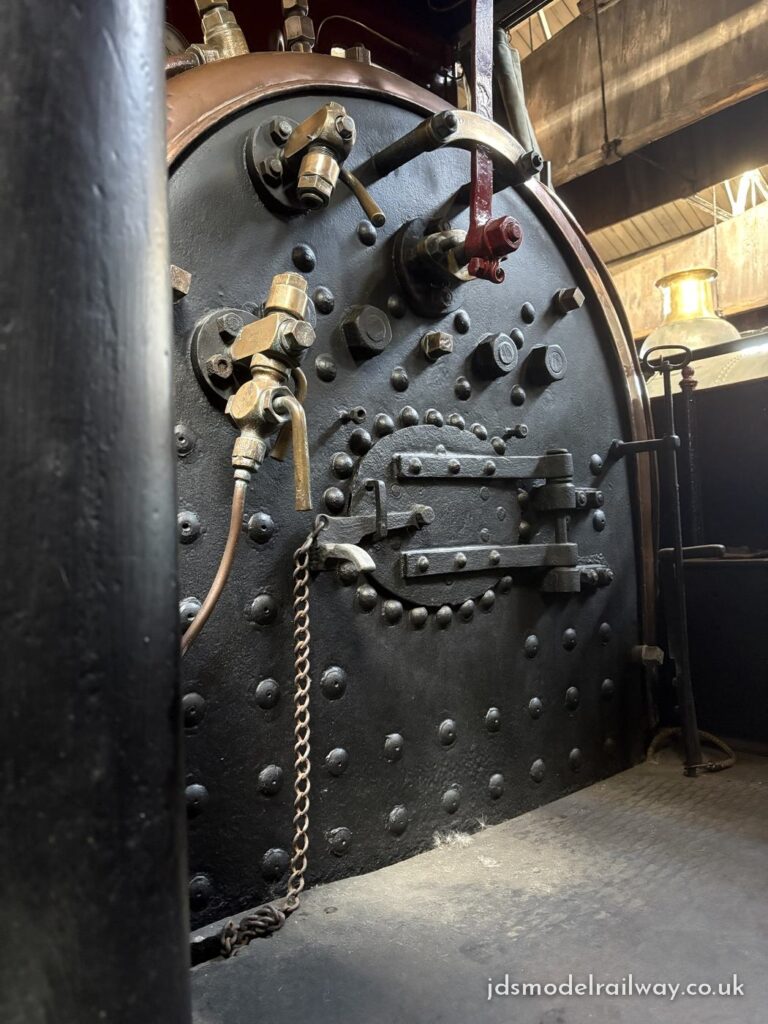
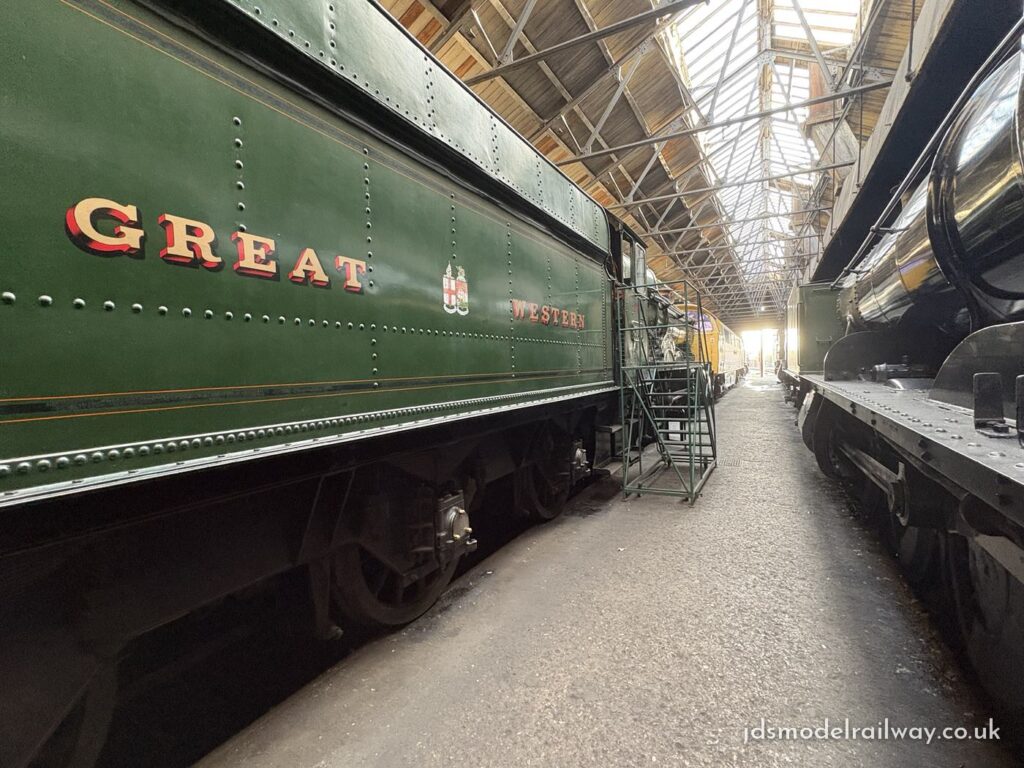
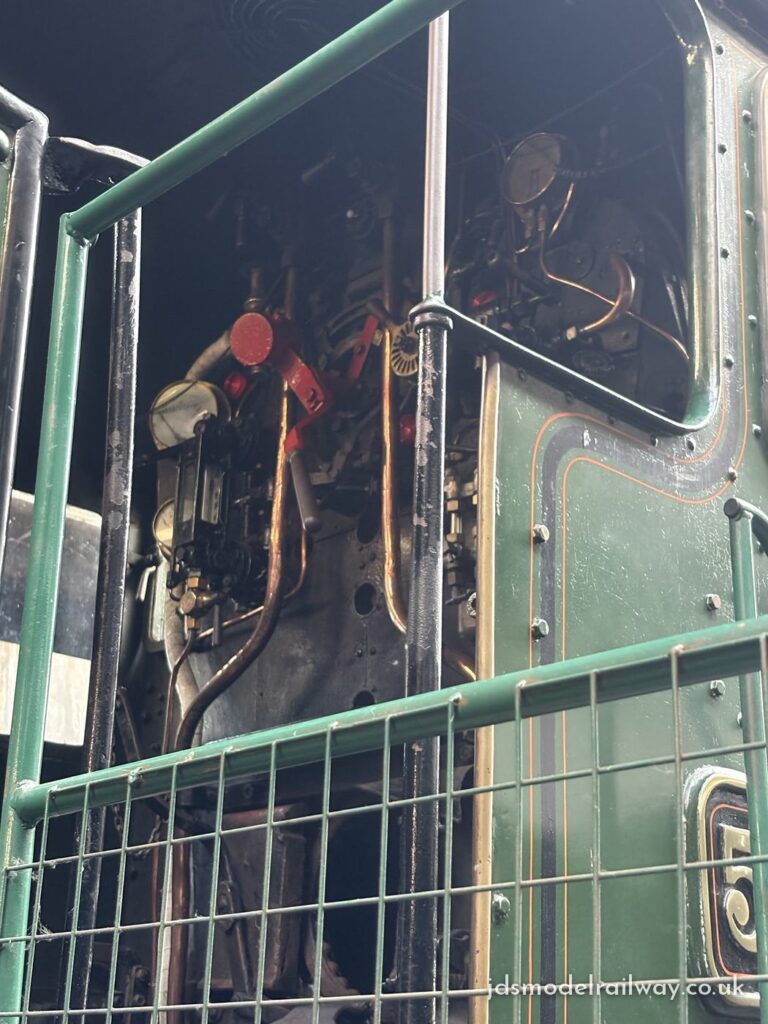
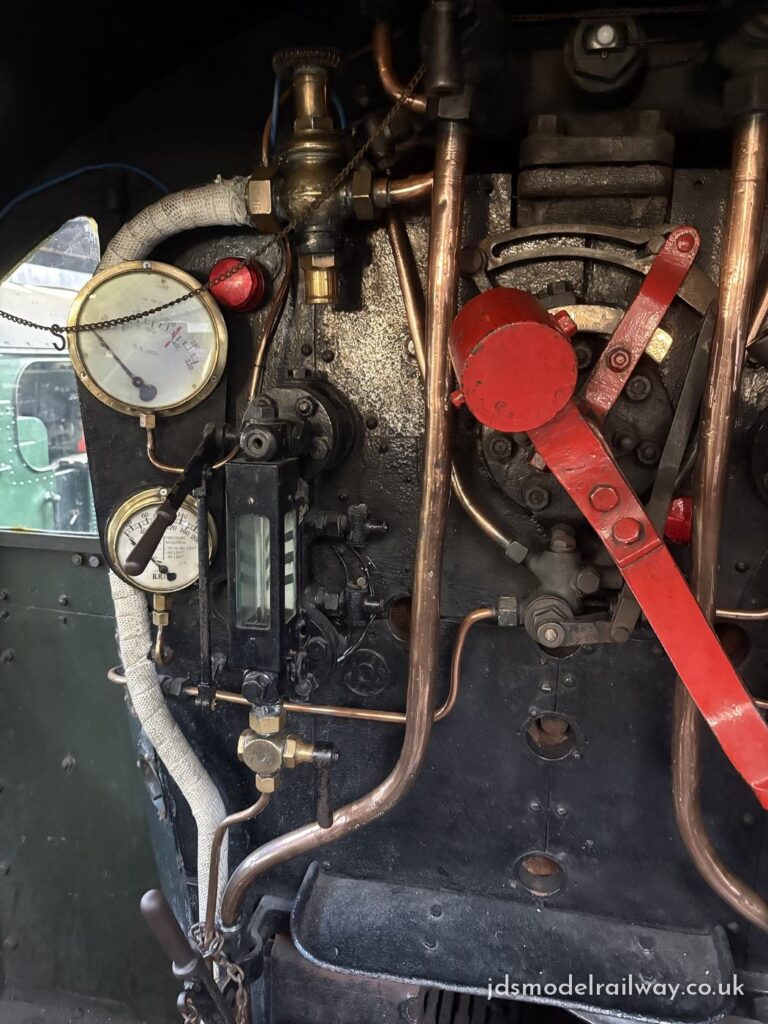
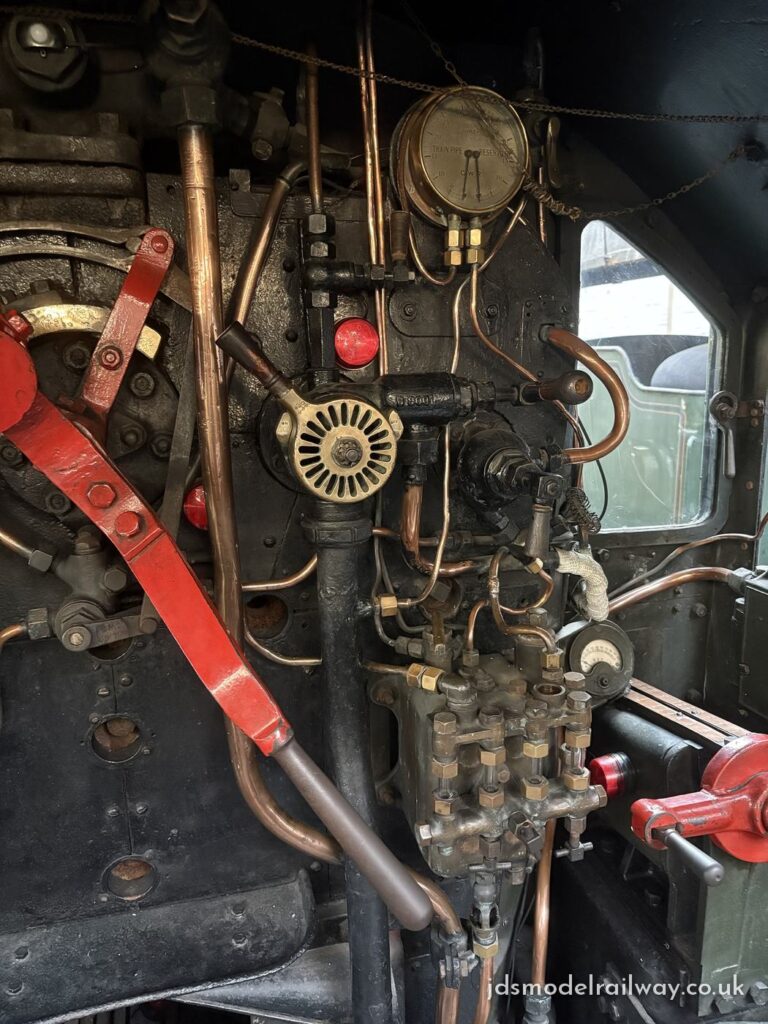
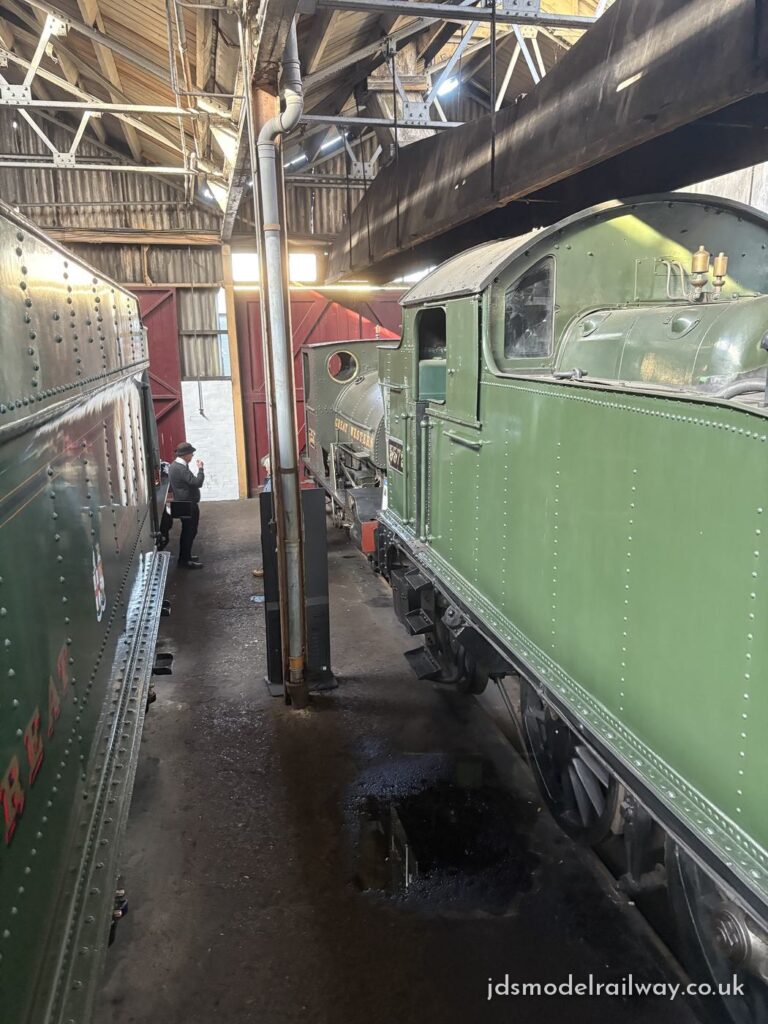
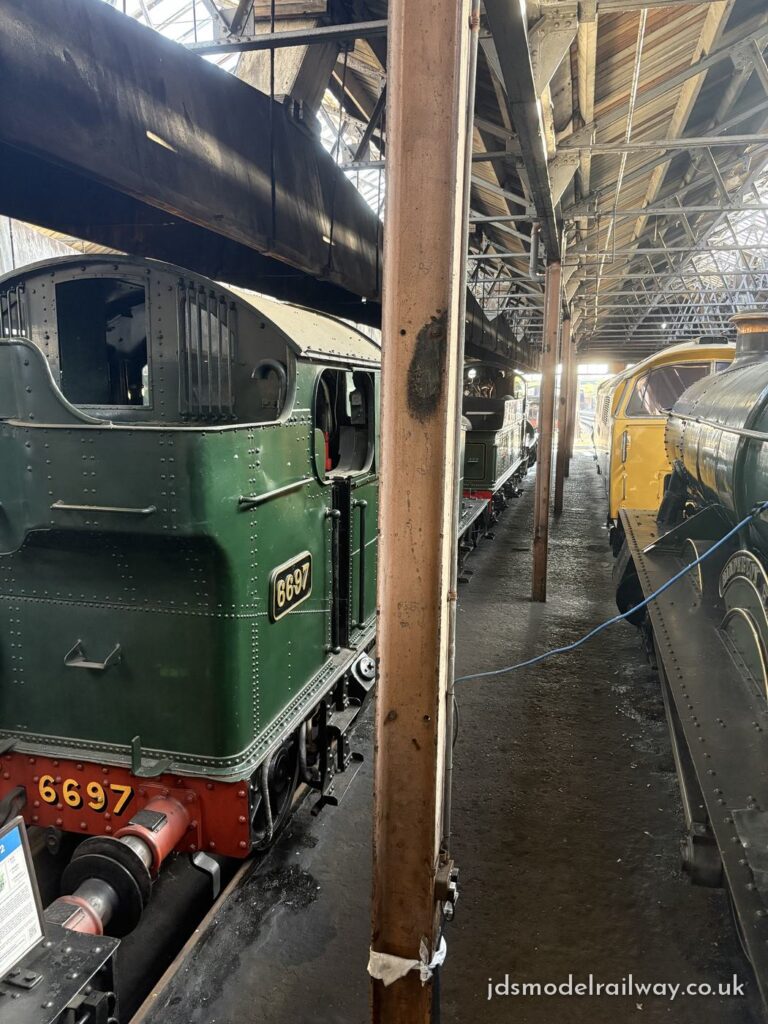
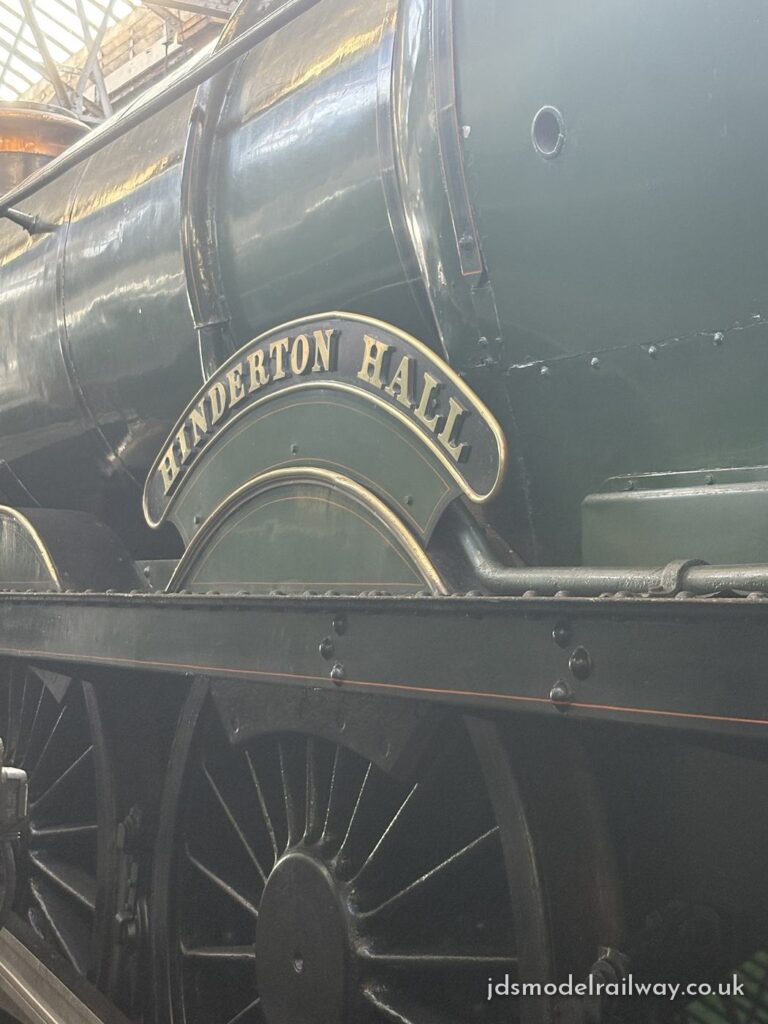
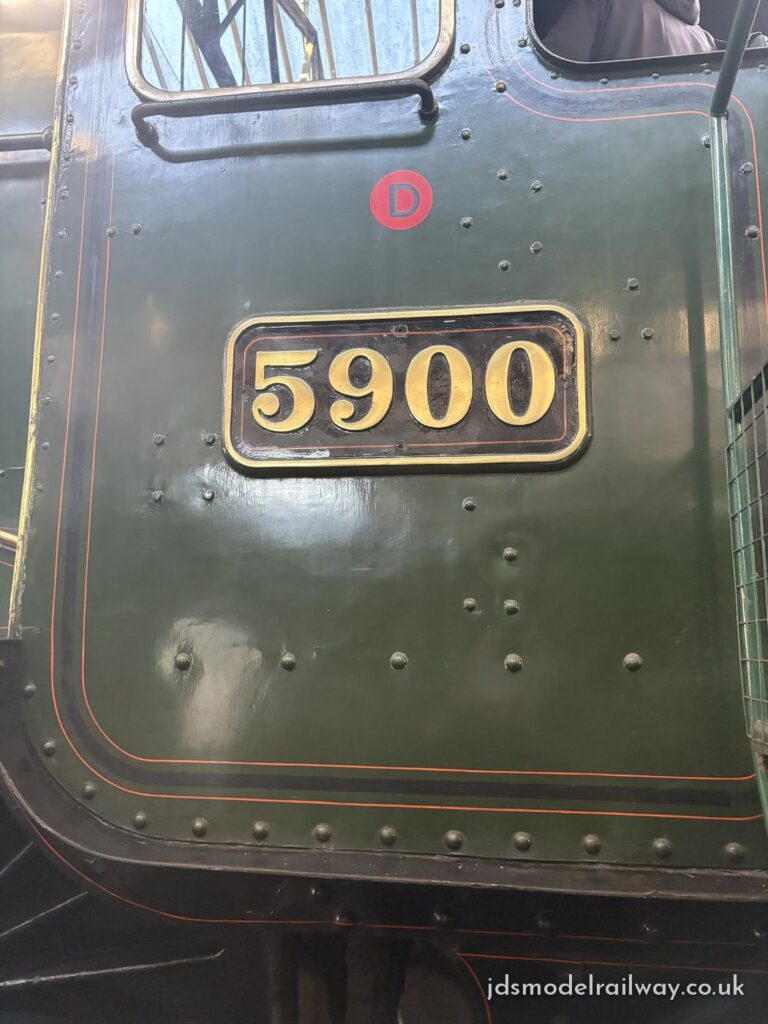
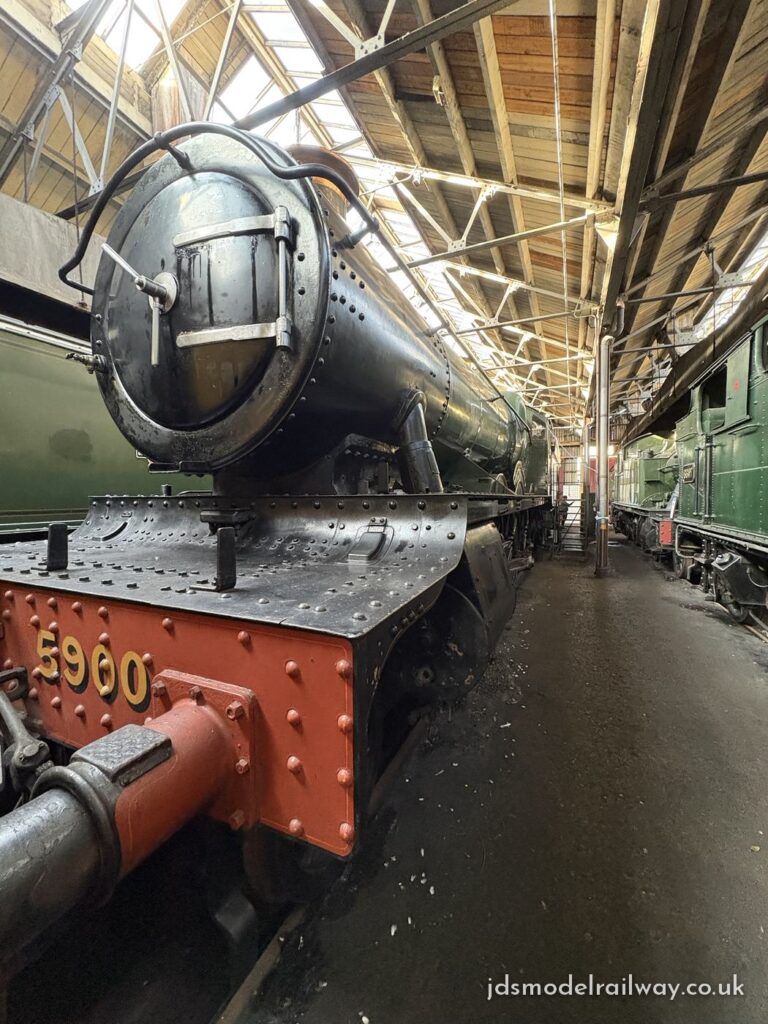
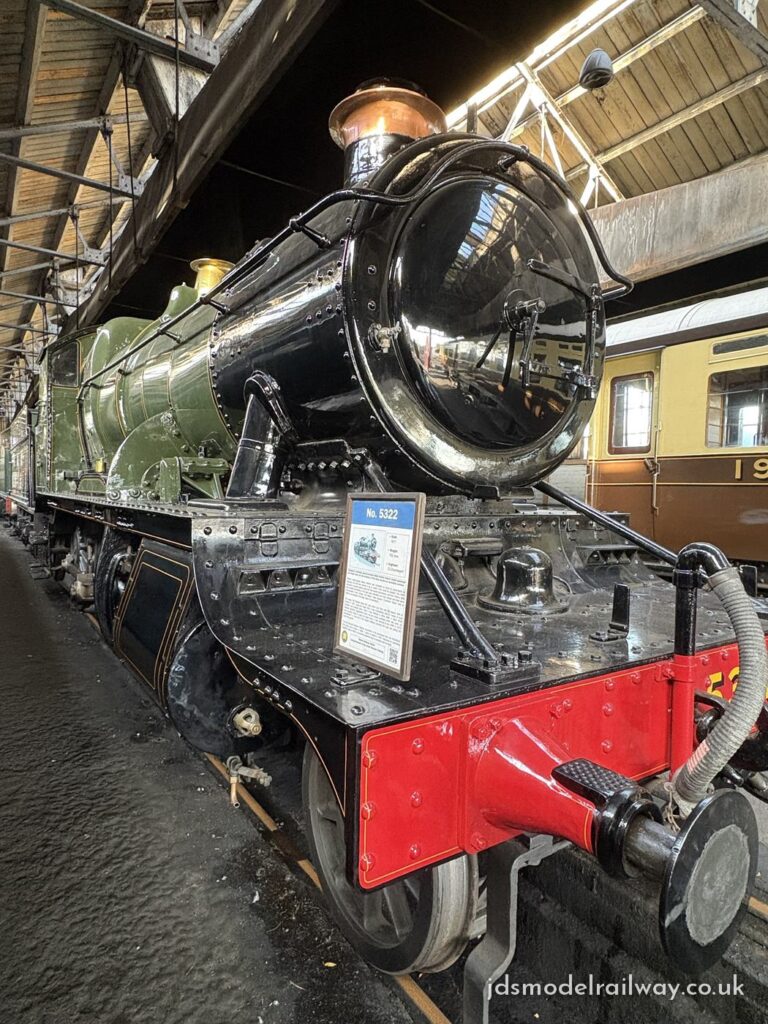
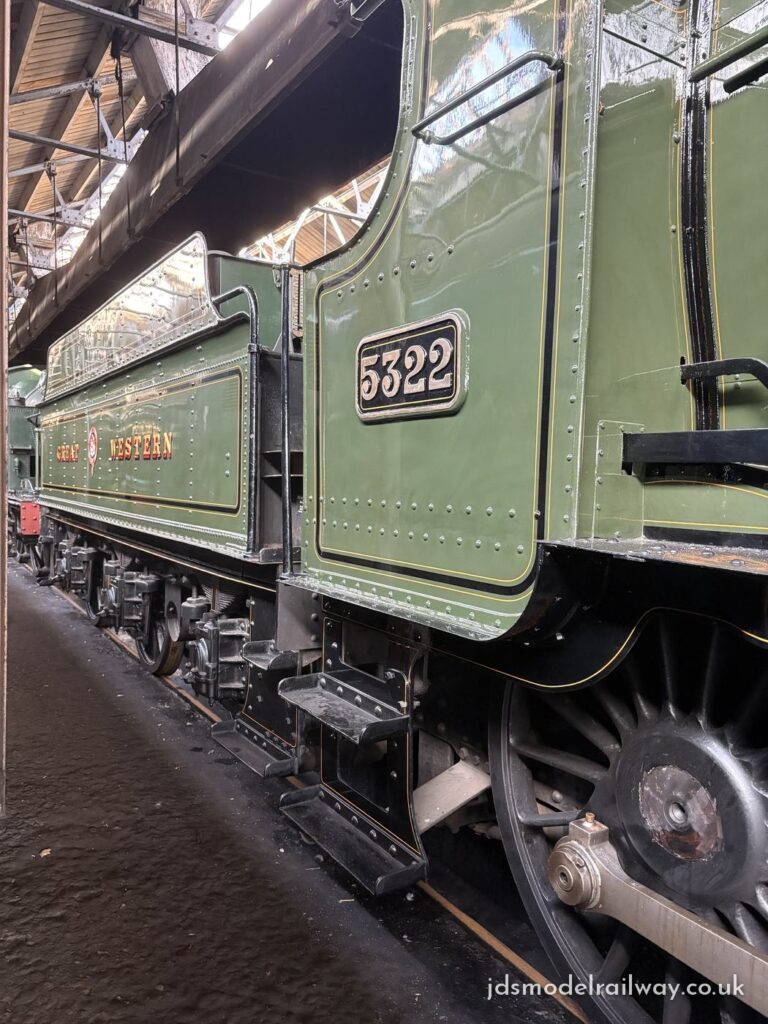
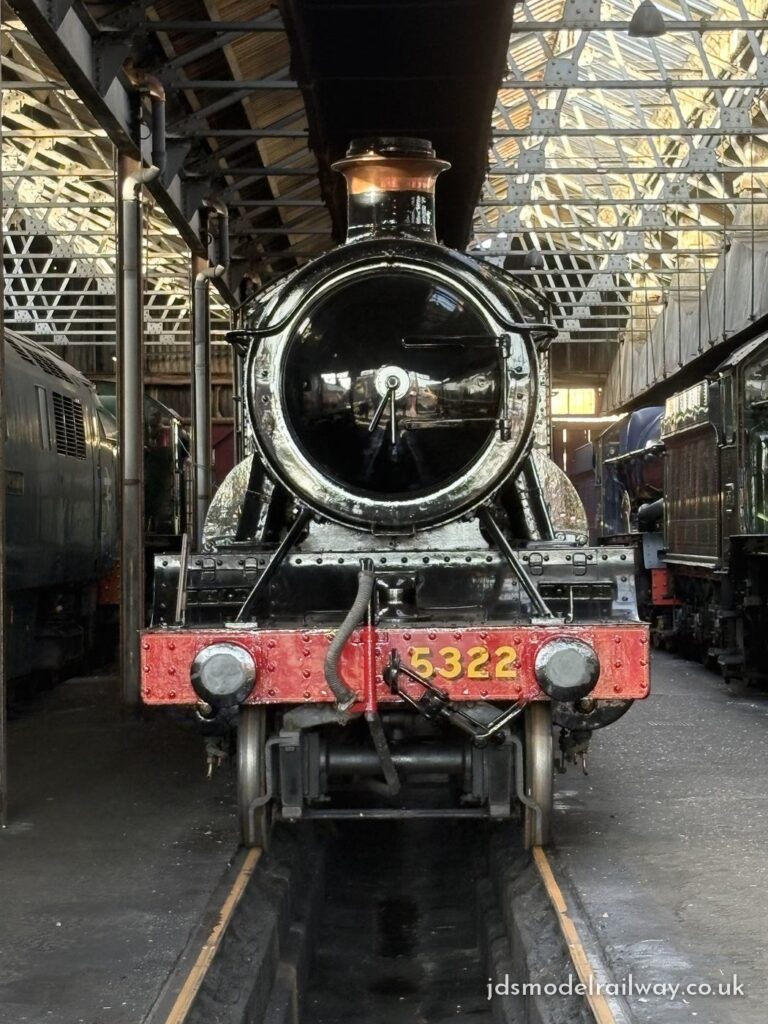
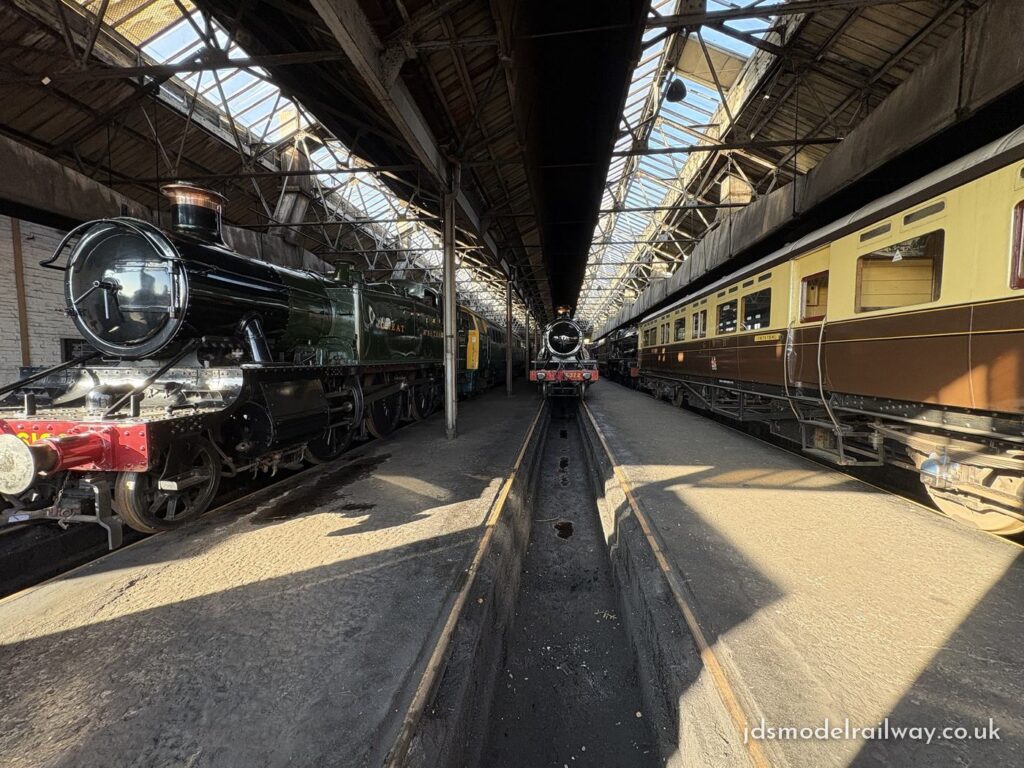
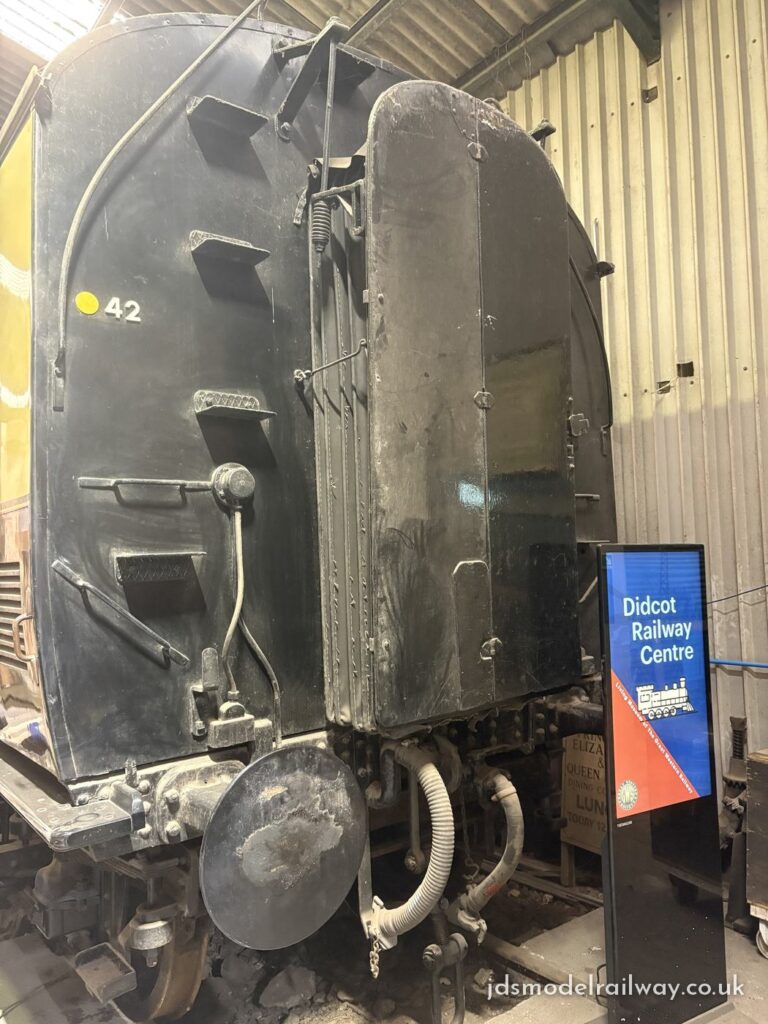
6998 Burton Agnes Hall, a Modified Hall built at Swindon in January 1949. In January 1966 it was picked to work the Western Region's last steam-hauled passenger train, and the Great Western Society bought it straight afterwards.Burton Agnes Hall's tender, in British Railways green with the lion emblem and a Swindon tender plate. D1023's yellow end is on the left.Burton Agnes Hall from the front, with the information board on the buffer beam and D1023 Western Fusilier alongside.Looking between the buffers to D1023 Western Fusilier, a Class 52 "Western" diesel-hydraulic built at Swindon in 1963. It belongs to the National Railway Museum and is at Didcot on a five-year loan.D1023 up close, in BR blue with a yellow end. The 84A shed plate stands for Laira, in Plymouth.The early British Railways emblem, the "cycling lion" on a wheel, used from 1949 to 1956.3822, a 28xx heavy freight engine built at Swindon in 1940 to a Churchward design. These big 2-8-0s hauled coal trains out of South Wales, and CDF on the buffer beam is the shed code for Cardiff Canton.3822 from the side, with all eight driving wheels and the valve gear.3822's cast number plate, with the blue E disc above it. That was the Great Western's code for the engine's power and route restrictions.3822's boiler, polished so much you can see the shed roof in it.Inside the cab of one of the big engines: the firehole, the regulator, the gauges and all that copper pipework. Then imagine it at speed with the fire roaring.The driver's side of a Great Western cab: the red reversing wheel, the sight-feed lubricator, and the brass bell of the ATC, the GWR's Automatic Train Control that rang a bell or sounded a horn as the engine passed a signal.Looking into an empty tender. That's where the coal goes, and the fireman shovelled it all by hand.4144, one of the Great Western's large Prairie tanks of the 5101 class, built at Swindon in 1946. Look at the rivets!Shannon, Wantage Tramway No. 5, dressed for Halloween. It was built by George England in 1857 for the Sandy & Potton Railway, then worked the little Wantage Tramway from 1878 to 1945. It's part of the National Collection.Shannon's backhead, all rivets and brass, and very simple compared with the later engines.A tender lettered GREAT WESTERN with the company's coat of arms in the middle. That style was used in the late 1920s and early 1930s.A look into another cab, through the safety railings.The boiler pressure gauge, water gauge glass and regulator handle.The other side of the same cab: the brake gauge marked "Train pipe" and "Reservoir" and the oil feeds for the cylinders.5572, a small Prairie tank built at Swindon in 1929, with a Great Western saddle tank beyond it.6697, one of the 56xx 0-6-2 tanks built for the South Wales valleys. This one was built by Armstrong Whitworth in 1928. Hinderton Hall is on the right.Hinderton Hall's nameplate. 5900 was built at Swindon in 1931 and rescued from Barry scrapyard, the yard in South Wales where hundreds of steam engines waited to be cut up.5900's cab side, with the red D disc. Red D meant it was heavy and strong enough to be kept off the lighter routes.Hinderton Hall from the front, with 6697 alongside.5322, a Churchward Mogul (2-6-0) built in 1917. It went straight to France in the First World War with the Railway Operating Division, hauling supplies for the army, before it ever worked for the Great Western.5322's cab and tender, with GREAT WESTERN and the company crest.5322 head-on over the pit. My favourite photo of the day, I think.The whole shed in one go: 6106 on the left, 5322 down the middle, and a chocolate and cream coach on the right.
A visitor from the Great Eastern
The surprise of the day for me was a tiny blue engine at the other end of the site, running up and down the branch line.
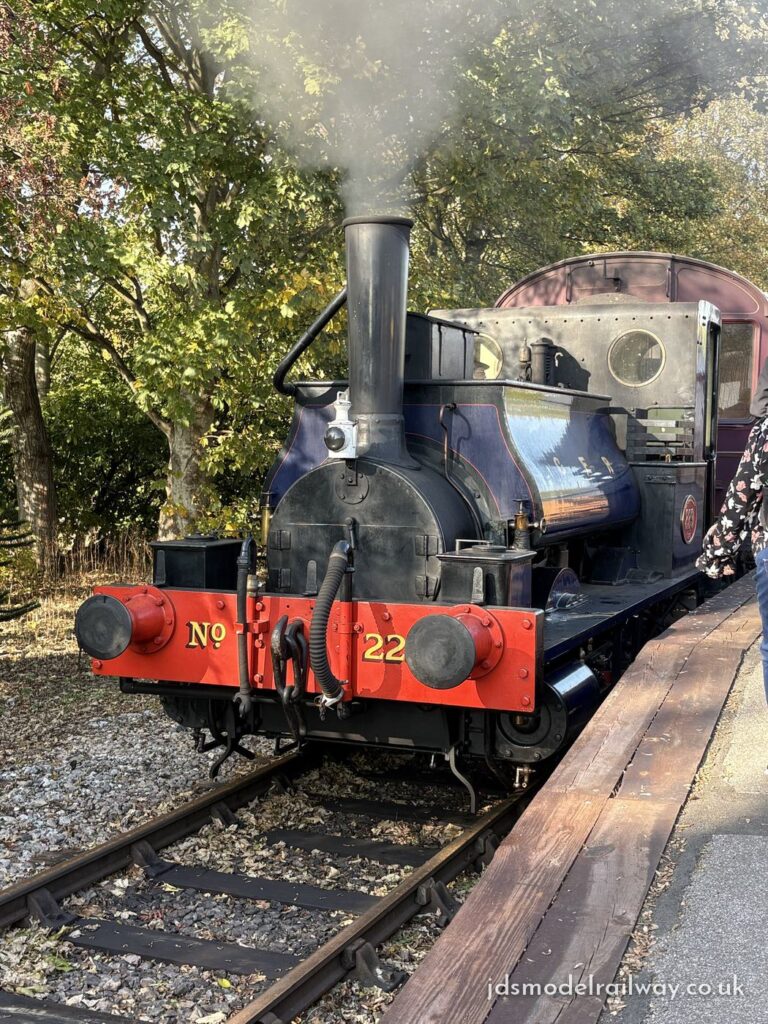
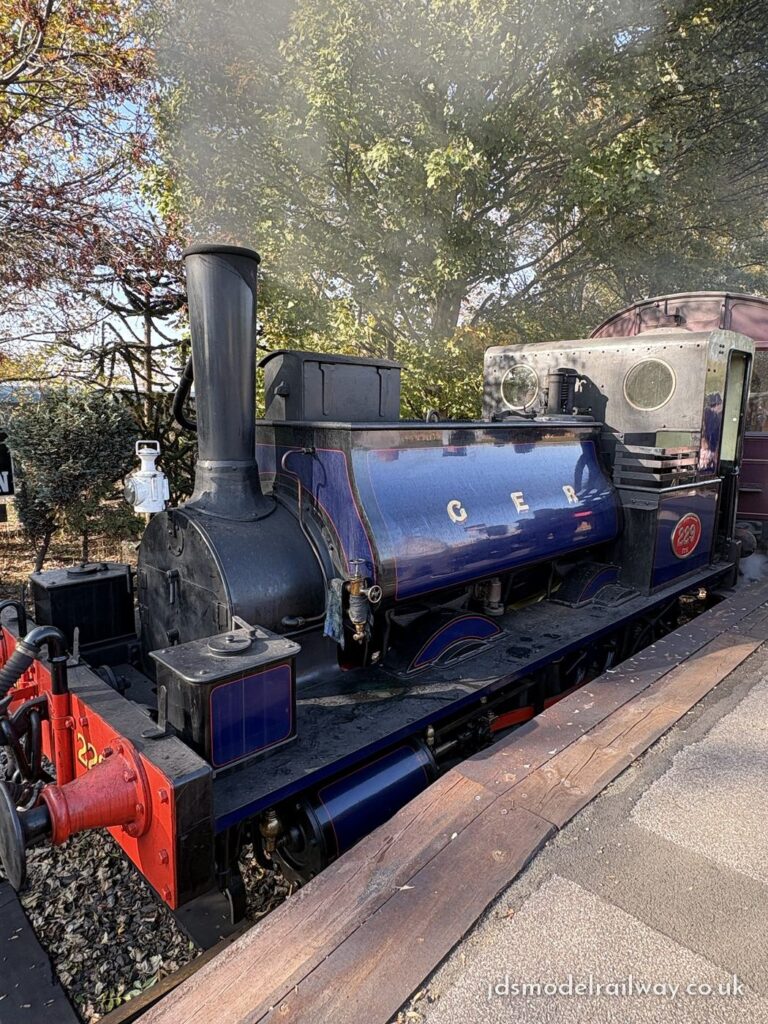
Great Eastern Railway No. 229, built by Neilson in 1876. It's one of a little class of dock tanks nicknamed "Coffee Pots". It spent years in a museum in East London and only came back to steam in 2025.229 from the side, in Great Eastern blue with G E R on the tank, simmering away with its carriage behind.
229 coming past on the branch line with auto coach No. 92.
Diesels
It's not all steam at Didcot.
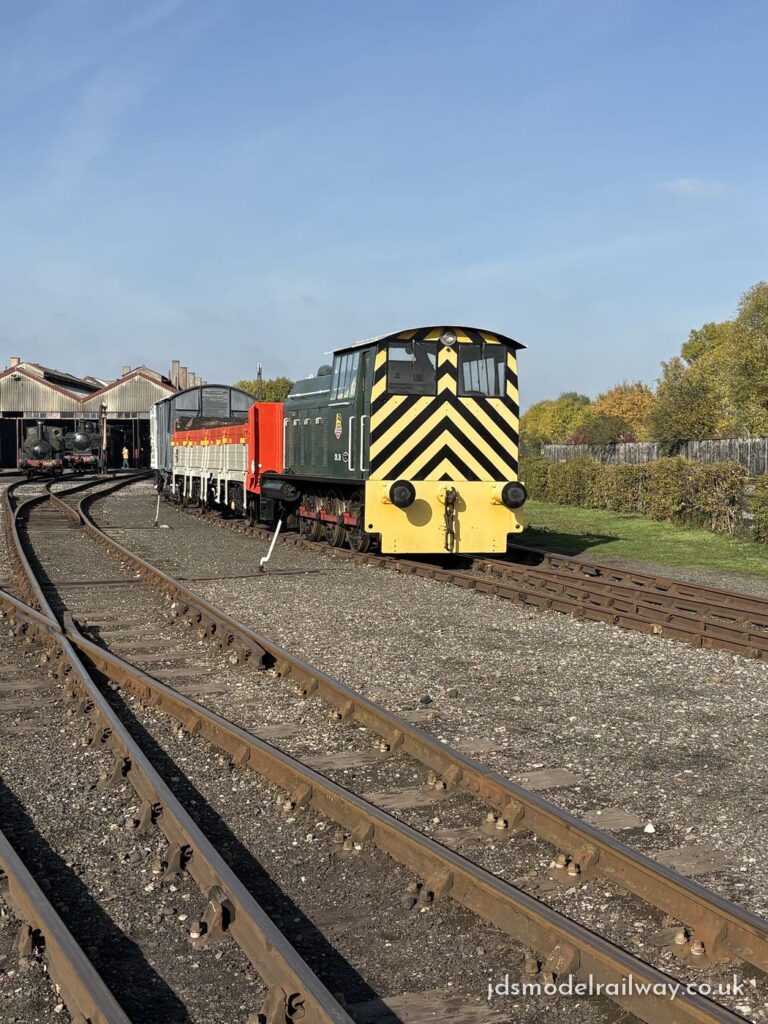
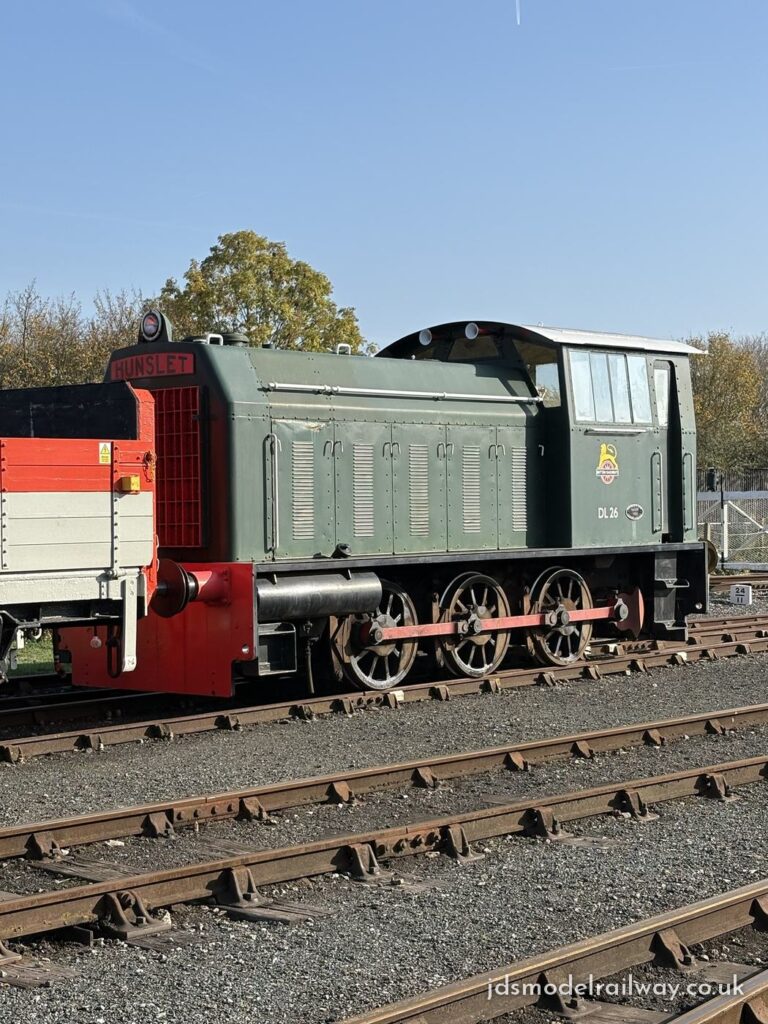
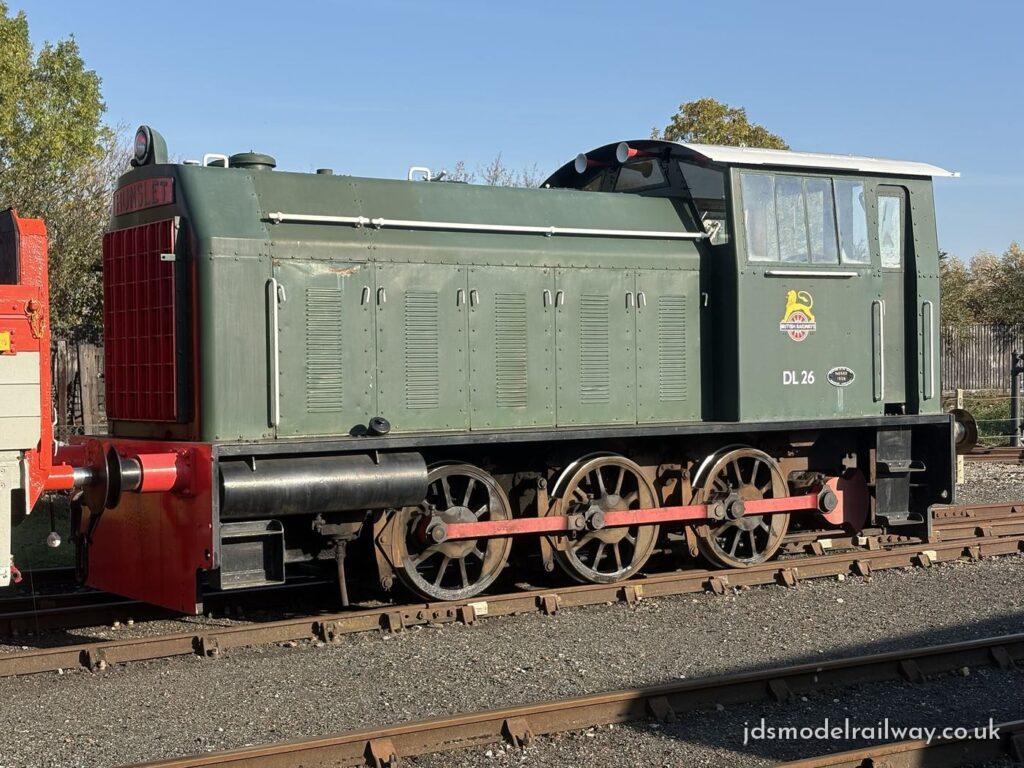
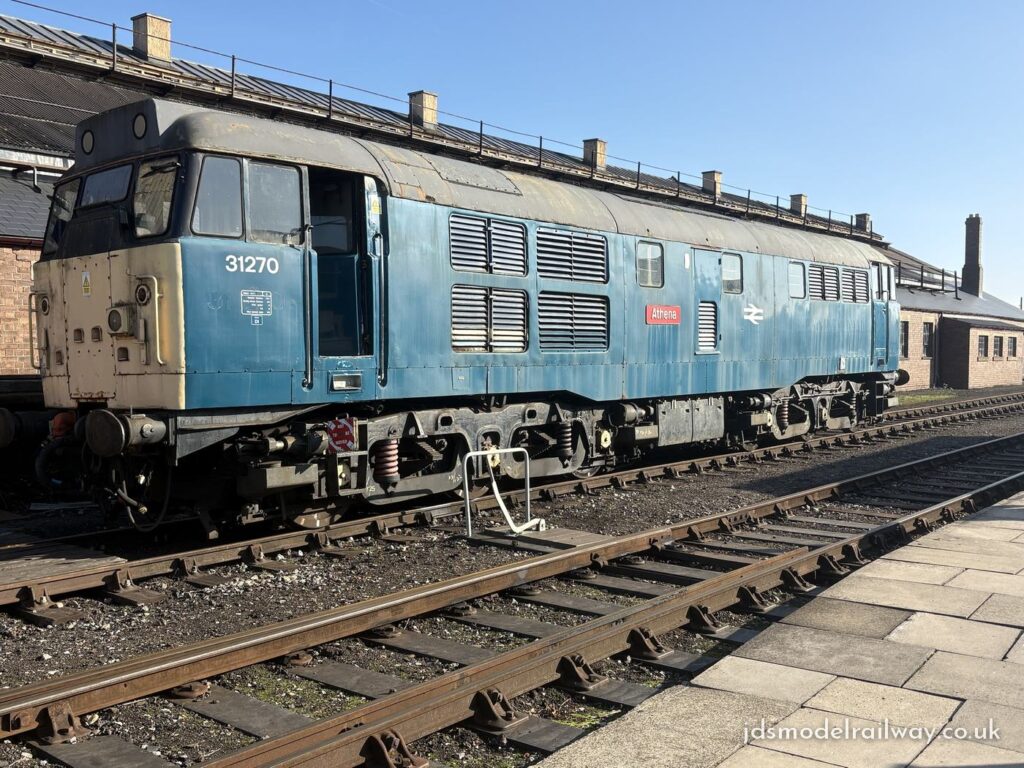
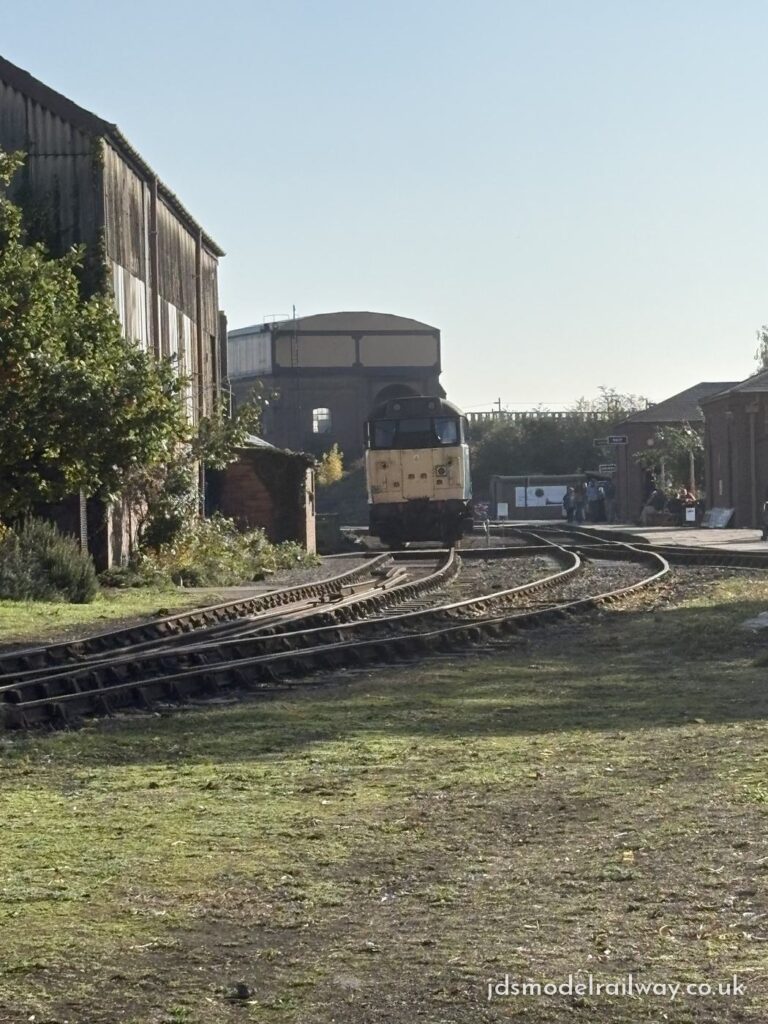
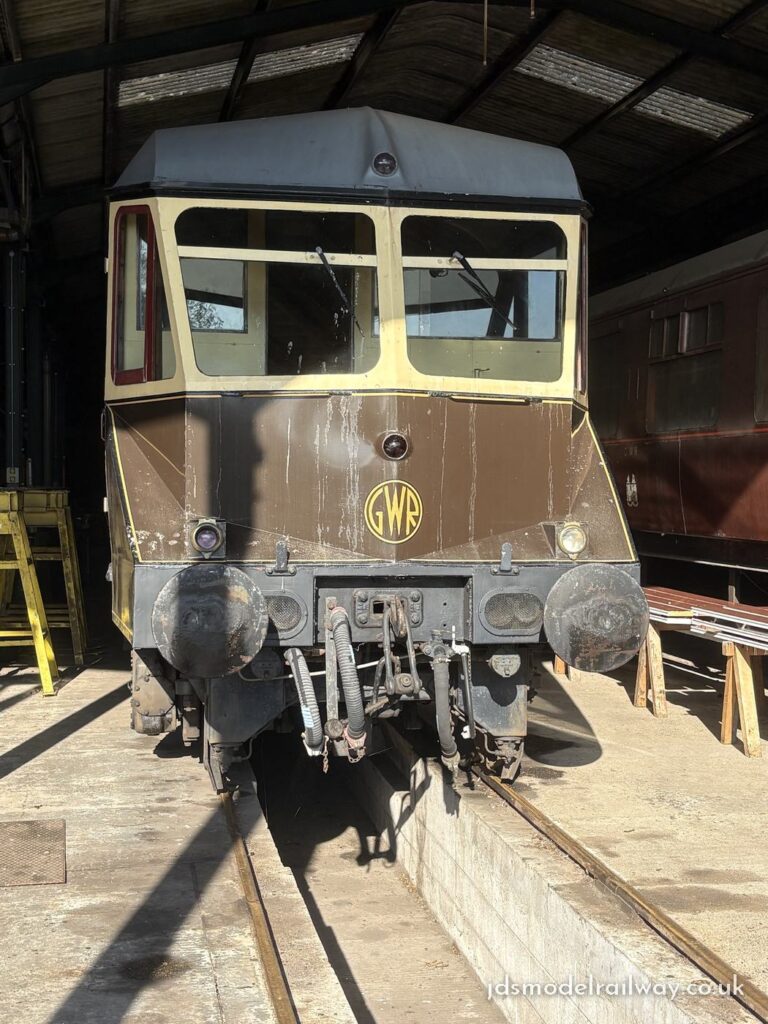
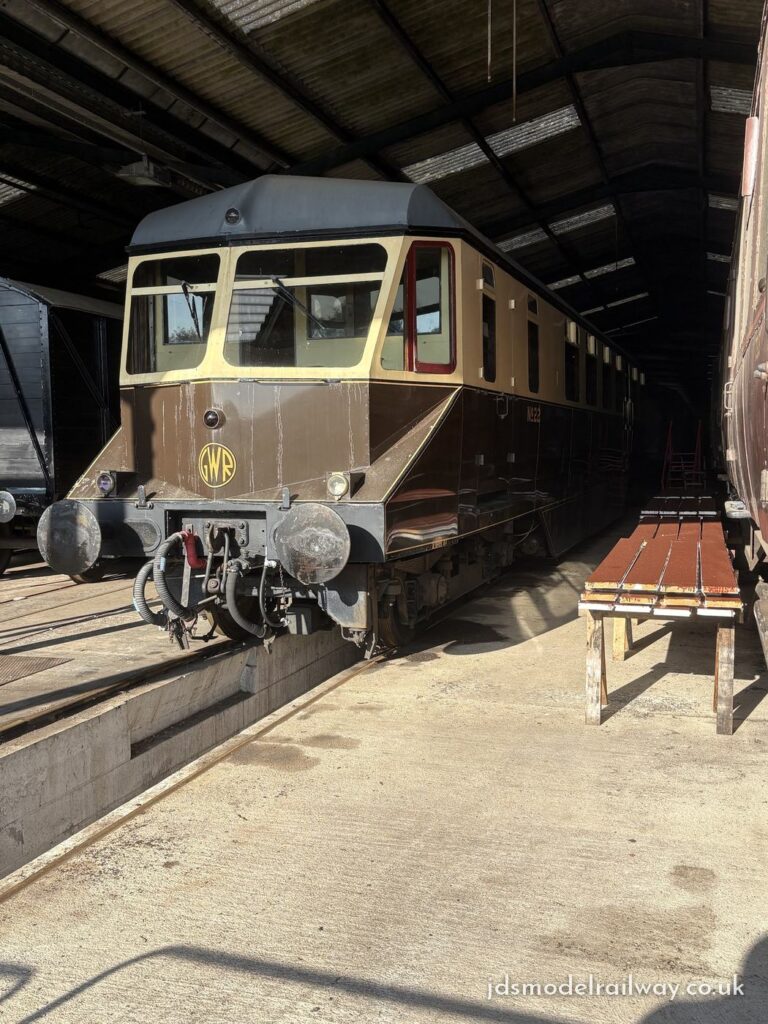
DL26, the yard shunter, in green with black and yellow wasp stripes. It was built by Hunslet in 1957, the same Leeds works as King George, and it's light enough to go over the carriage shed traverser, which is why it's so useful.DL26 from the side, with the Hunslet name above the radiator and the British Railways lion on the cab.DL26 in the sunshine, with its red coupling rods and works plate.31270 "Athena", a Brush Type 2 in BR blue. It was built in 1961 as D5800, started work at March depot, was withdrawn from the main line in 2000 and arrived at Didcot in 2023.The Class 31 again, nose-on, framed by the coal stage.Diesel railcar No. 22, built at Swindon in 1940. The Great Western's early railcars were so rounded they got the nickname "Flying Bananas". No. 22 is one of the later, more angular ones.No. 22 from the side, with the sun coming into the shed.
Wagons
There are wagons everywhere at Didcot, and a lot of them are perfect for anyone modelling the Great Western.
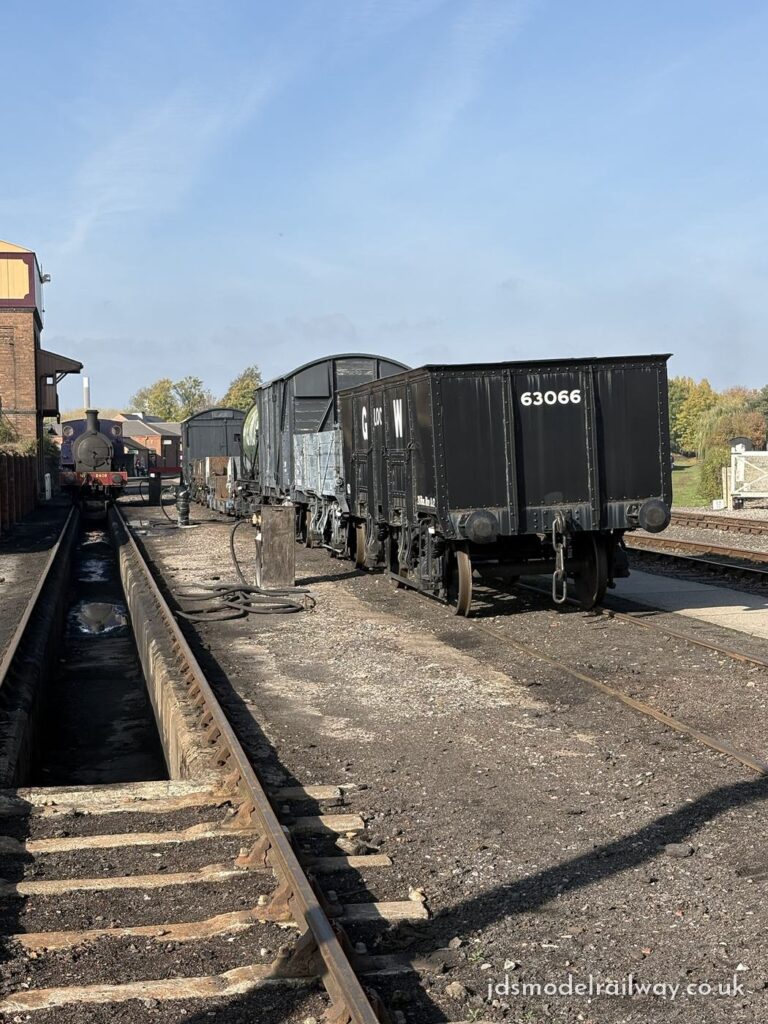
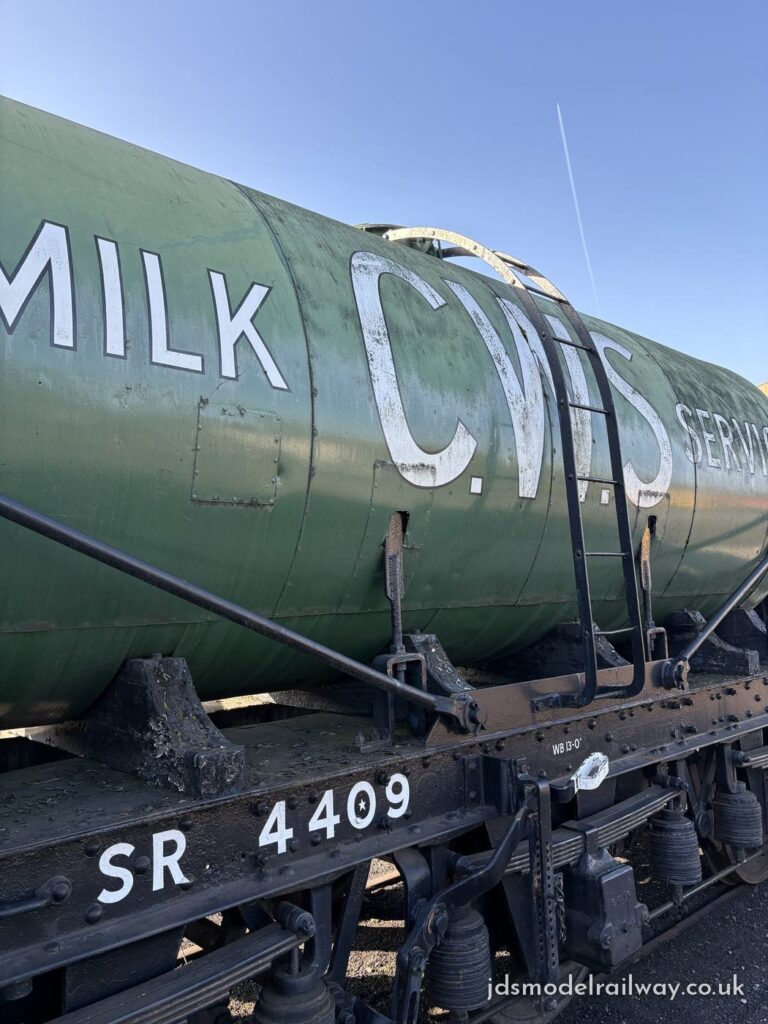
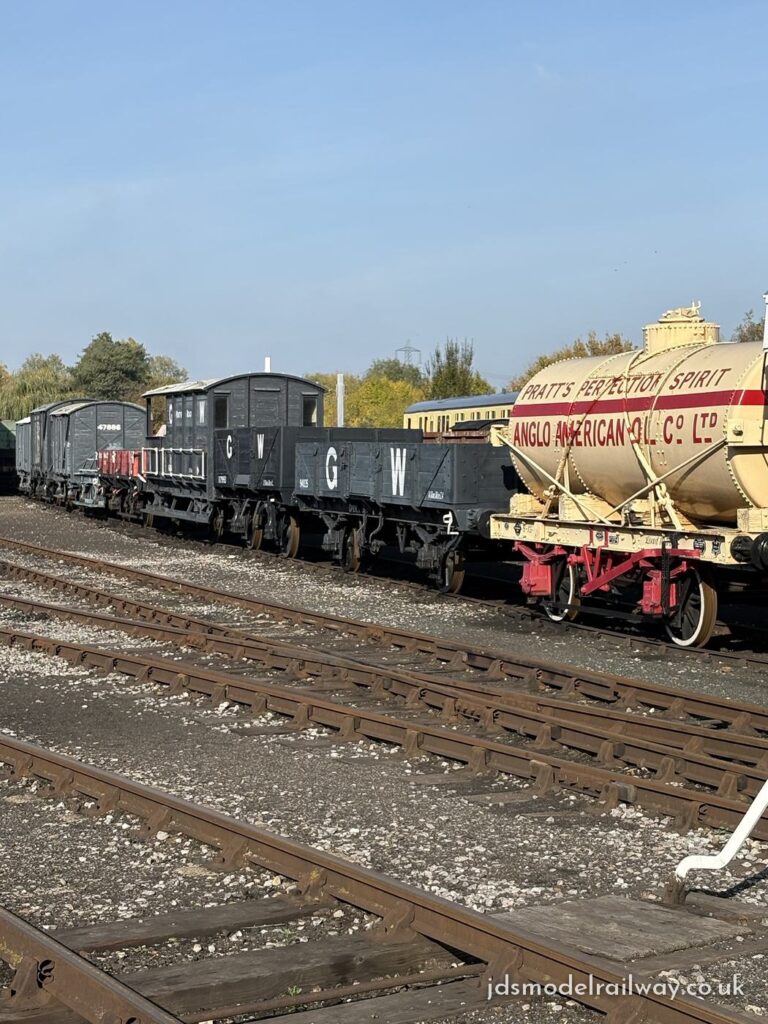
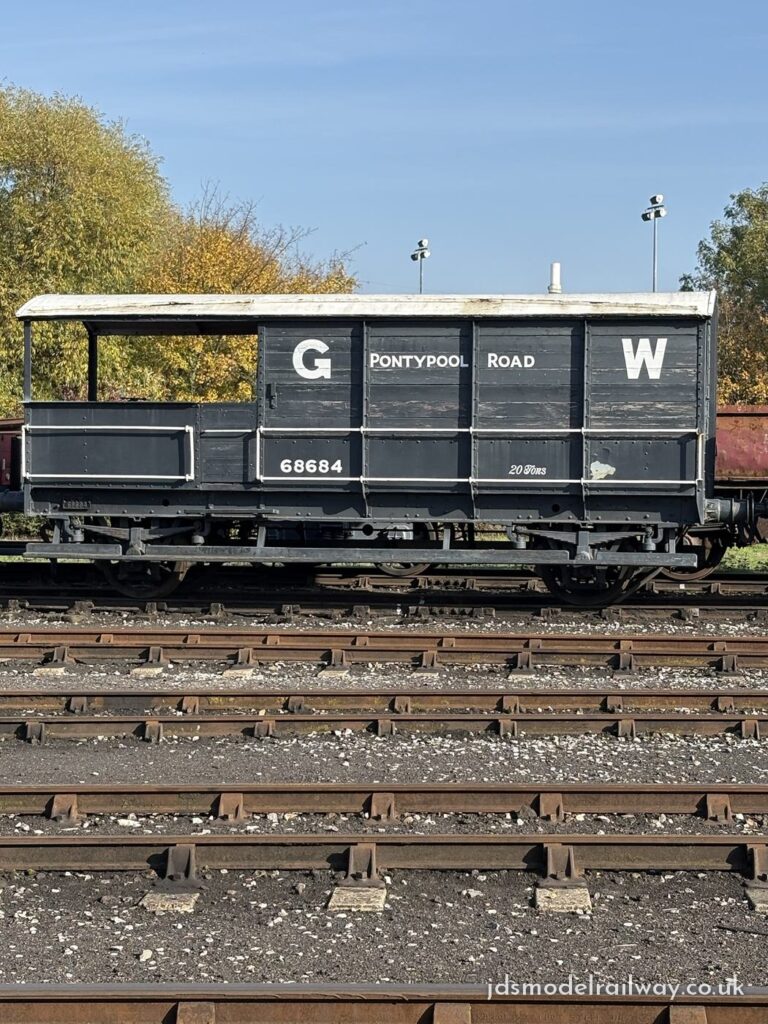
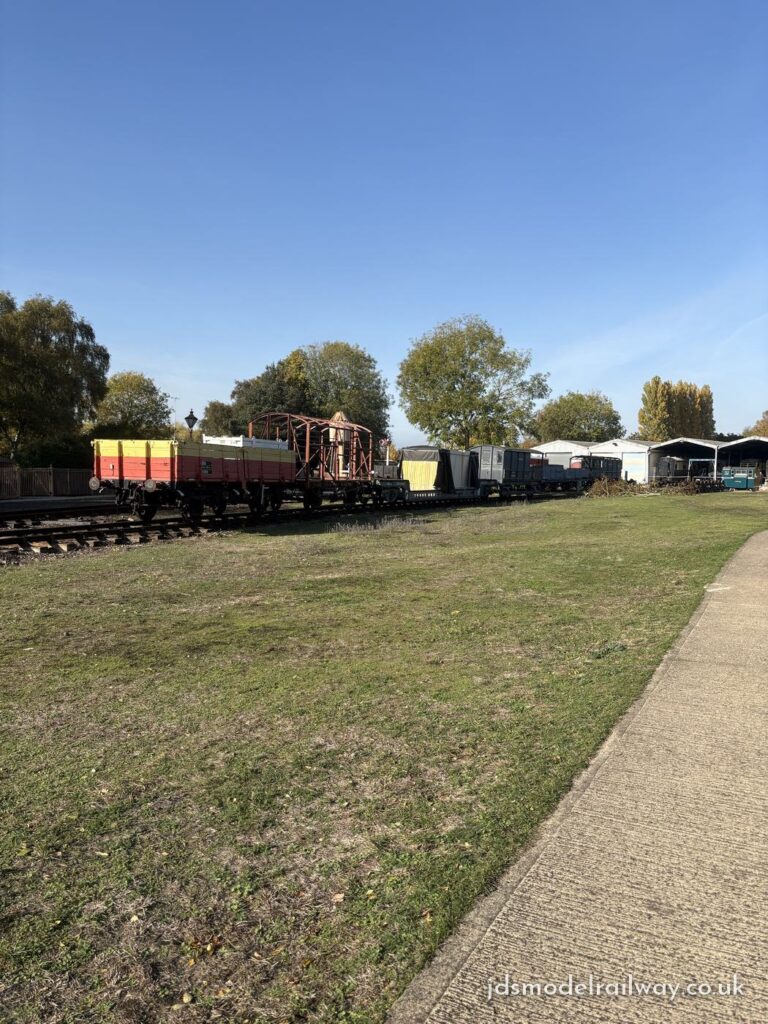
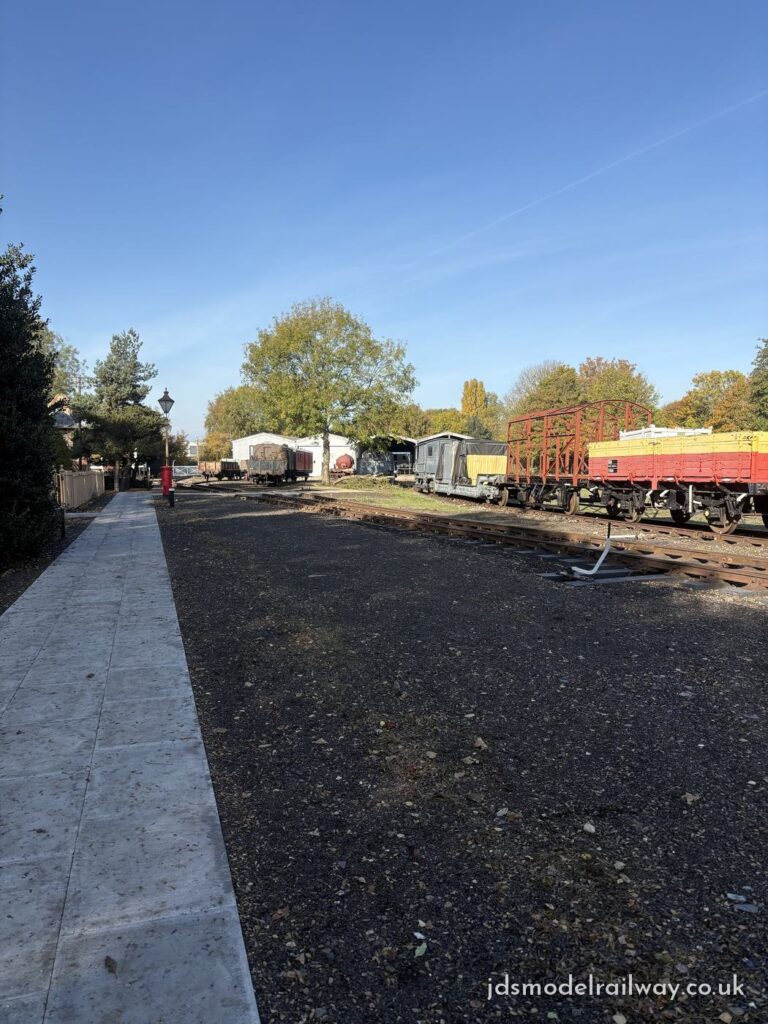
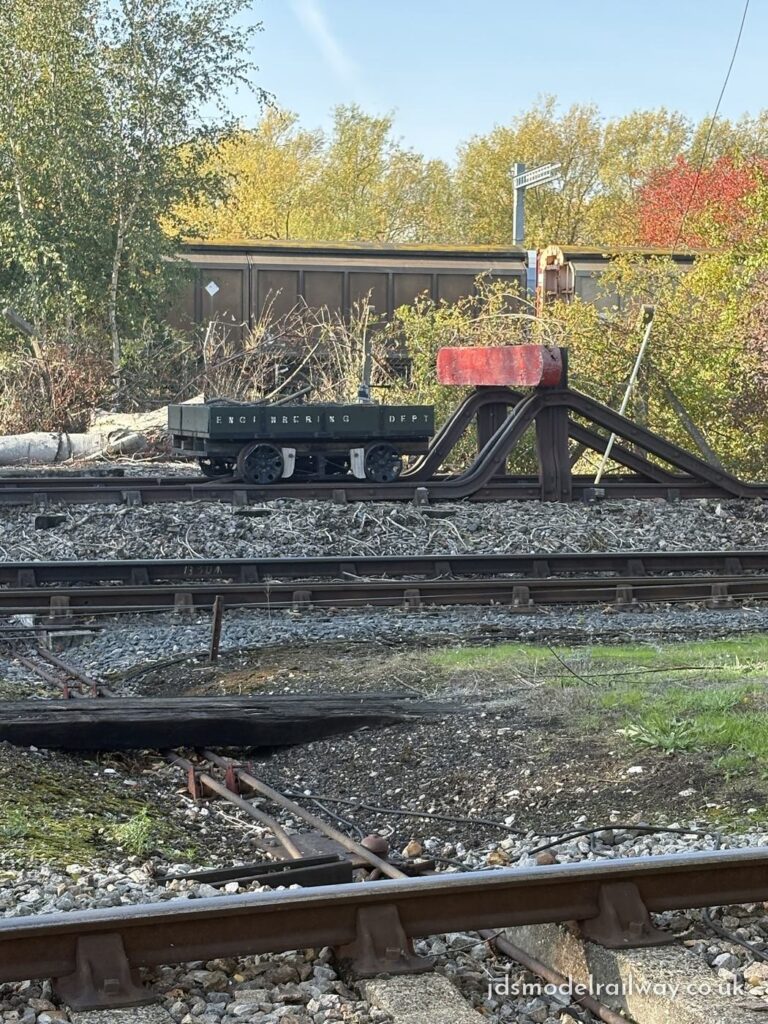
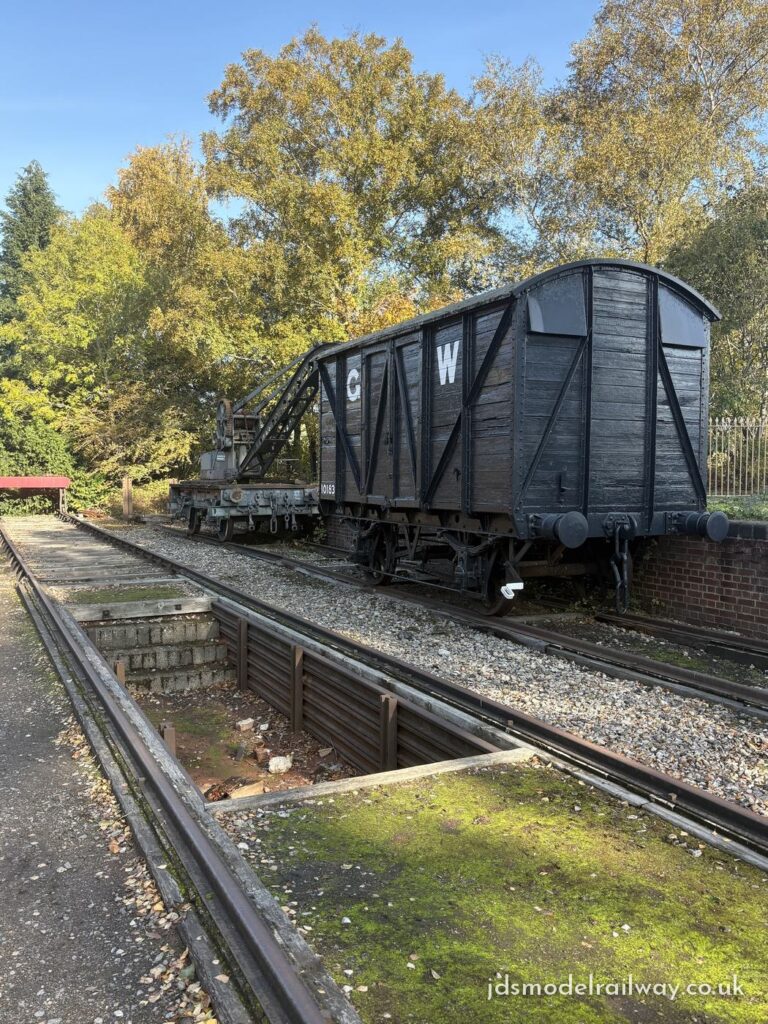
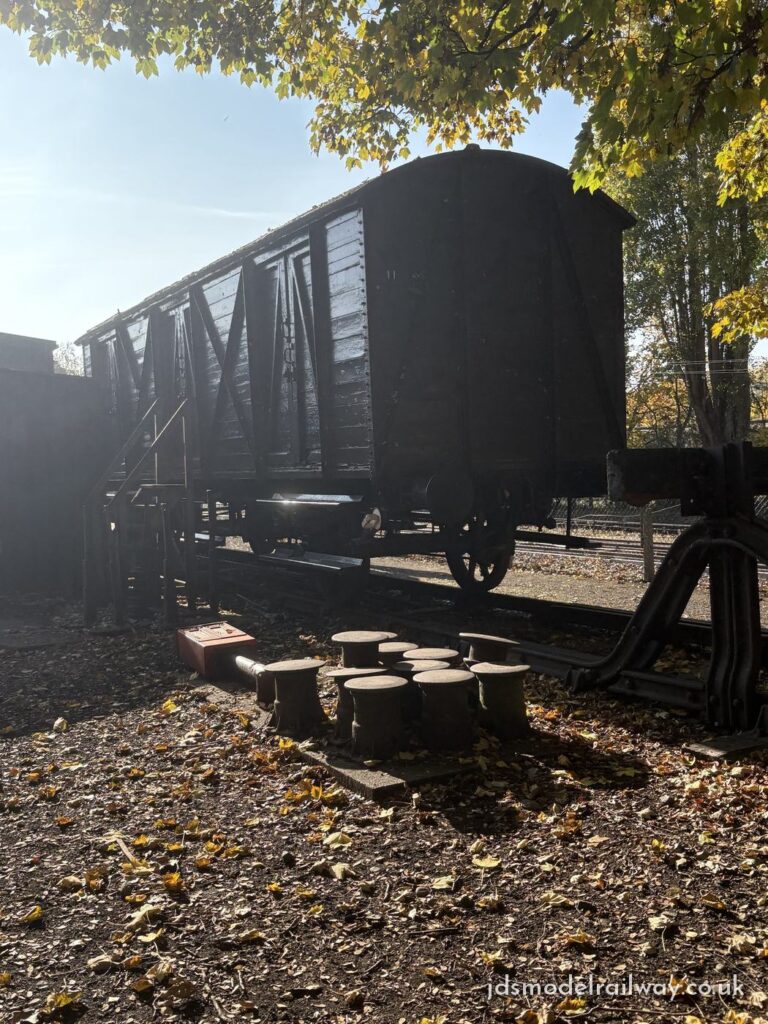
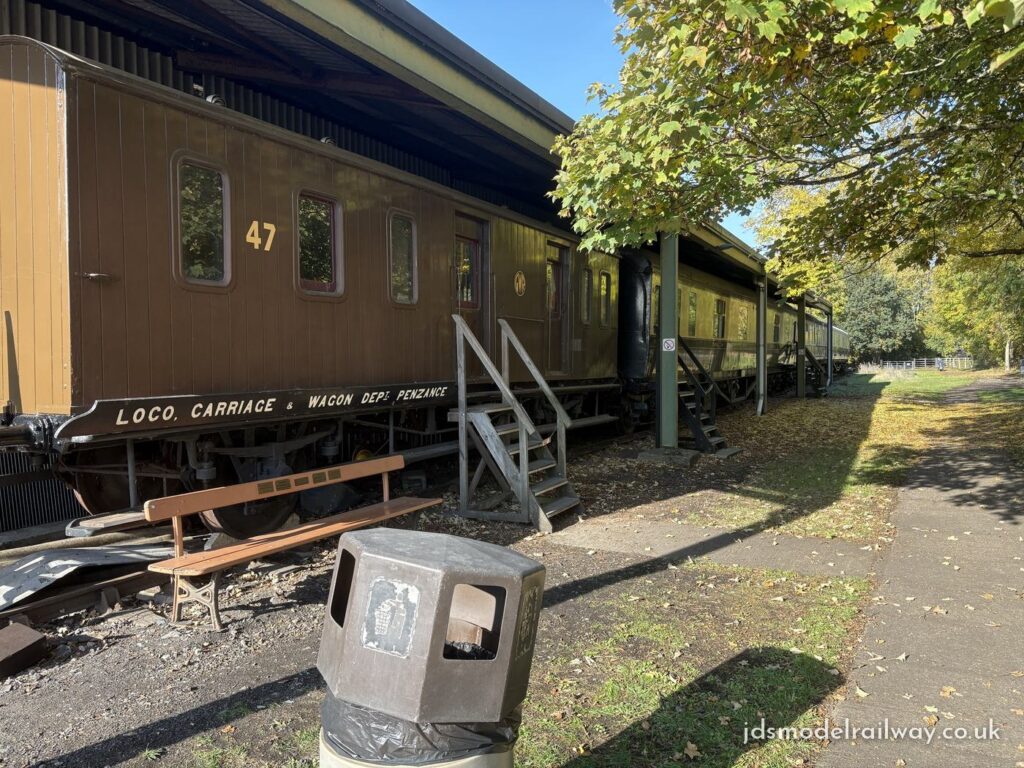
The wagons by the coal stage. The black one, 63066, is lettered G LOCO W. That marked a wagon the Great Western kept for carrying coal for its own engines.Milk tank S 4409. It was built by the Southern Railway in 1931 as a four-wheeler and rebuilt with six wheels in 1937. It now wears the green of the Co-op's milk service.A couple of engineers' wagons on the siding, with the coal stage and King George beyond.More Great Western wagons, and on the right a tank wagon in Pratt's Perfection Spirit colours. It was built by Hurst Nelson in 1912. Pratt's was the Anglo-American Oil Company's petrol brand, and the company later became Esso.A Great Western "Toad" brake van, No. 68684, built at Swindon in 1924. "Toad" was the GWR's telegraph code for a goods brake van. Each one was painted with its home depot, here Pontypool Road. Most goods trains had no continuous brakes, so the guard rode in here and used the handbrake.The sidings across the field, with a bright red and yellow wagon at the front.Another angle on the same wagons. The red frame is a wagon stripped back for restoration.Buffer stops at the end of a siding, with a Great Western wagon behind.An old wooden goods van in the sidings near the transfer shed.The same van up close, with its outside bracing.Coach No. 47, lettered for the "Loco, Carriage & Wagon Dept, Penzance". When old carriages were retired, plenty carried on as departmental vehicles like this.
Brunel's broad gauge
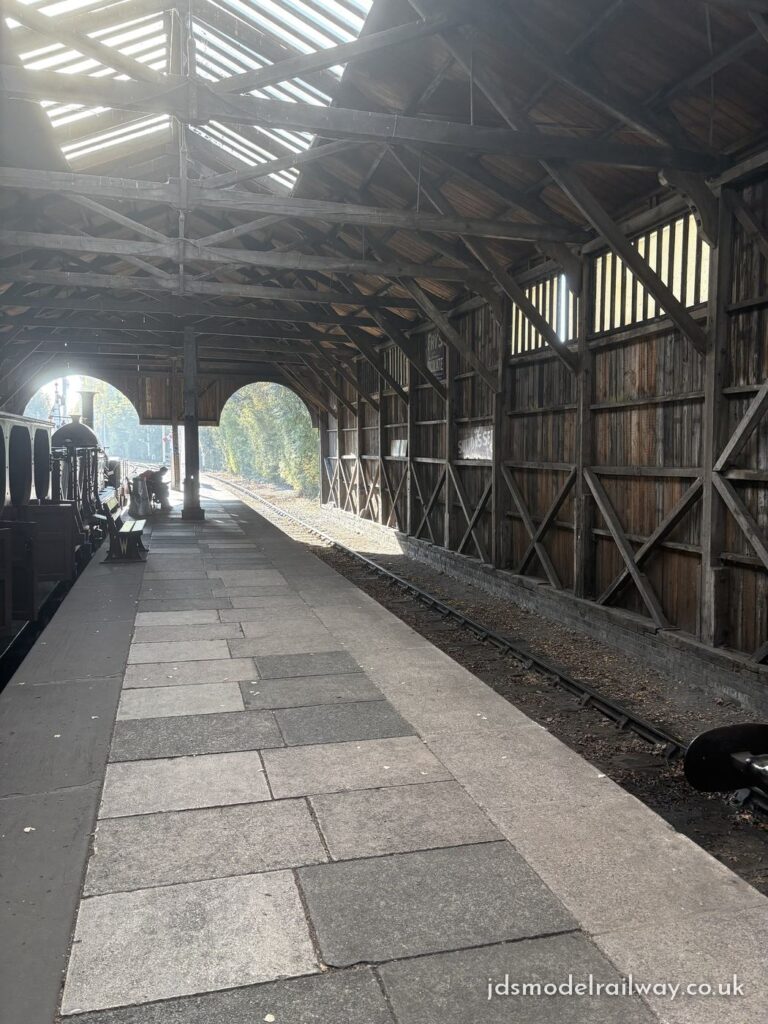
The branch line takes you down to the old transfer shed, where the broad gauge lives. The rails are 7 feet apart, compared with the 4 ft 8½ in that everyone else used, and the Great Western ran on it until 1892. The shed dates from the 1850s, when goods had to be swapped between broad and standard gauge trains. It had been decorated for Halloween, which made for some different photos.
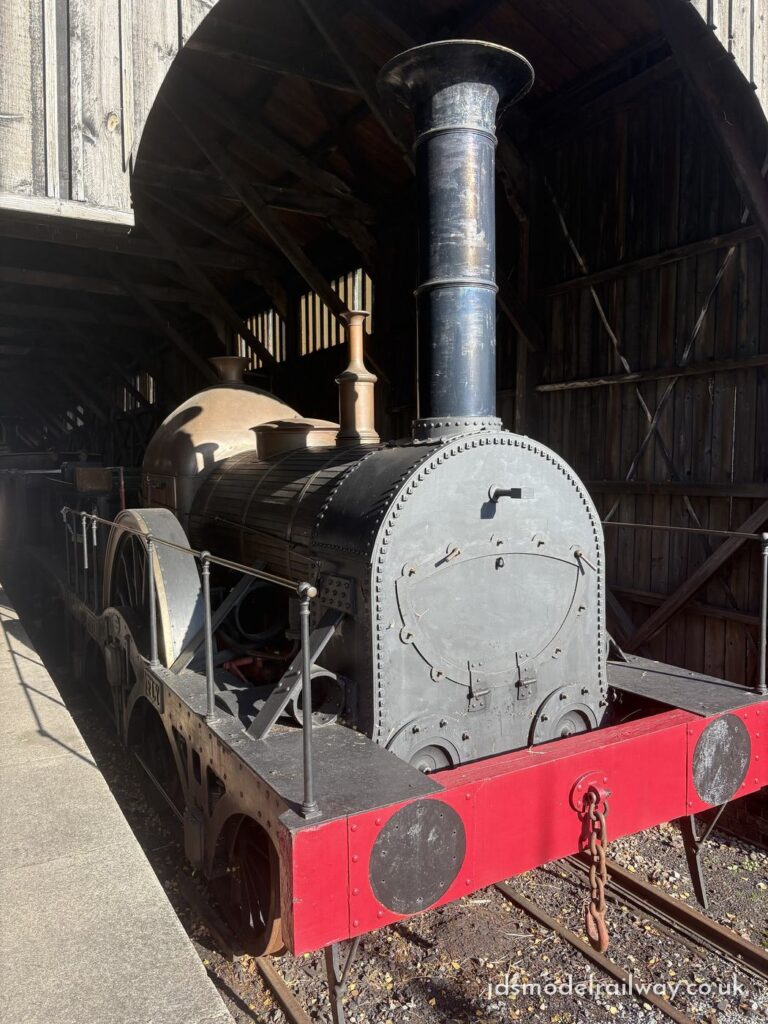
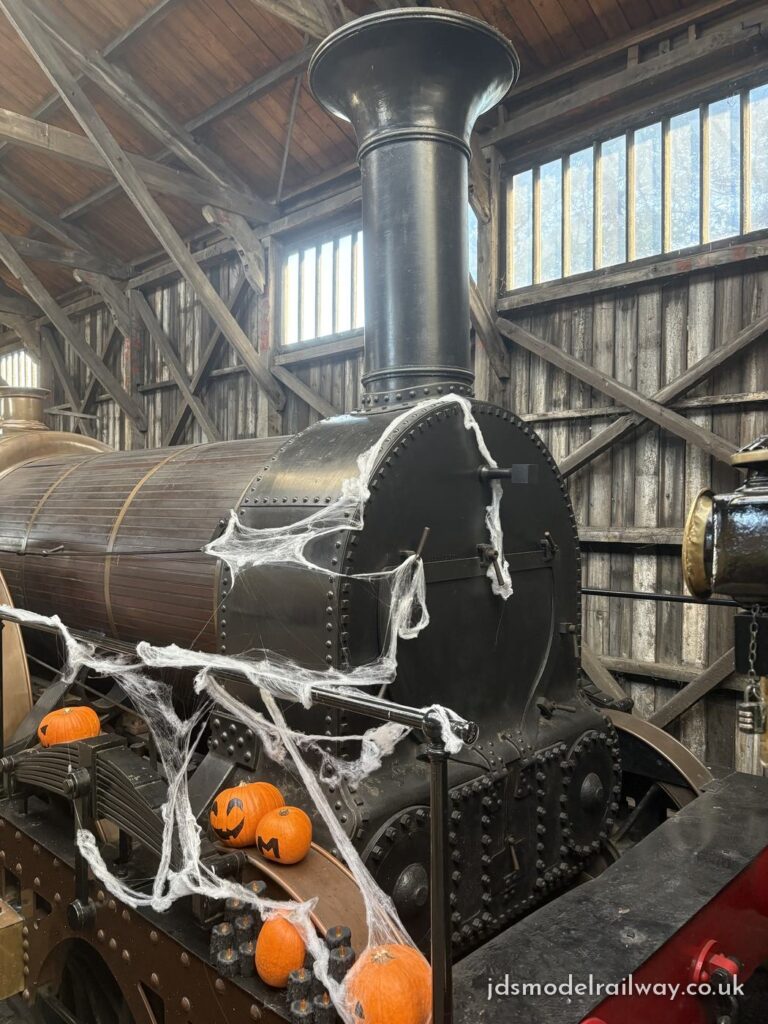
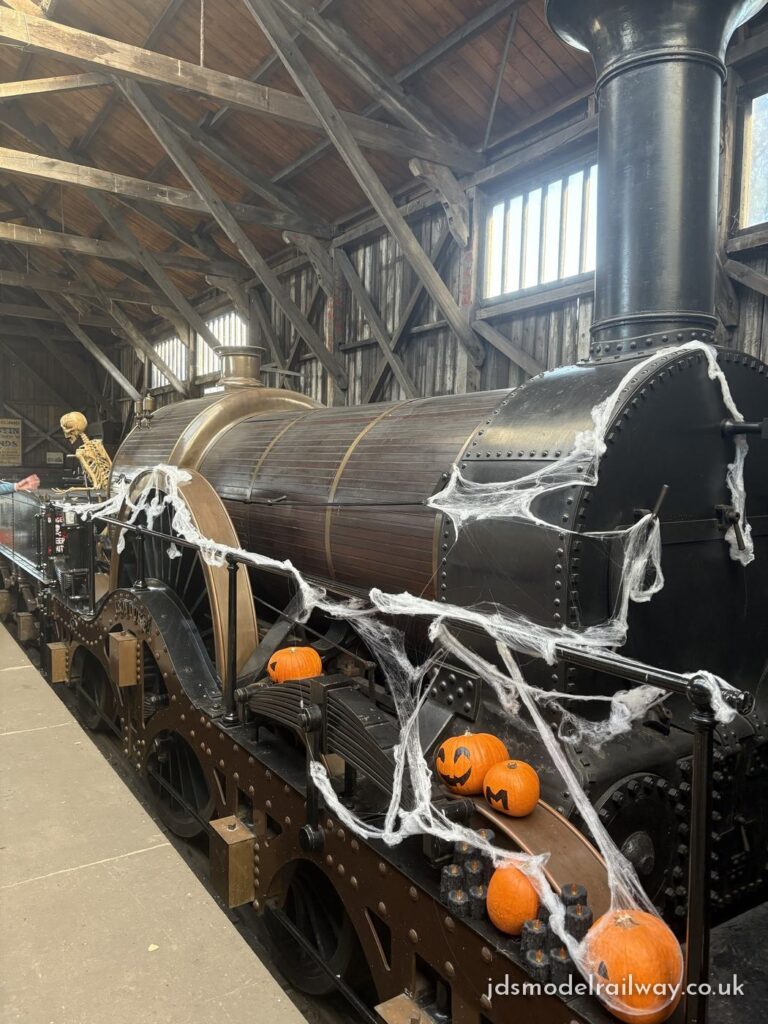
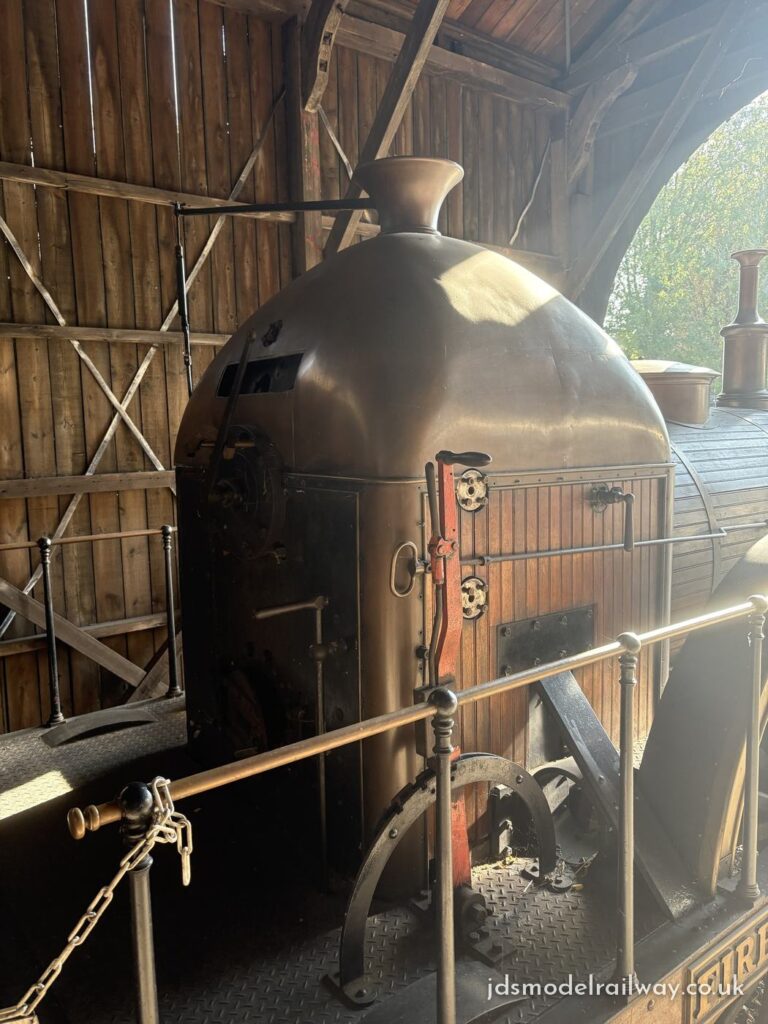
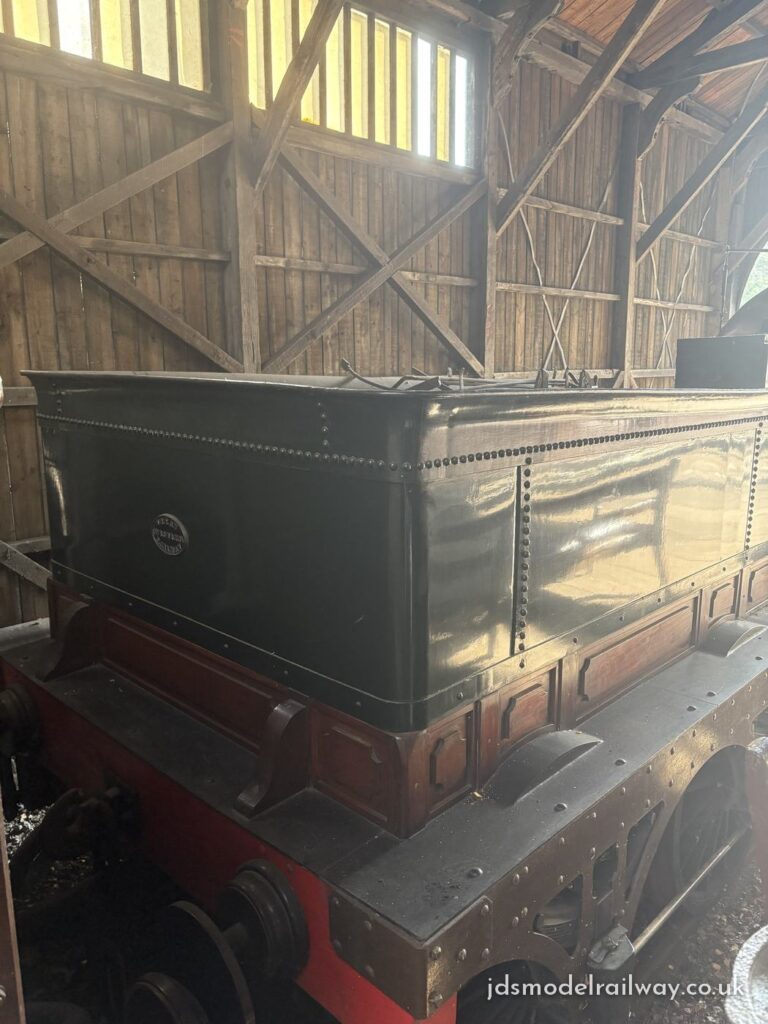
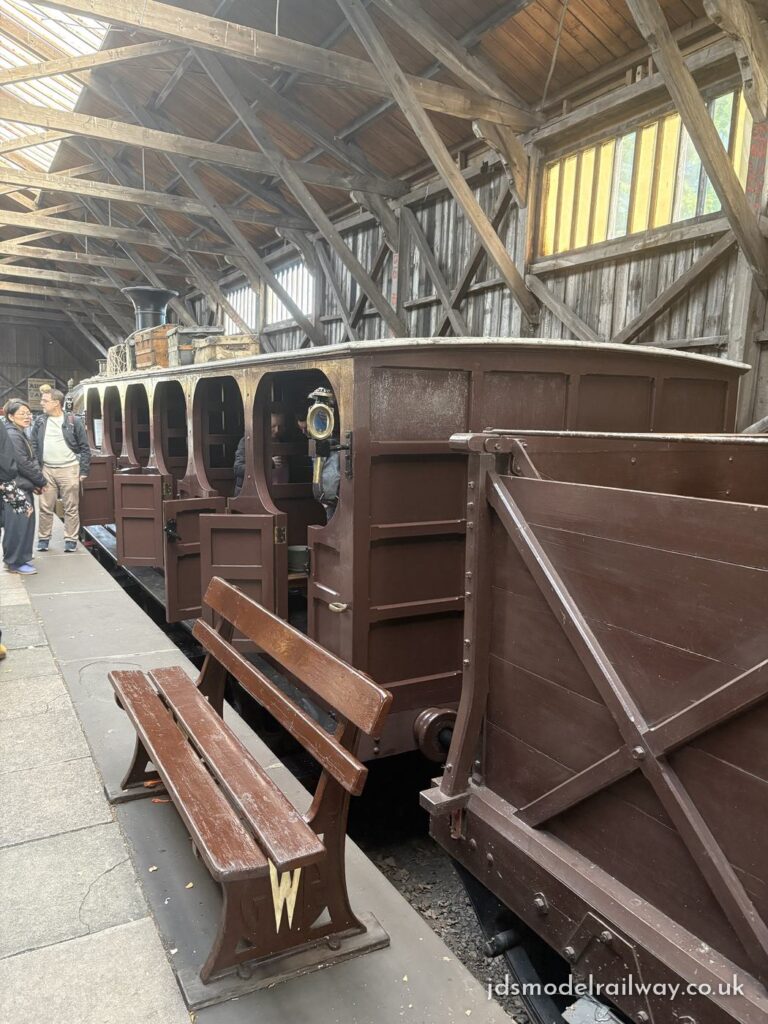
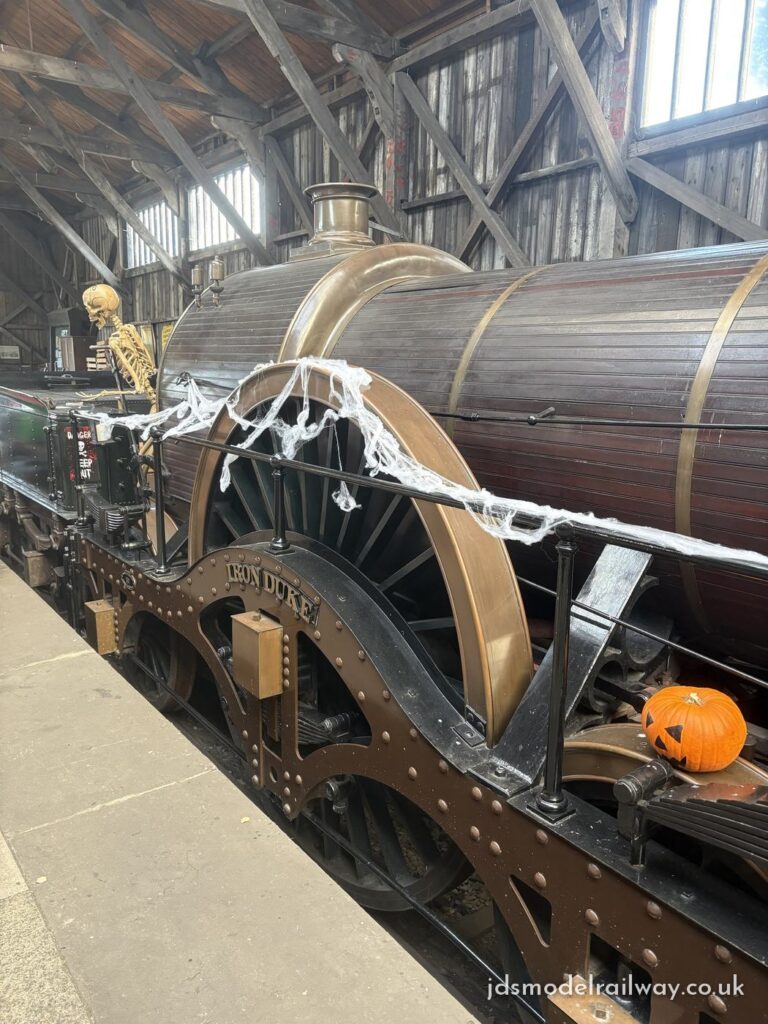
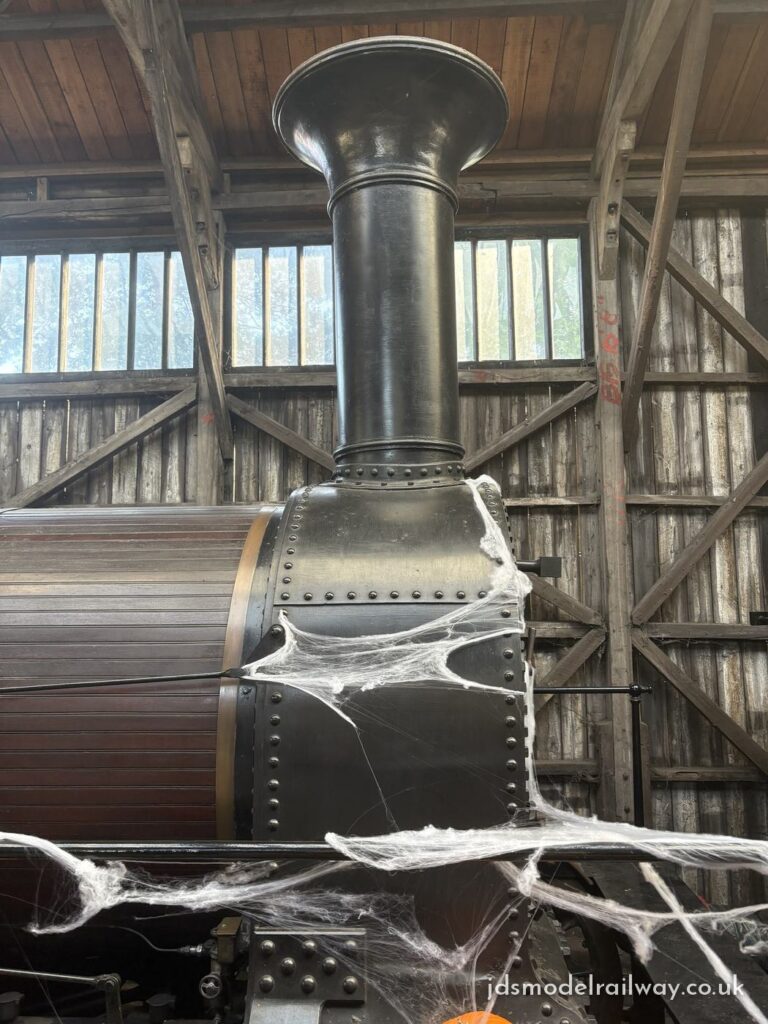
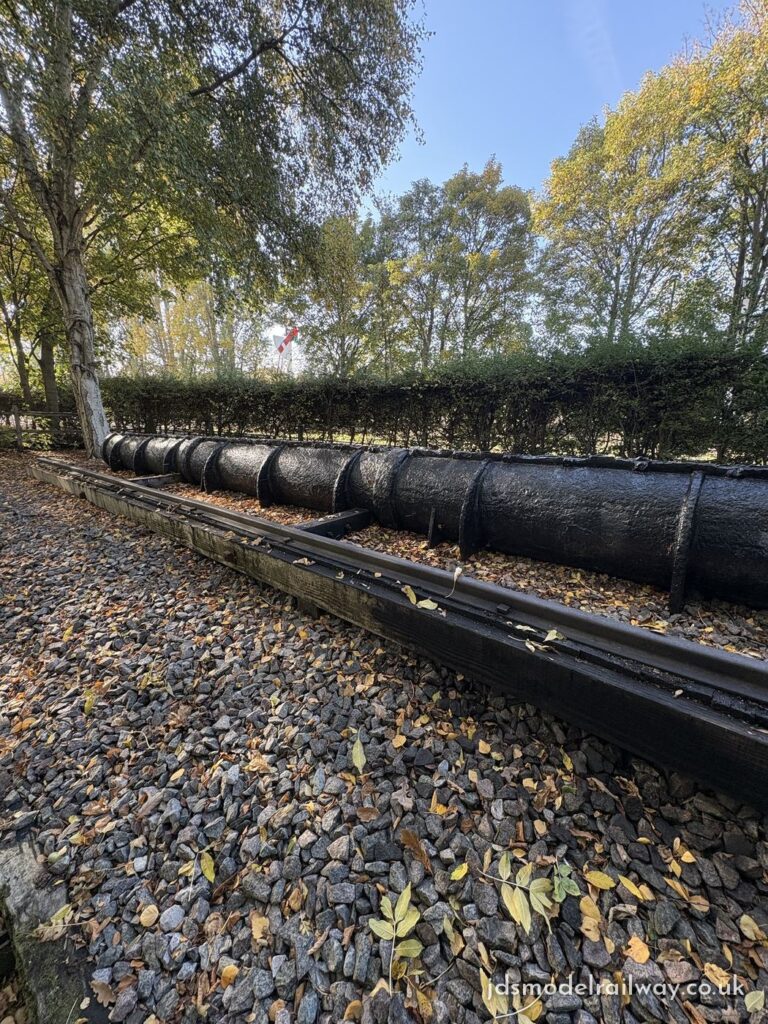
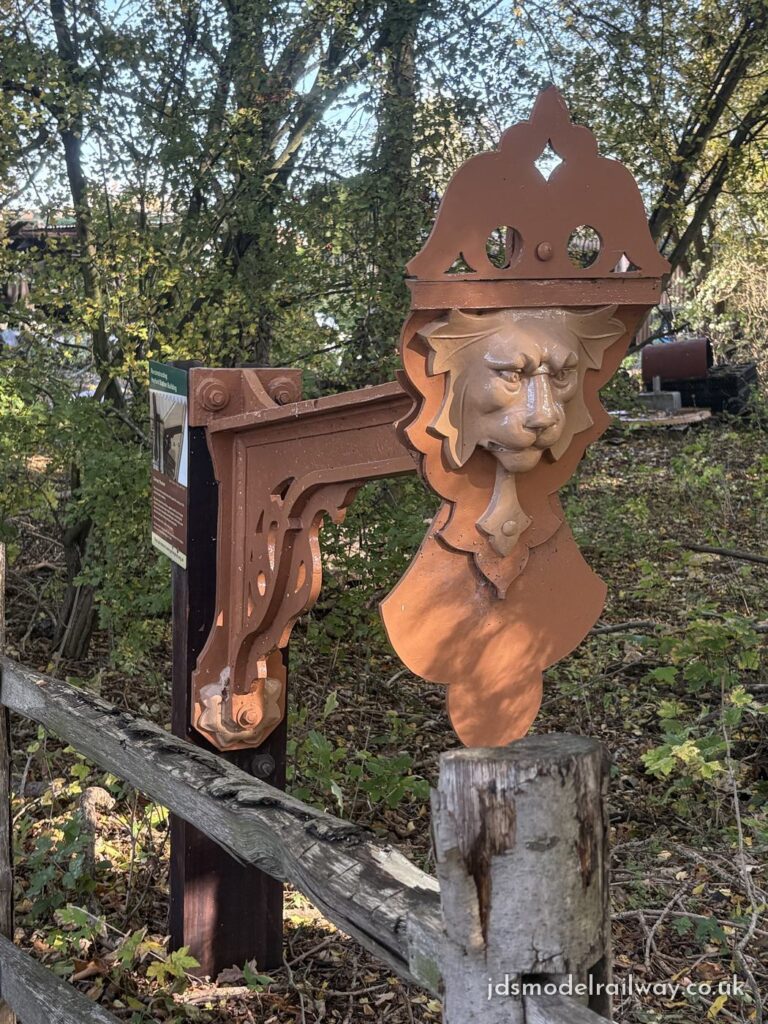
Inside the transfer shed, which doubles as Burlescombe station at the end of the branch line.Fire Fly, a working replica of one of Daniel Gooch's express engines of 1840. It was finished here at Didcot in 2005.Fire Fly dressed for Halloween, with cobwebs on the chimney and pumpkins on the footplate.The cobwebs went all the way along the boiler.Fire Fly's tall domed firebox, often called a "haycock" because of its shape, with the polished wooden lagging and the controls on the footplate.One of the broad gauge tenders, with its Great Western Railway plate and rows of rivets.A broad gauge third class carriage, with open sides and wooden seats. It's a reproduction, first built in 1985 for the GWR's 150th birthday. In the early 1840s, third class passengers really did travel like this.Iron Duke, dressed up for Halloween with a skeleton on the footplate and a pumpkin on the frames. It's a replica of an 1847 express engine, built in 1985 using parts from two Hunslet Austerity tanks. The single driving wheel is 8 feet across.Iron Duke's chimney, covered in fake cobwebs, with the wooden boiler lagging held on by brass bands.This is a bit of Brunel's atmospheric railway. In the 1840s, on the South Devon line, trains were pulled along by a piston in this pipe, with pumping houses sucking the air out ahead of it. The leather flap that sealed the slot didn't last, and the system was dropped within a year.A cast iron lion's head on a post near the broad gauge area. I loved the detail on it.
The carriage shed
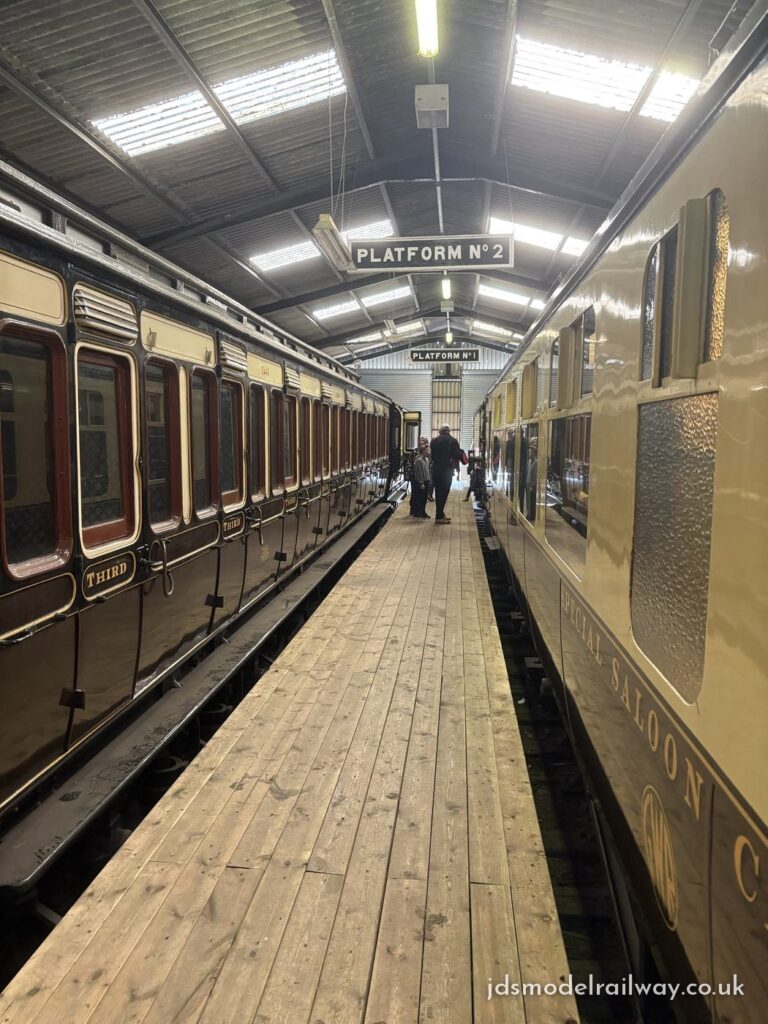
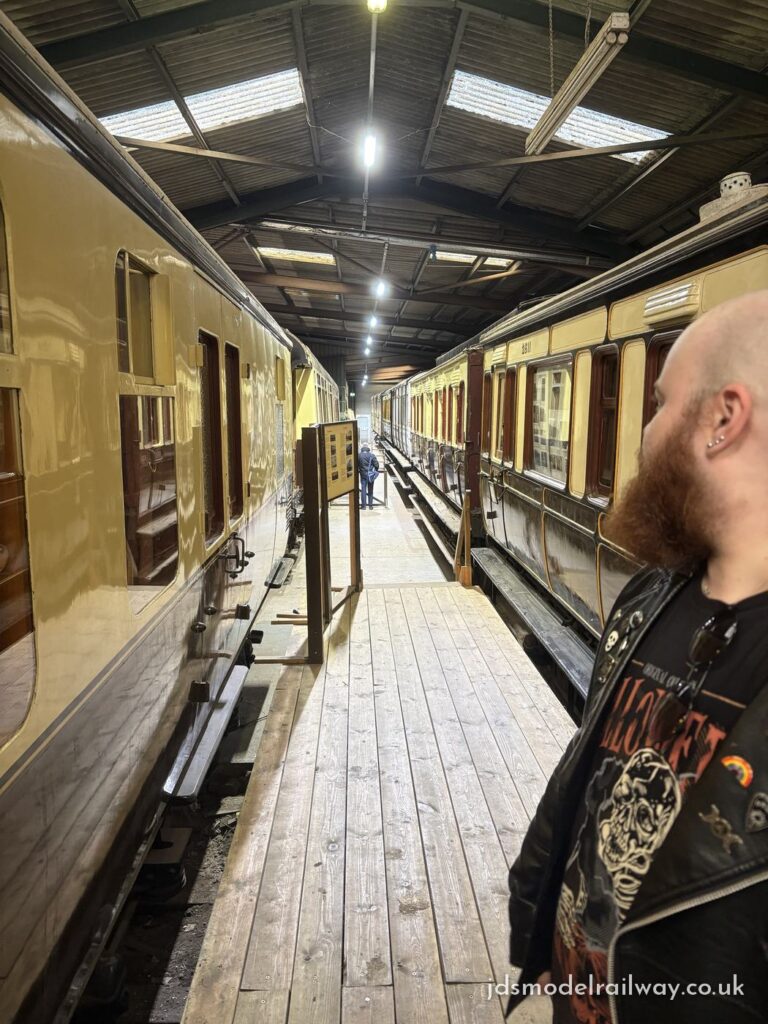
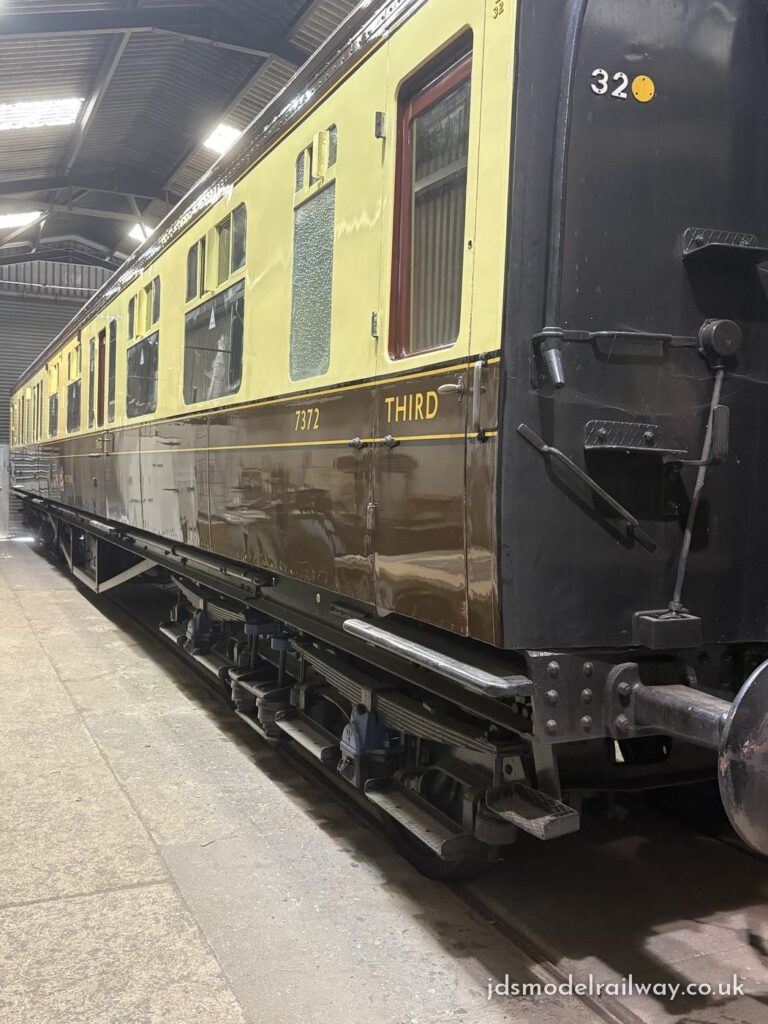
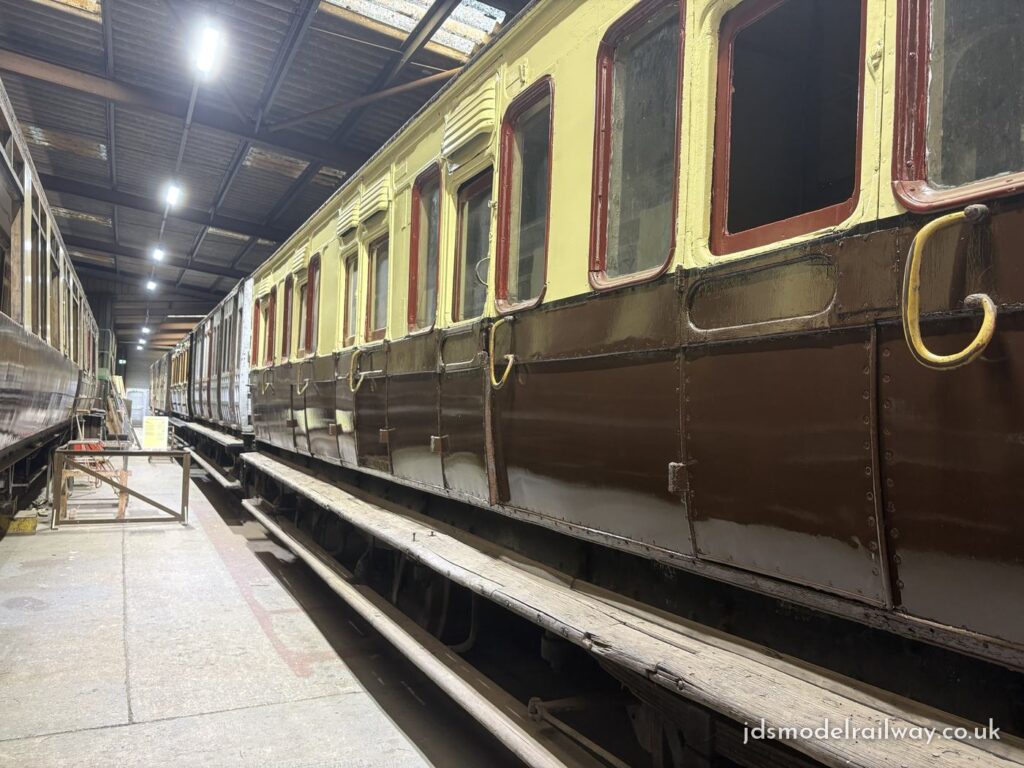
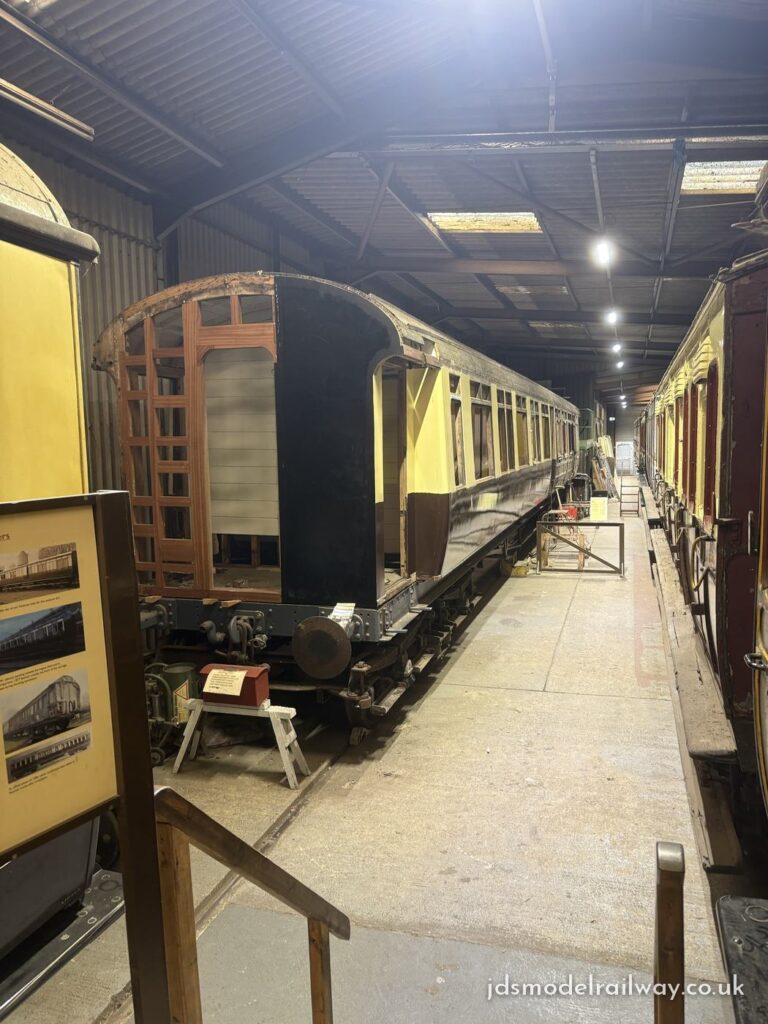
The carriage shed is set out like a station with wooden platforms, so you can walk right alongside the coaches. The Great Western's chocolate and cream looks amazing all lined up.
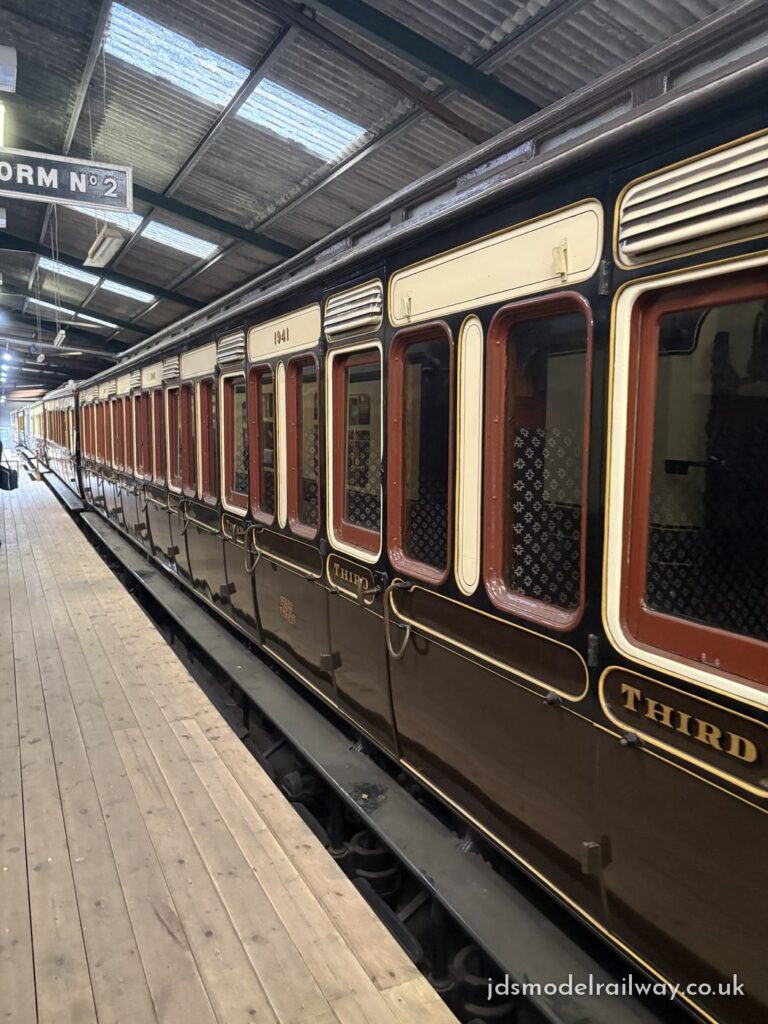
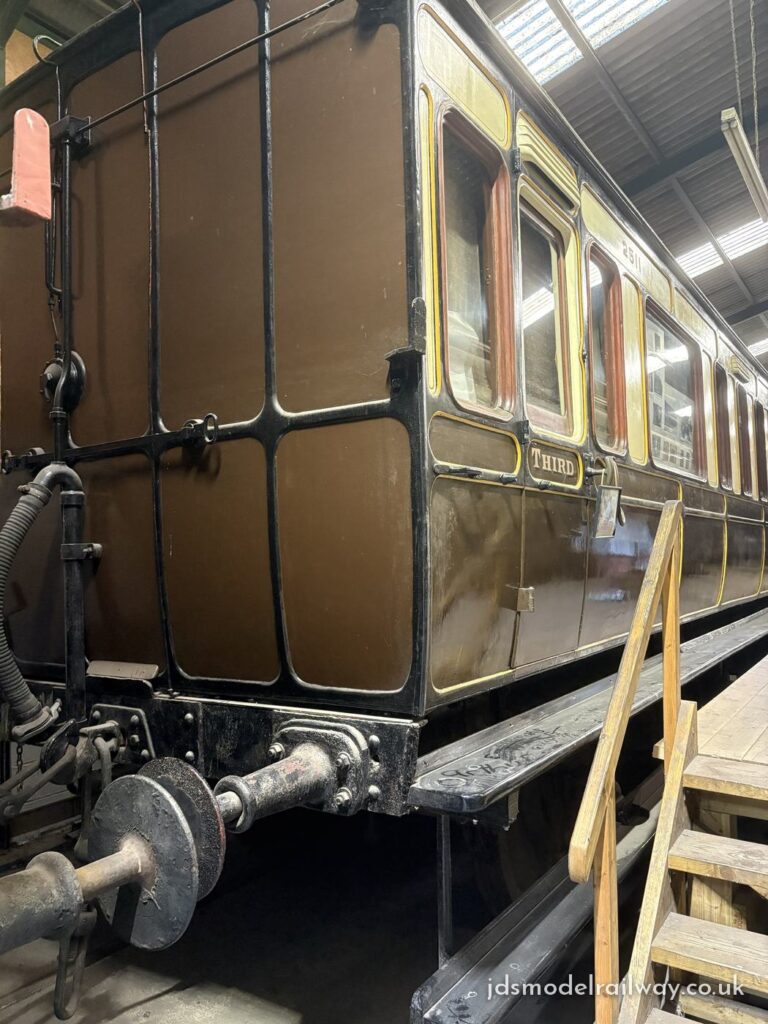
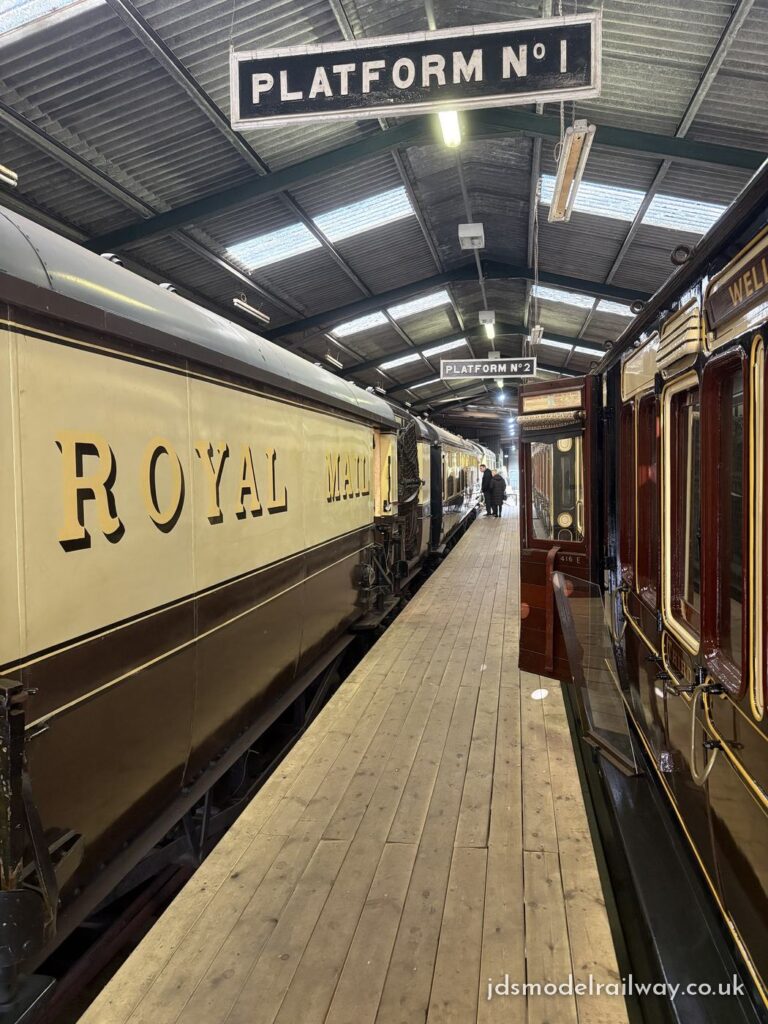
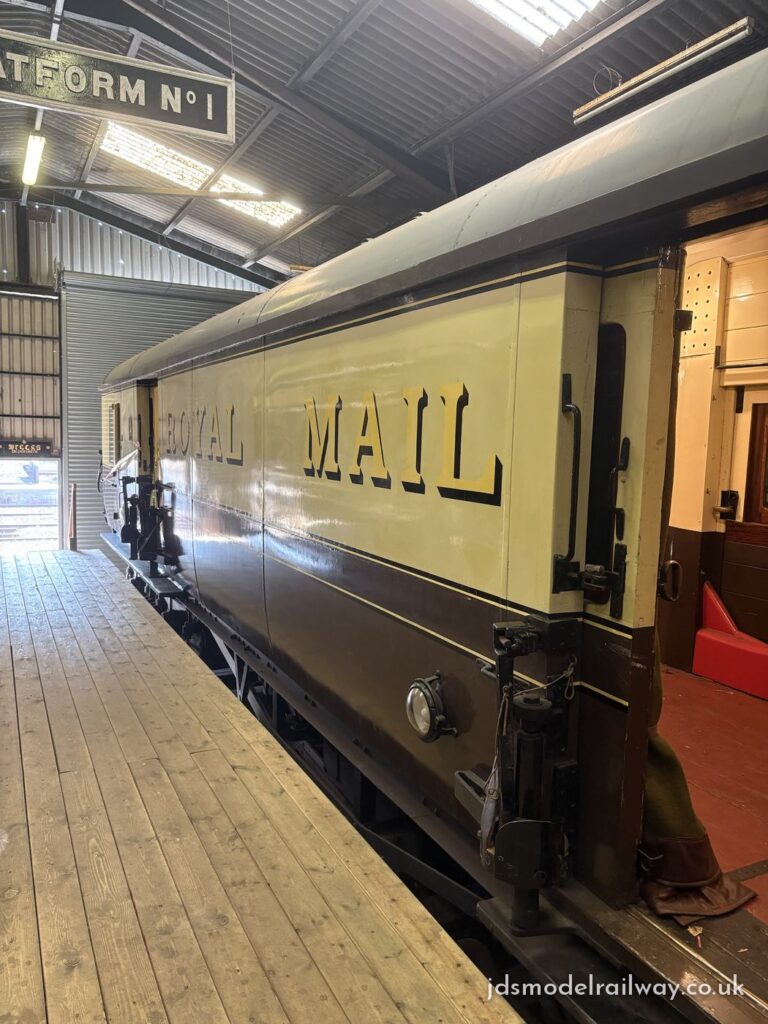
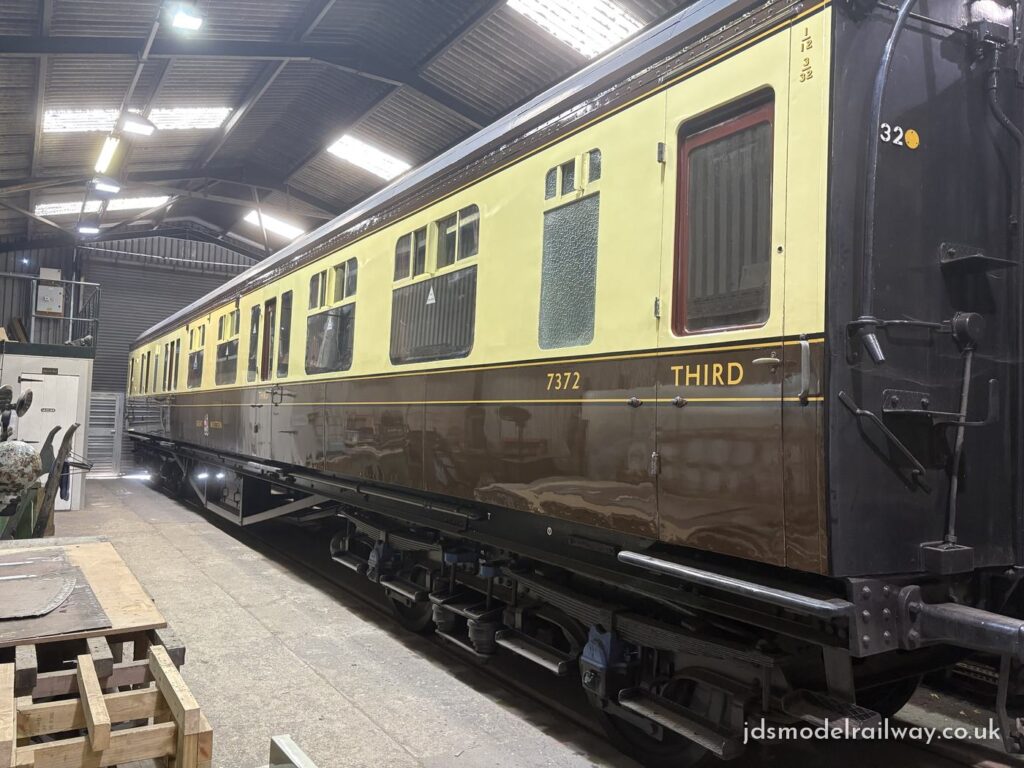
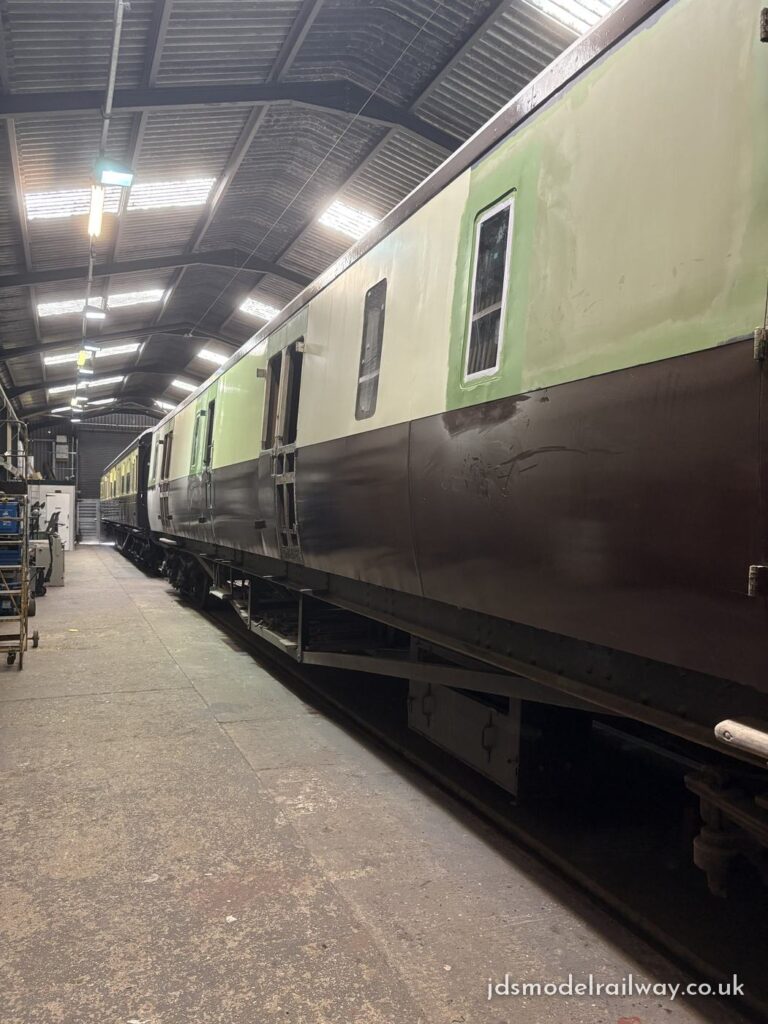
Platform No. 2. On the left is Dean third No. 1941, built in 1901. On the right is Special Saloon 9002, built in 1940, which carried Winston Churchill, General Eisenhower and the Royal Family during the war.The Victorian thirds, with their lined-out panels and "Third" on every door.One of the Victorian carriages from the end, in chocolate and cream with gold lining.On the right is 2511, a family saloon from 1894. Well-off families could hire it and have it attached to any train. In 1937 the body was sold and lived on as a house at Purley-on-Thames, which is why so much of the original inside survives. It came to Didcot in 1972.Platform No. 1, with the Royal Mail van on the left.Travelling Post Office van 814, built at Swindon in 1940. Mail was carried and sorted on the move, and the black gear at the far end is the apparatus for picking up and dropping mail bags at speed.A later Great Western corridor coach, gleaming in chocolate and cream.The same coach from the end, where you can see the corridor connection.A Collett coach in the shed. The polish on these is something else.Another, with the light catching the paint.This one is partway through a repaint, so you can see the undercoat.The end of a coach with its gangway and steam heating pipes.Looking down between the coaches in the carriage shed.
Inside the carriages
Some of my favourite photos from the day are of the little things inside the carriages.
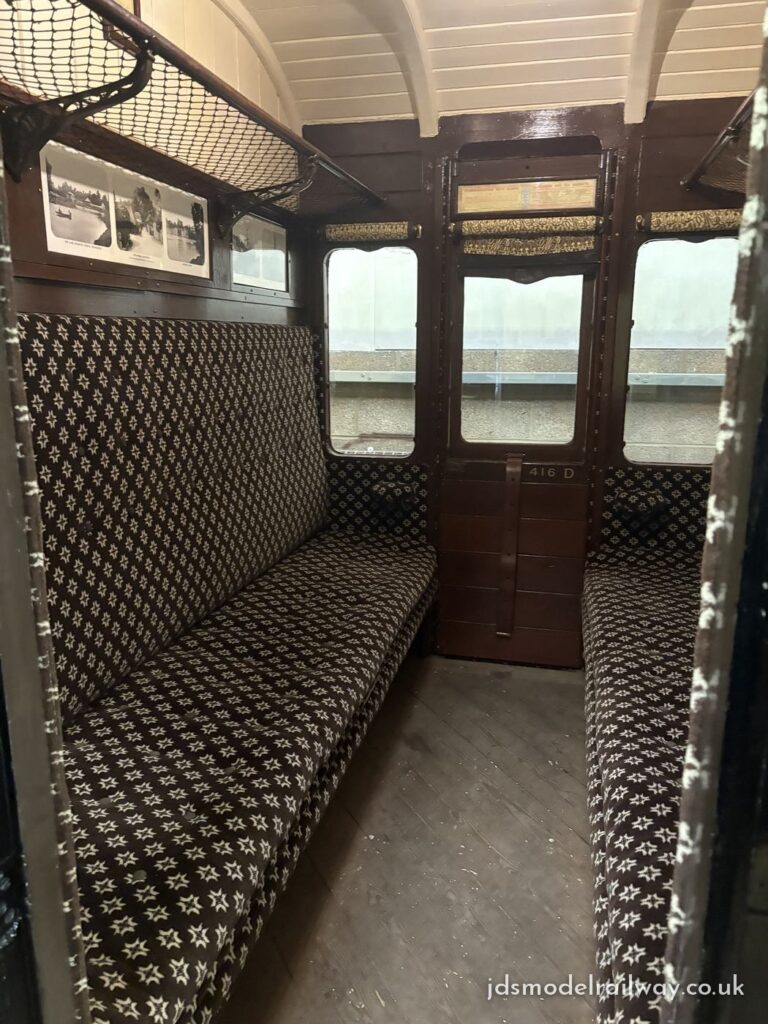
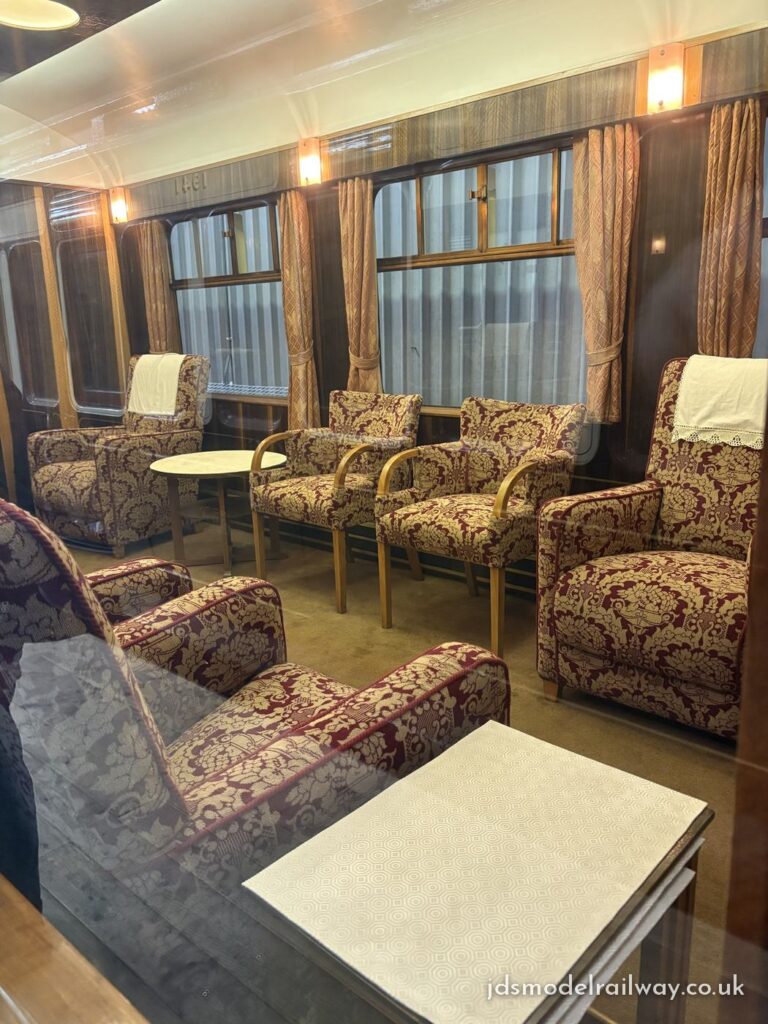
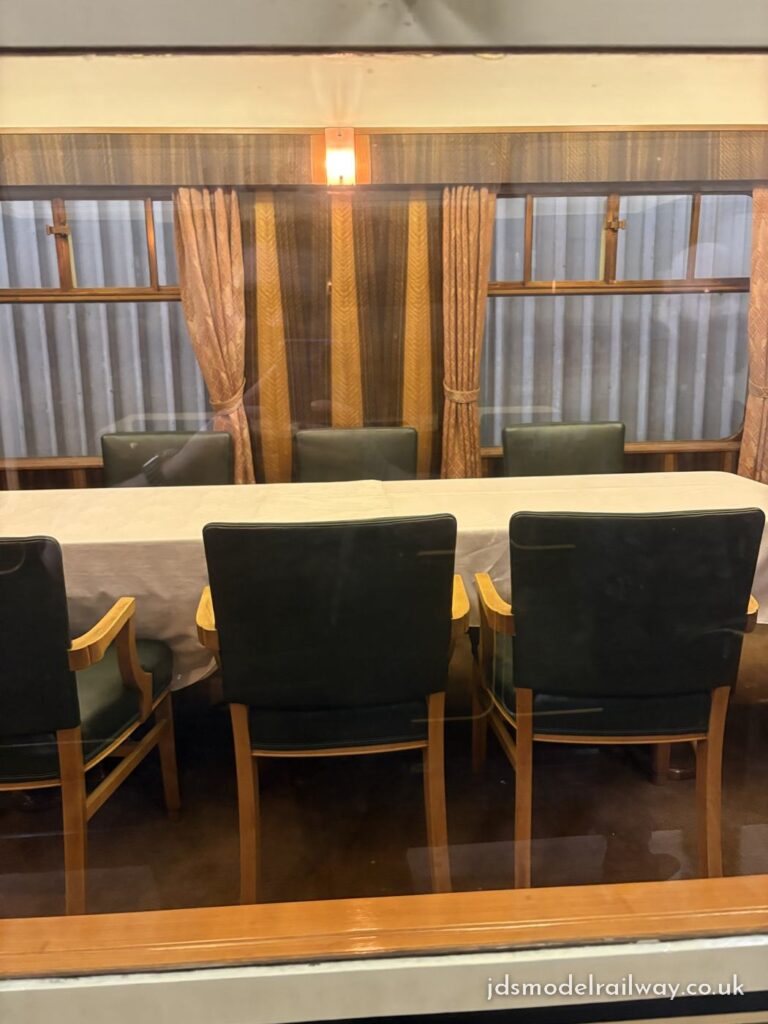
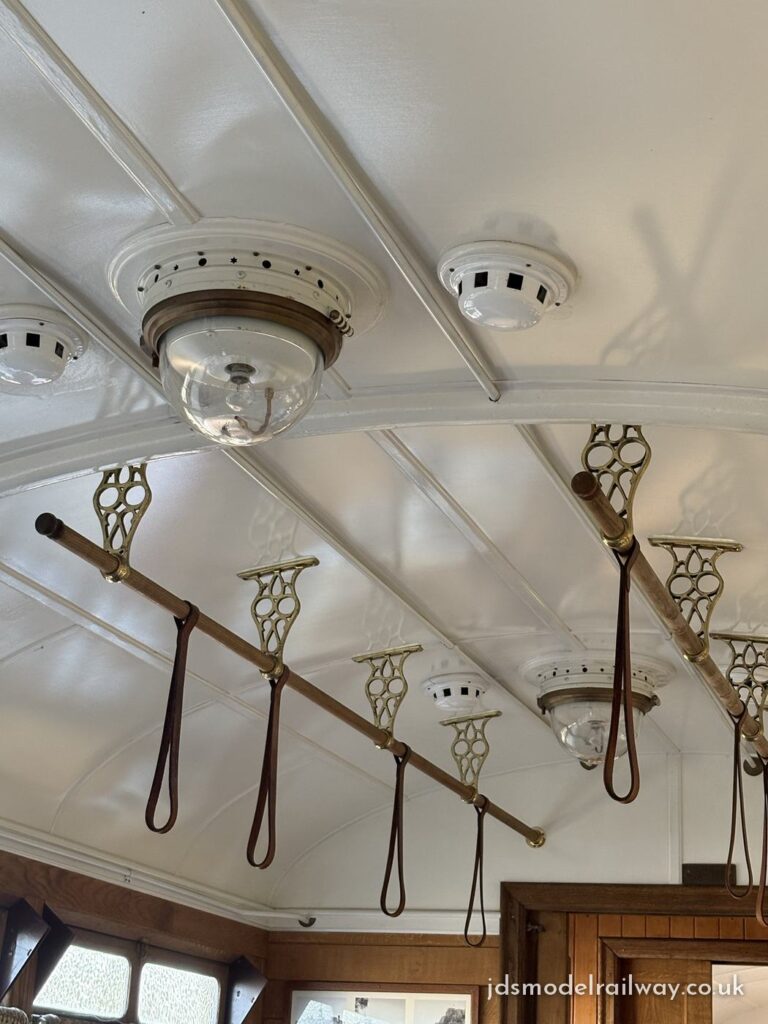
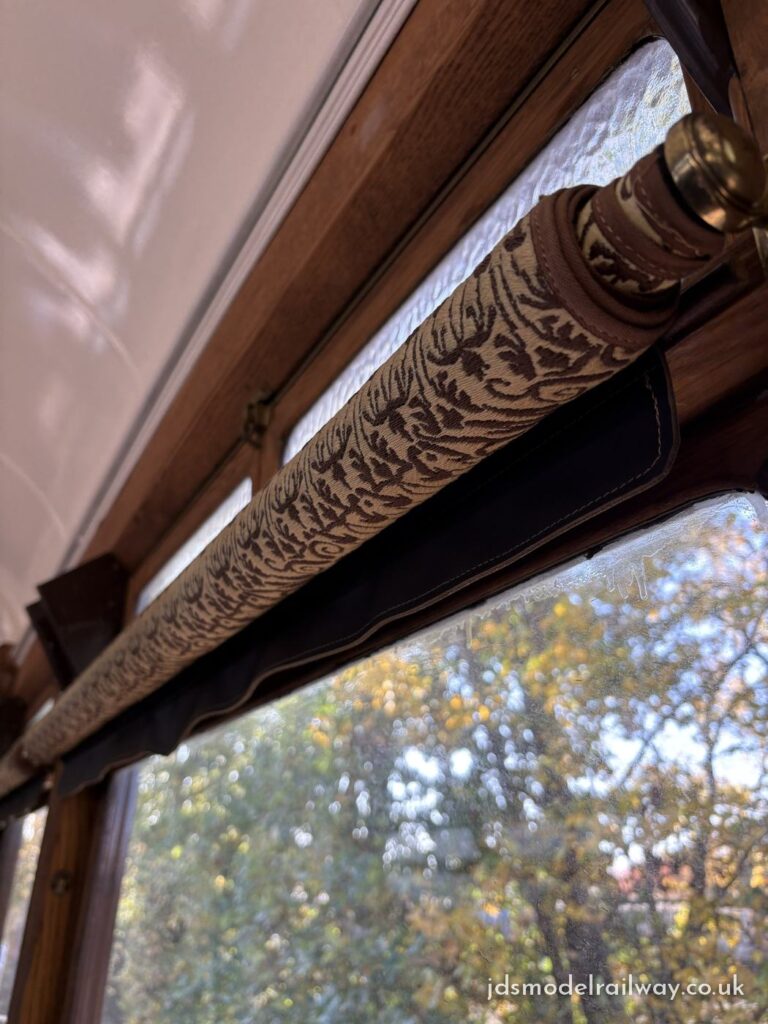
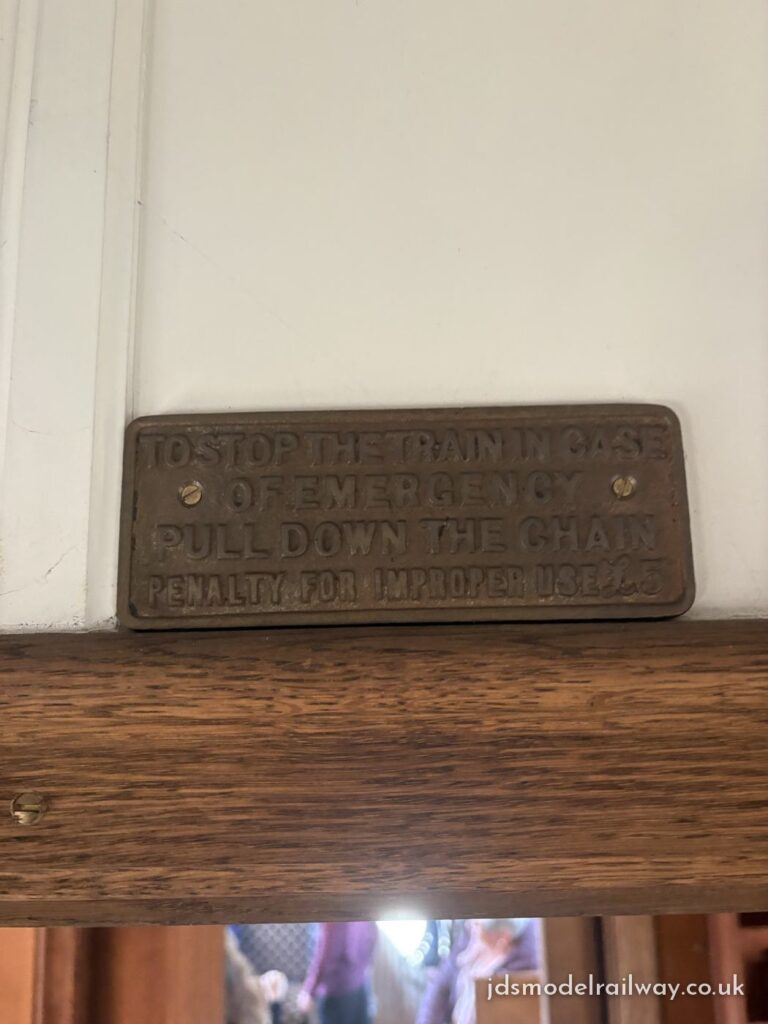
A compartment in one of the old carriages: patterned seats, the luggage net above, and old photos of seaside towns on the wall.Looking into one of the saloons, with armchairs instead of seats. Not quite what we get on the train today!And the dining table in another saloon.Inside one of the old carriages: brass brackets, wooden rails and leather straps to hang on to. I'm fairly sure this was the steam railmotor, built in 1908 to win passengers back from the trams.A rolled-up window blind, with the autumn trees outside."To stop the train in case of emergency pull down the chain. Penalty for improper use £5." That was a lot of money back then.
Restoration
You can see how much work goes into keeping all this going.
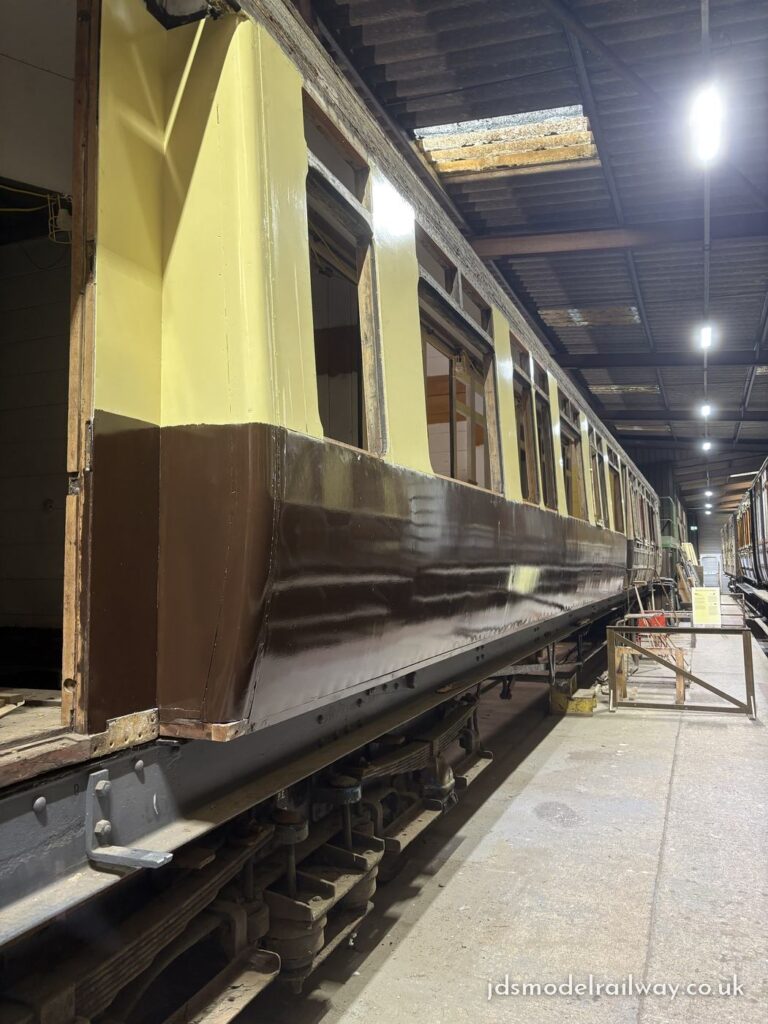
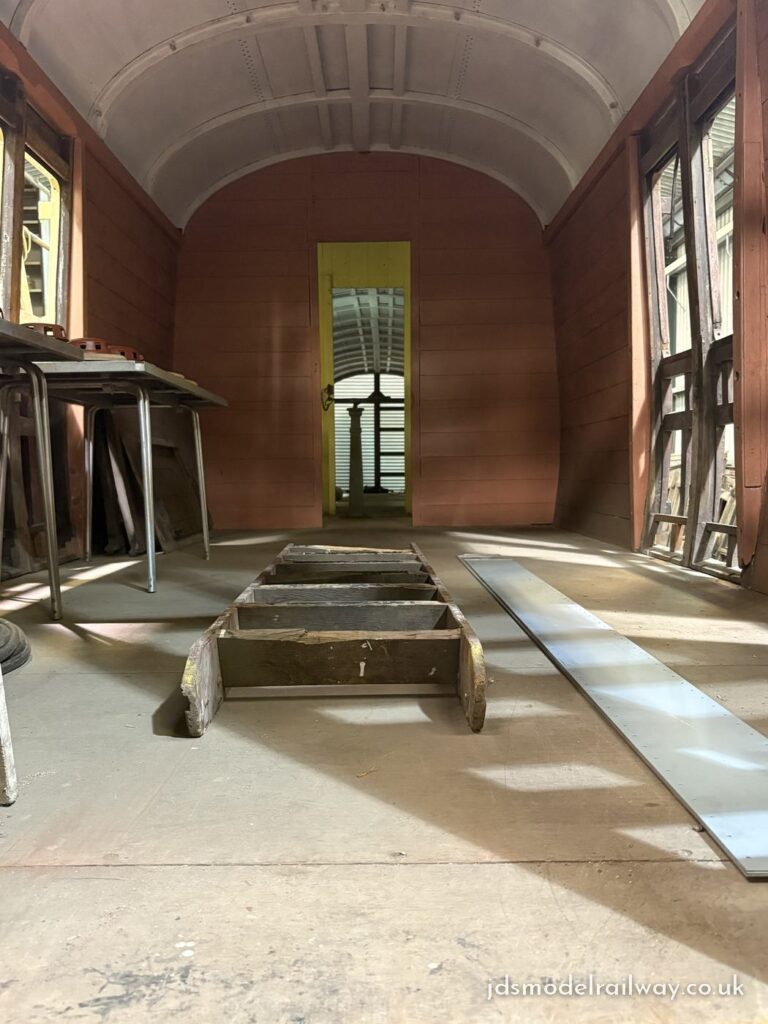
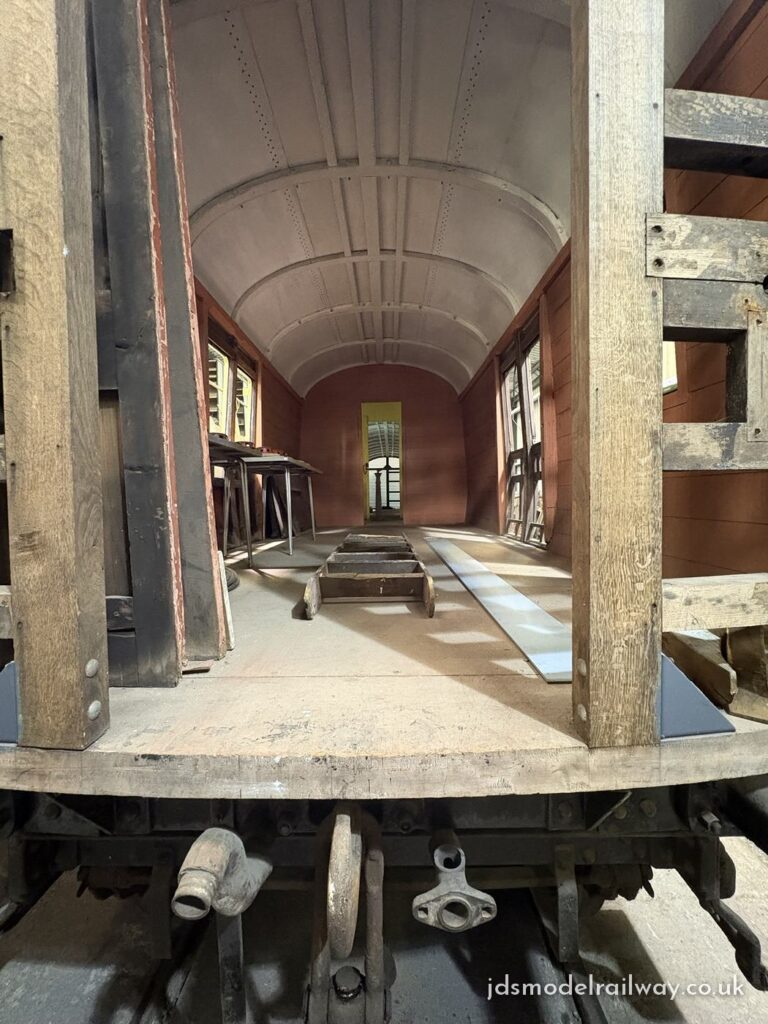
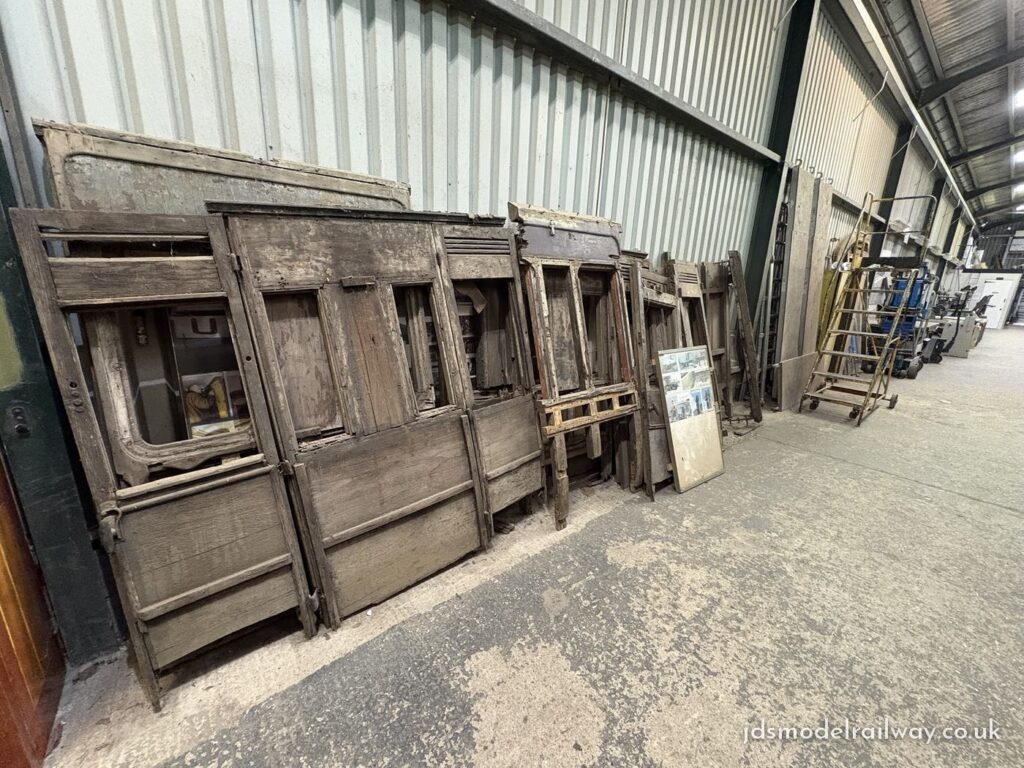
Inside a coach that has been stripped right back. The roof and walls are done and the floor is next.The same coach from outside, up on its frame with the panels off.Old carriage doors and panels lined up, waiting to be repaired or copied.
The ghost train
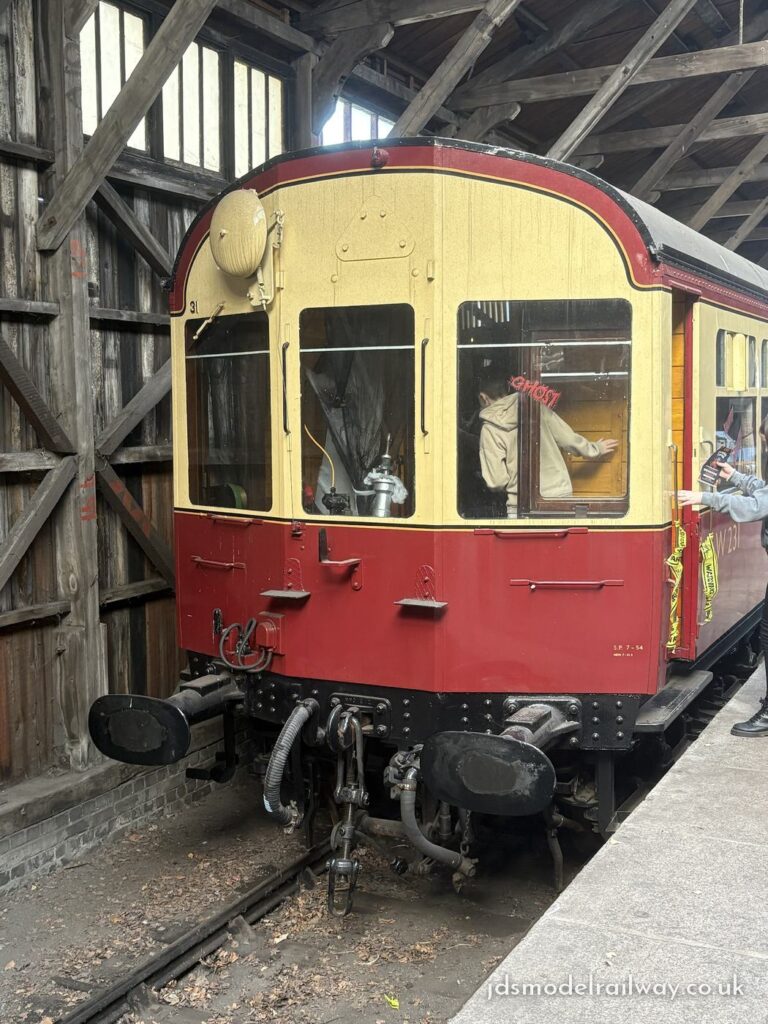
Being Halloween, there was a ghost train. Not a moving one: auto trailer W231 was parked up in the shed with a "GHOST" sticker in the window, and of course we went in.
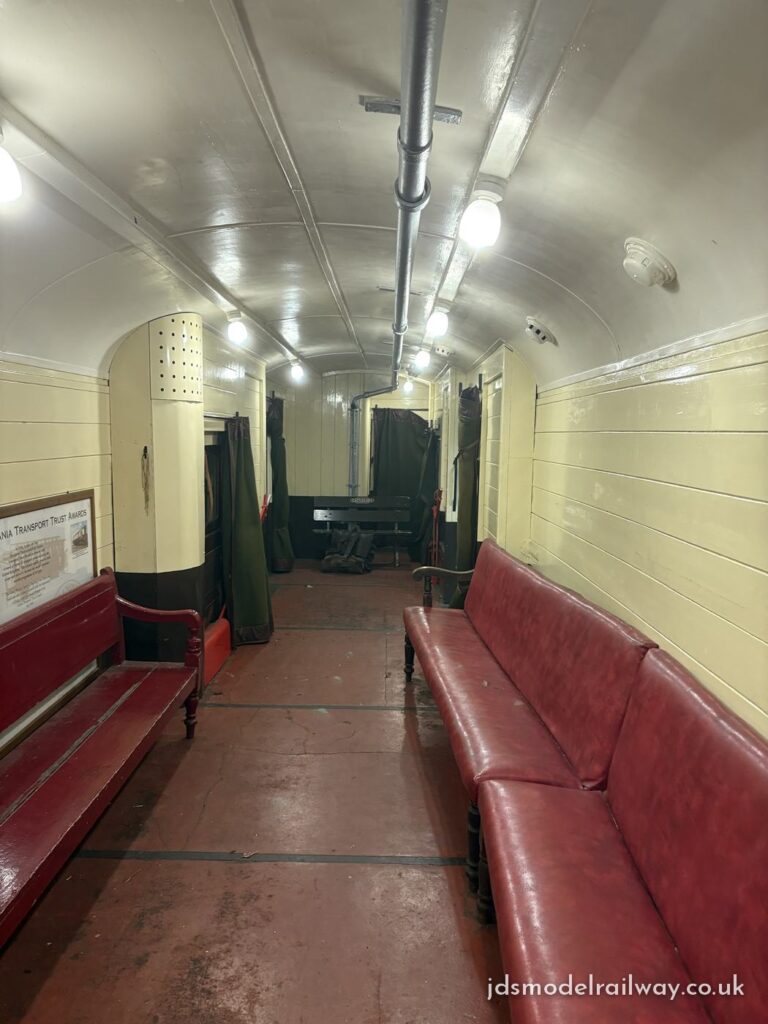
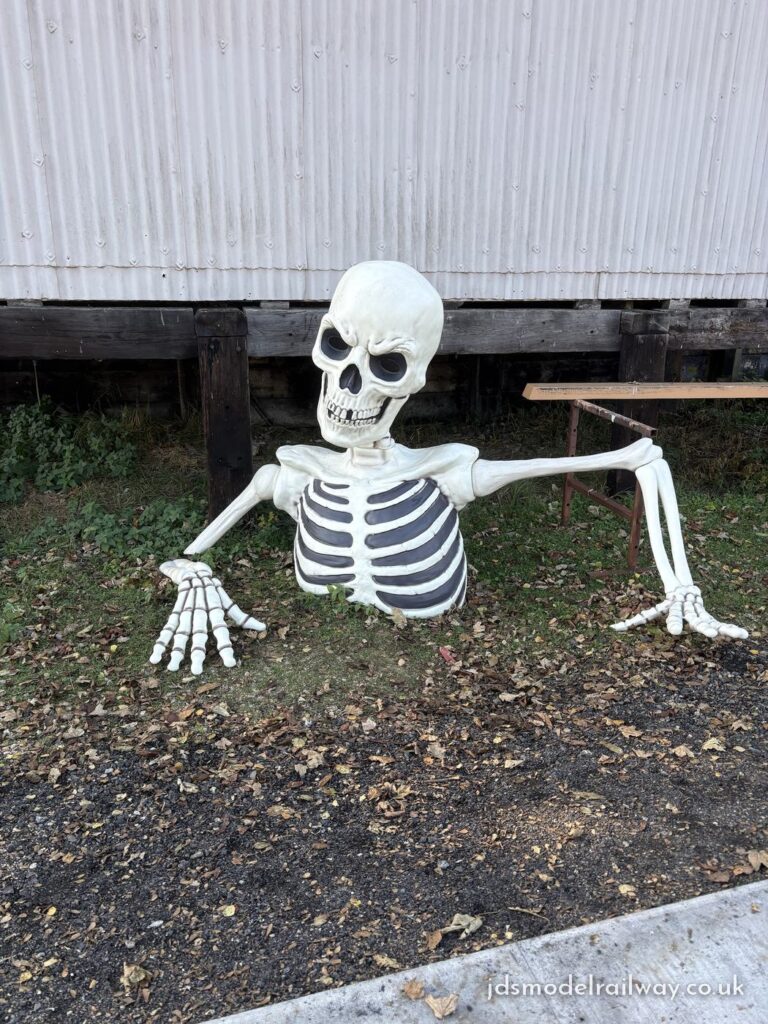
Auto trailer W231, the last Great Western auto coach design, built at Swindon in 1951. It has a driver's cab at this end, so the engine can push from the back without having to run round. For today it was the ghost train, sticker and all.Inside the ghost train: red seats down both sides and a dark curtain at the end.This chap was waiting for us by the platform.
Signals and the branch line
The signals are a big part of Didcot, and some of them are working. There's even a whole signalling area.
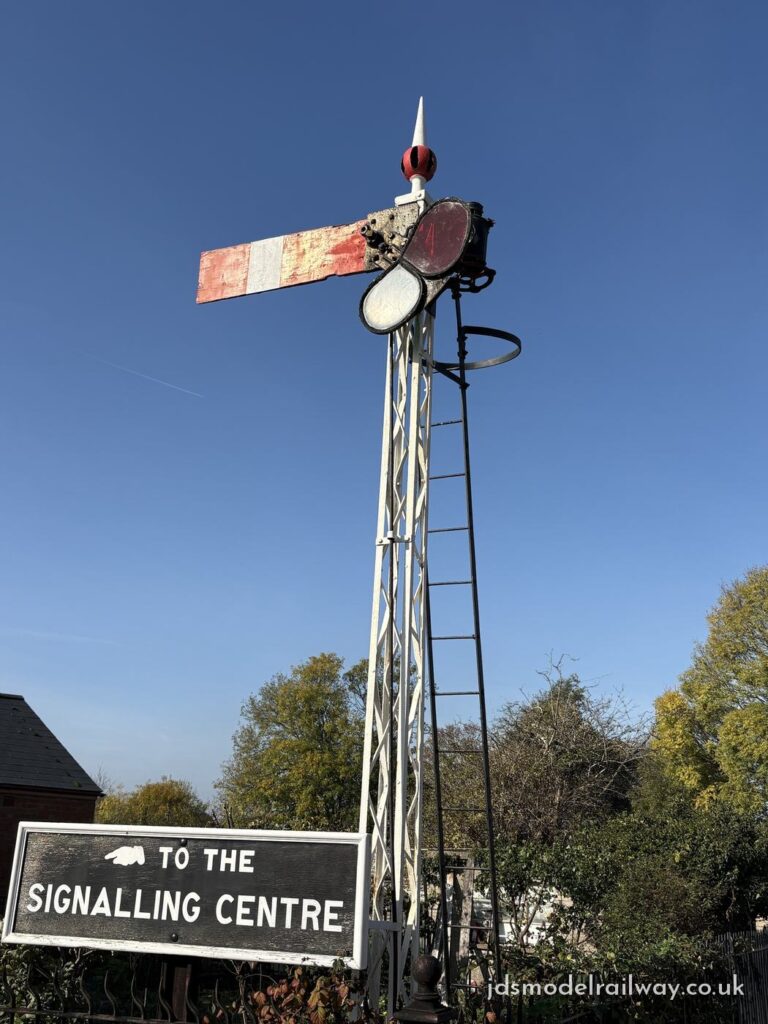
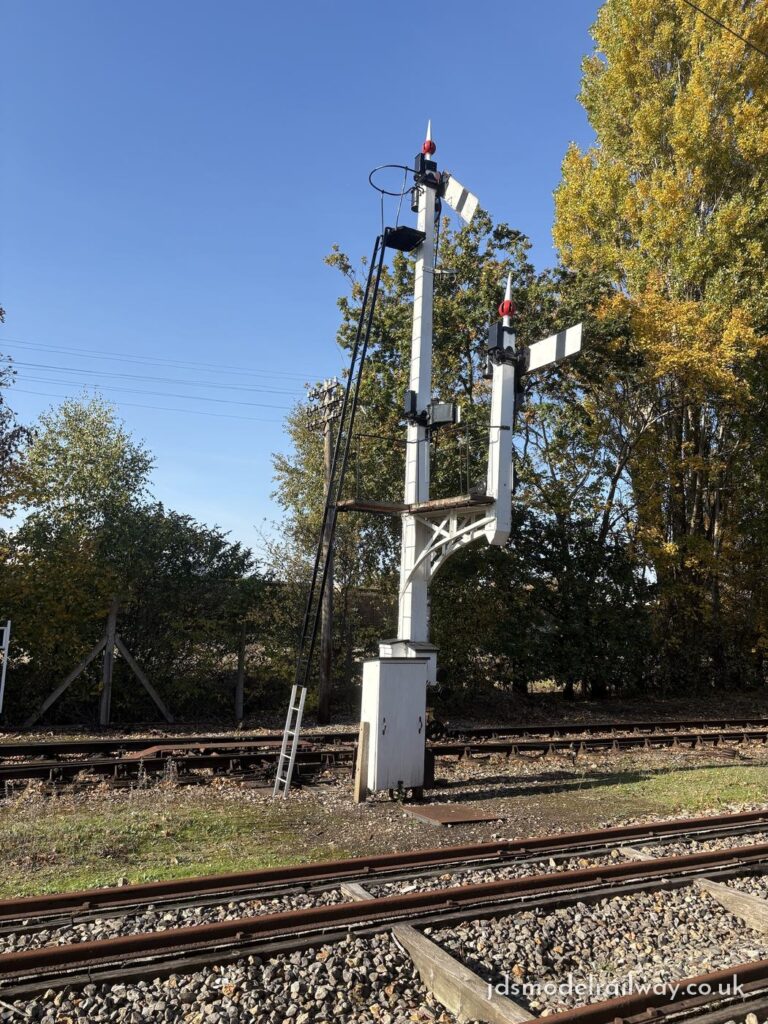
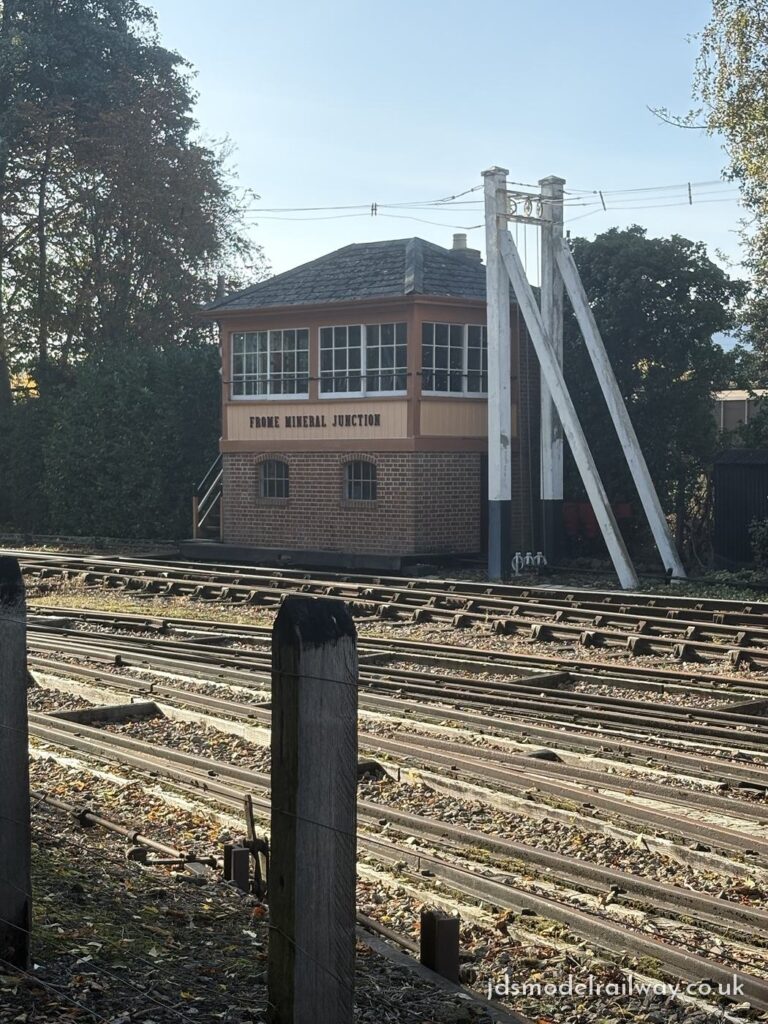
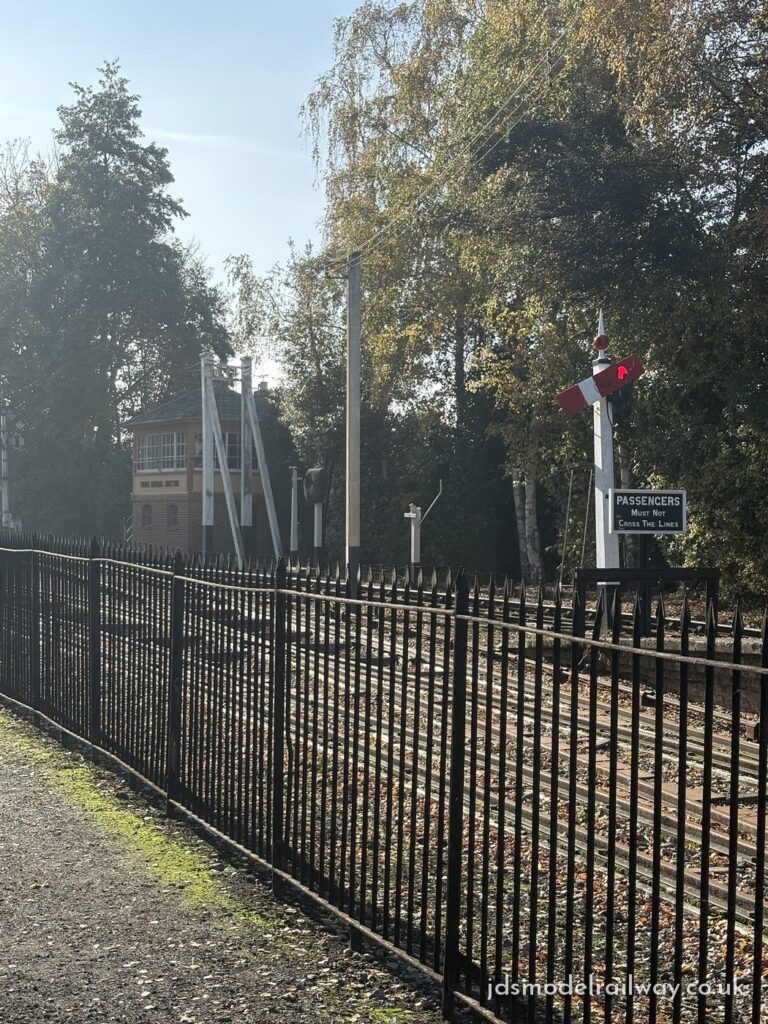
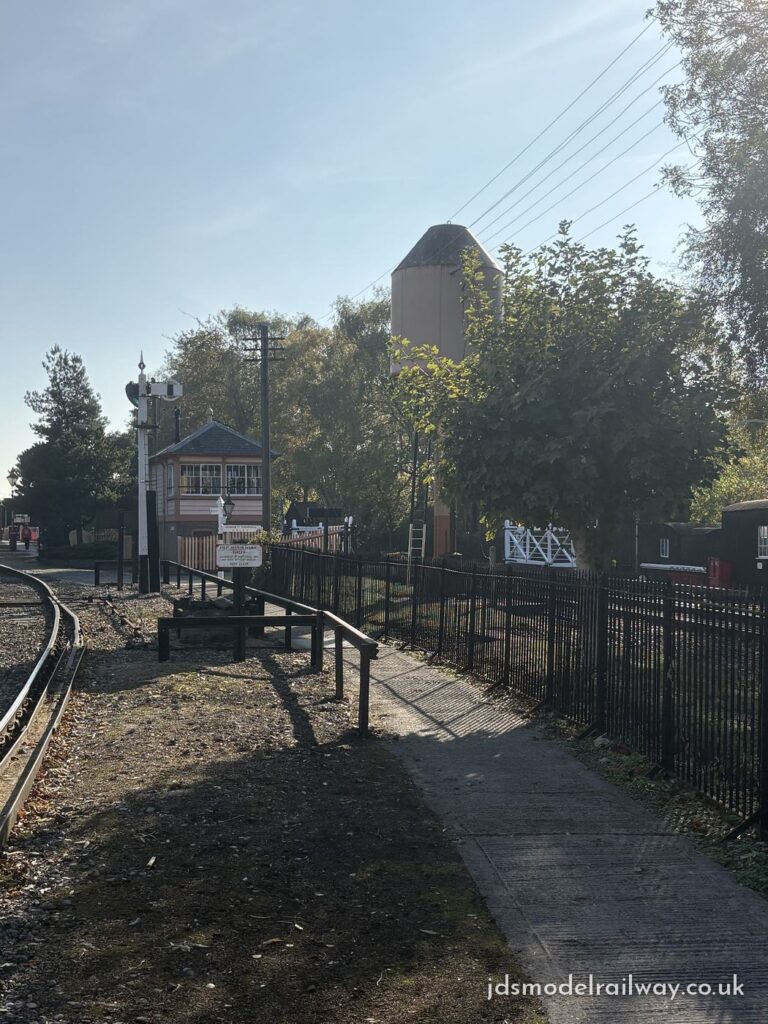
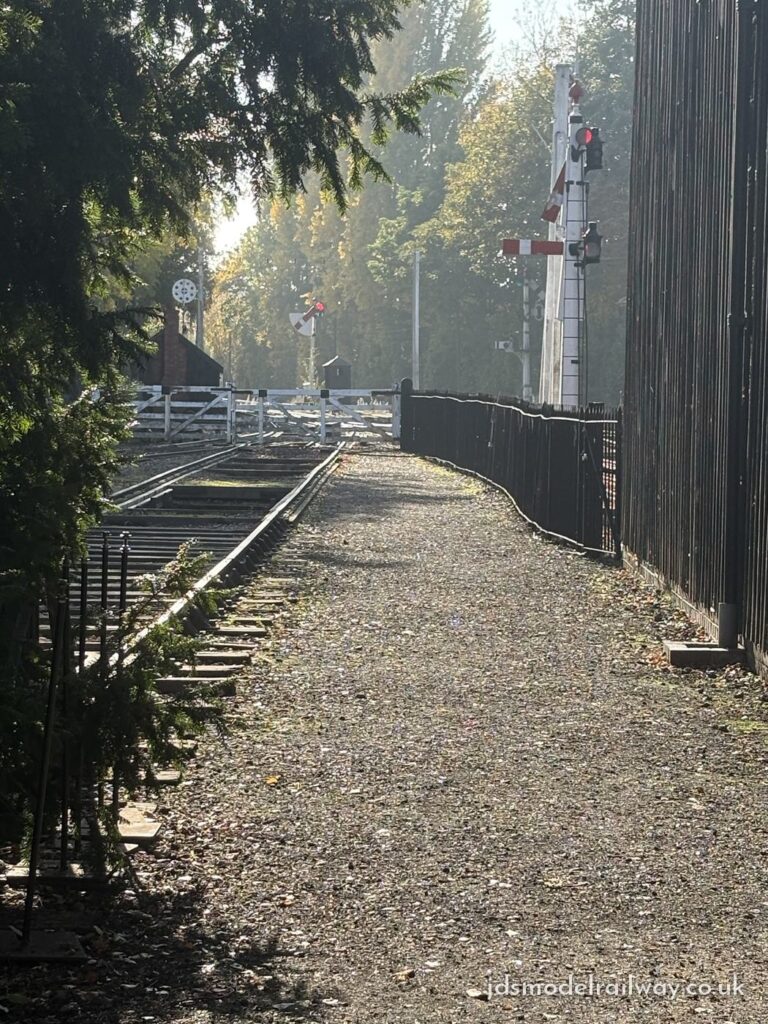
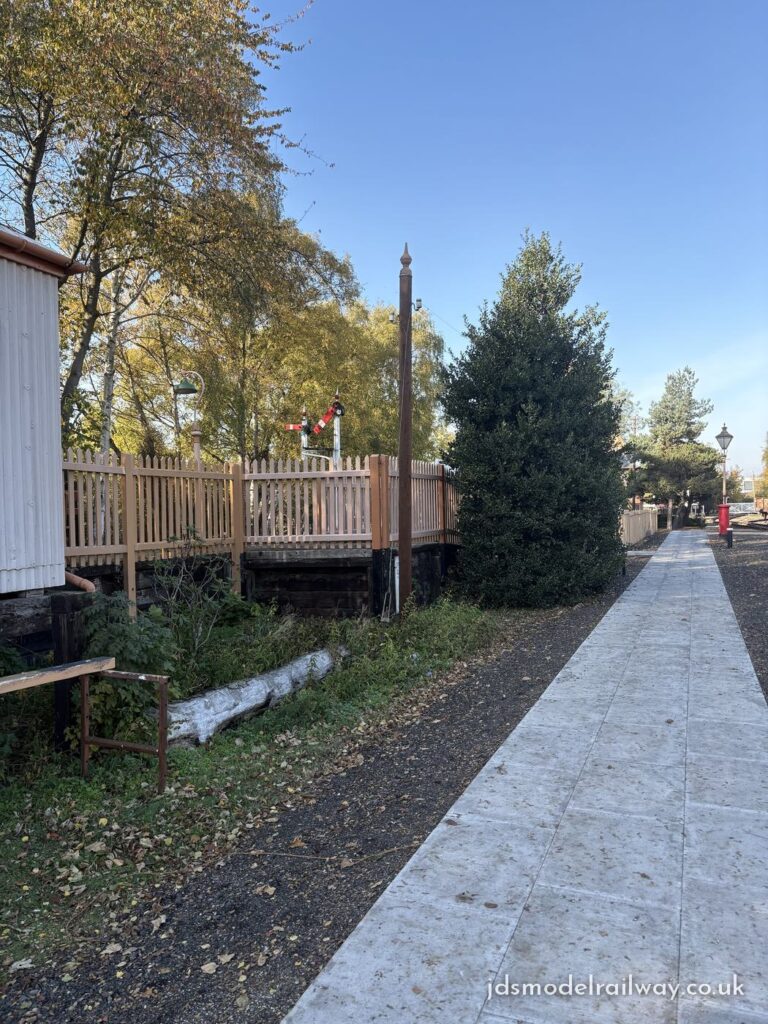
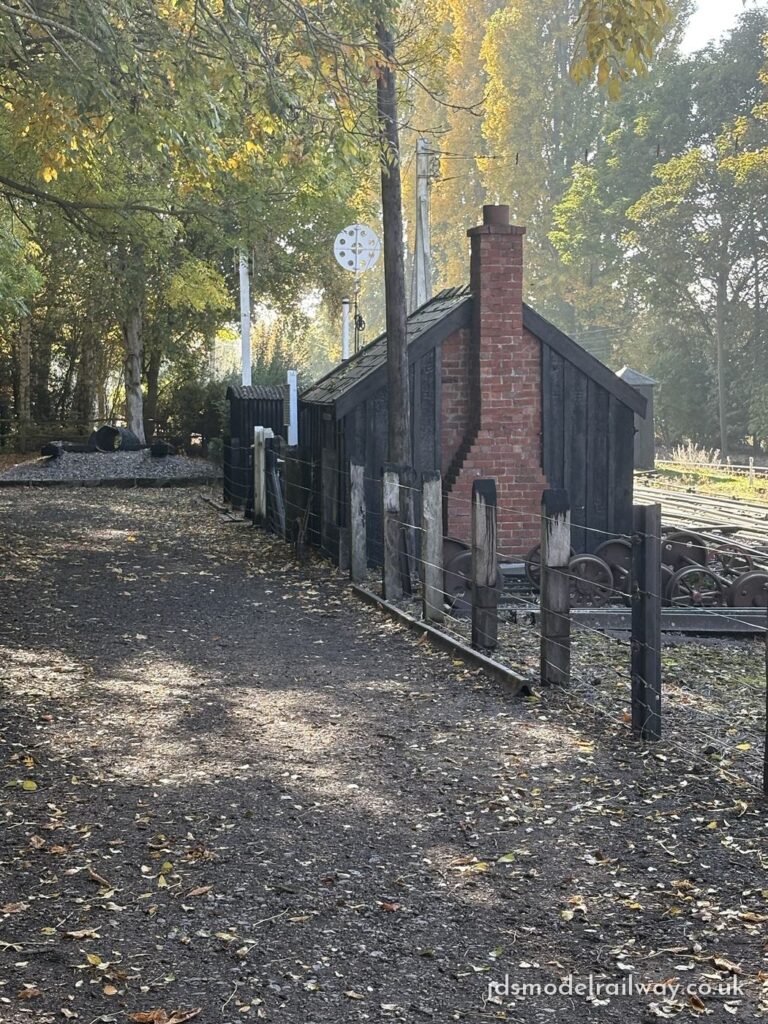
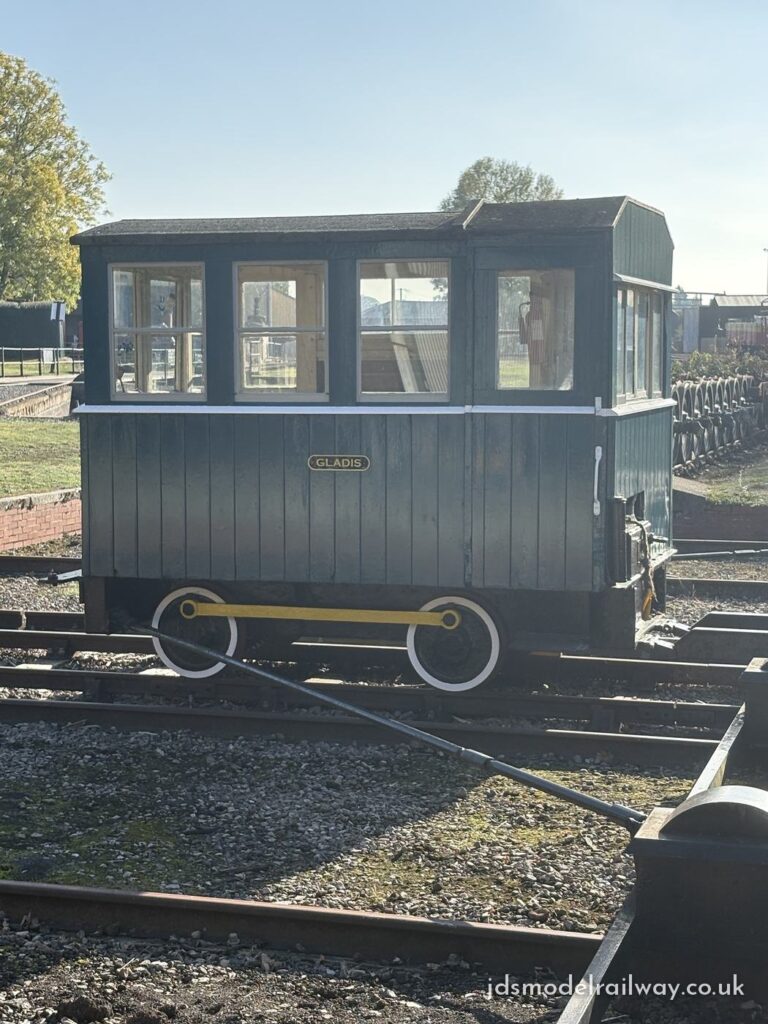
A semaphore signal at danger, beside the sign to the signalling centre.A bracket signal, with arms for more than one route.Frome Mineral Junction signal box, with a row of tall signals beside it.Another signal by the railings, with a signal box behind.The path down towards the branch line.The branch line itself. It runs from Didcot Halt down to Burlescombe, the platform in the transfer shed.By the platform, with the signals peeping over the fence.One of the little brick huts around the site, complete with its chimney."Gladis", a little wooden inspection car, sitting on the points.
A ride on the branch line
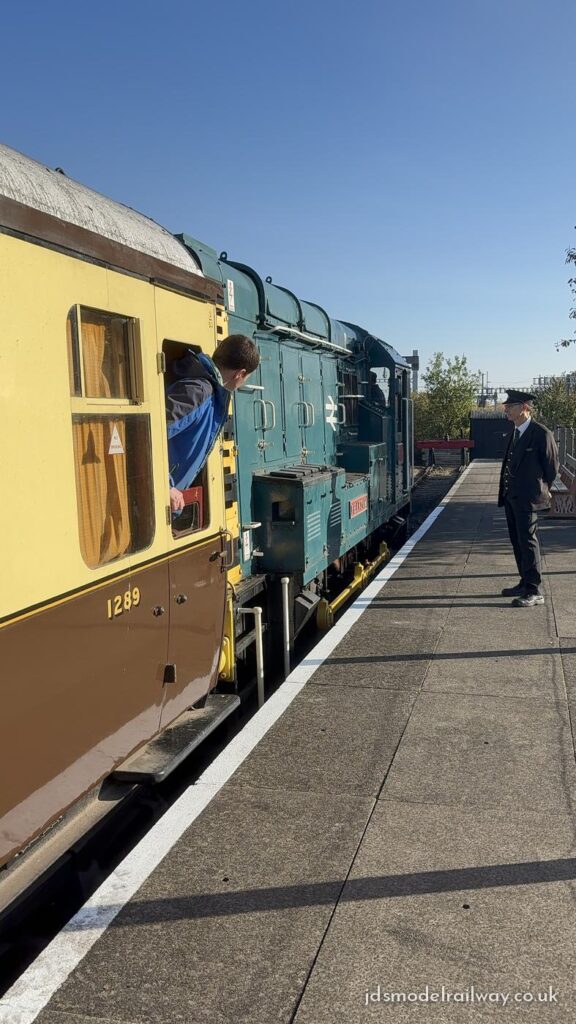
We had a ride too, in a 1930s coach hauled by the yard's Class 08 shunter.
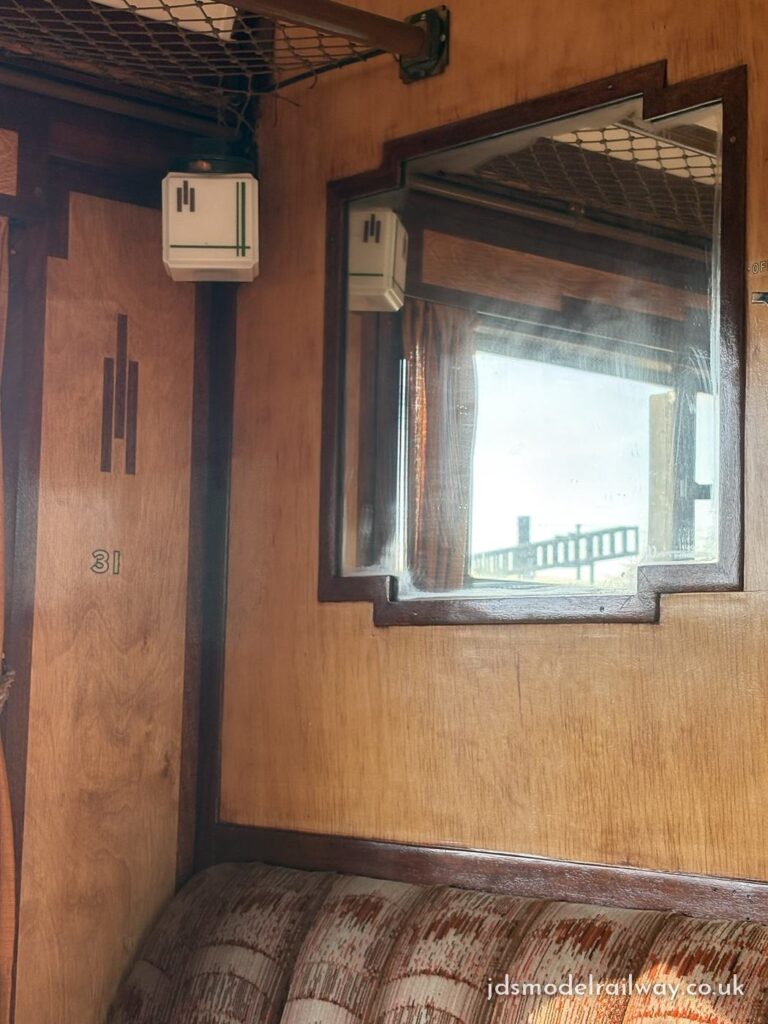
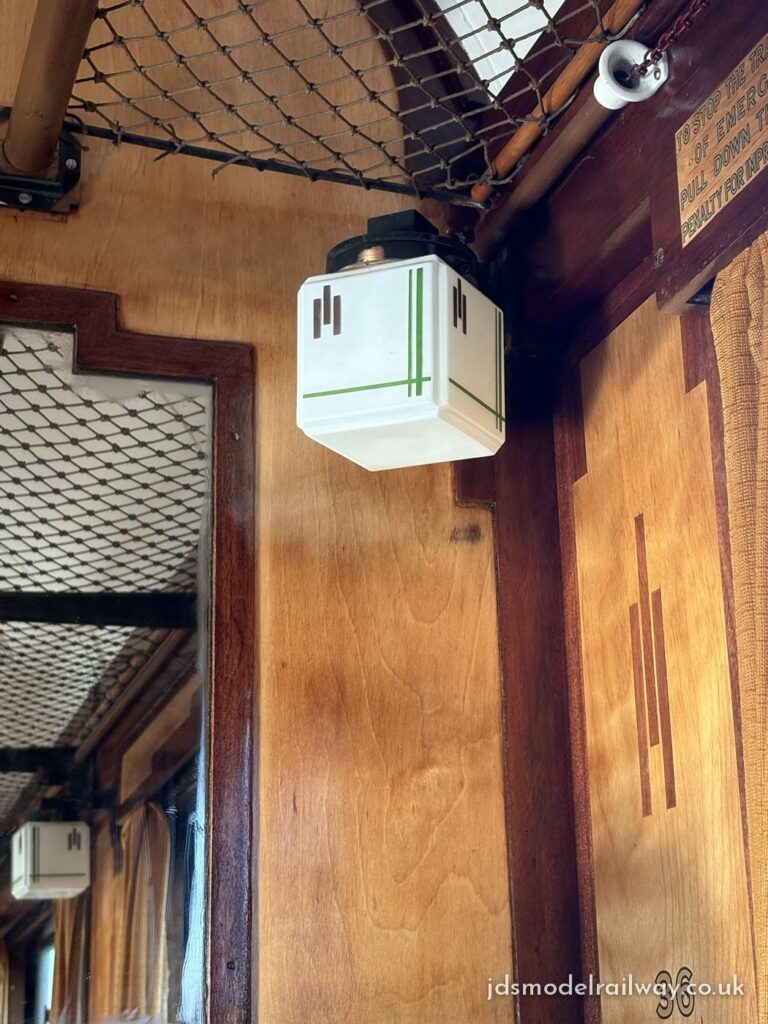
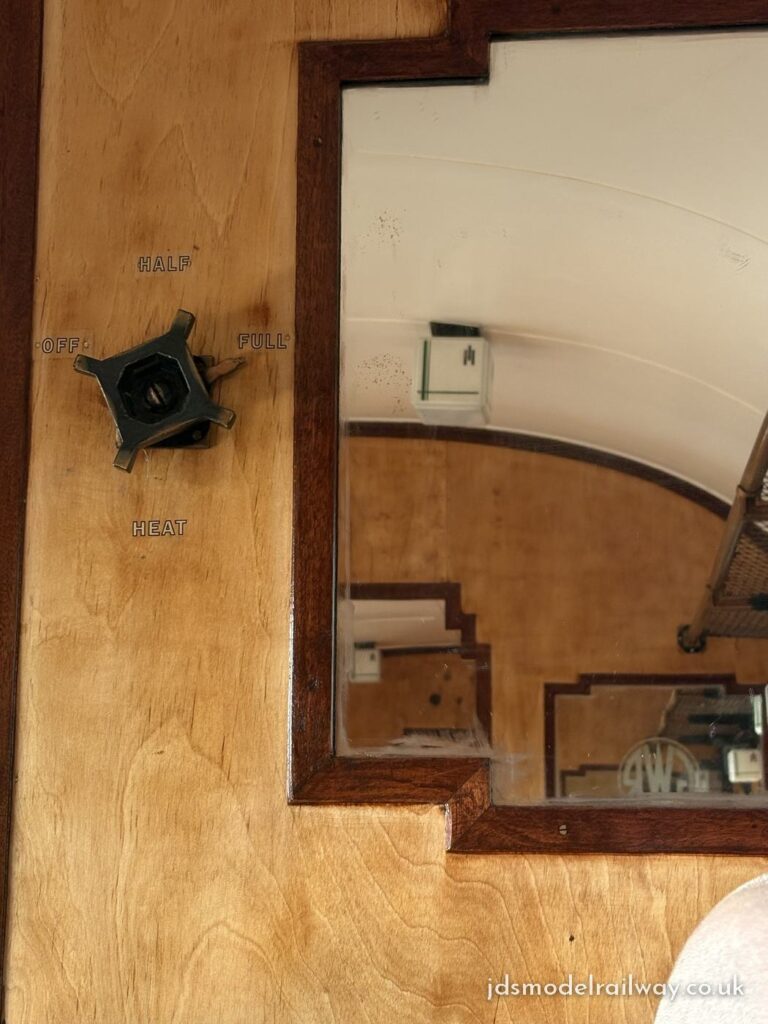
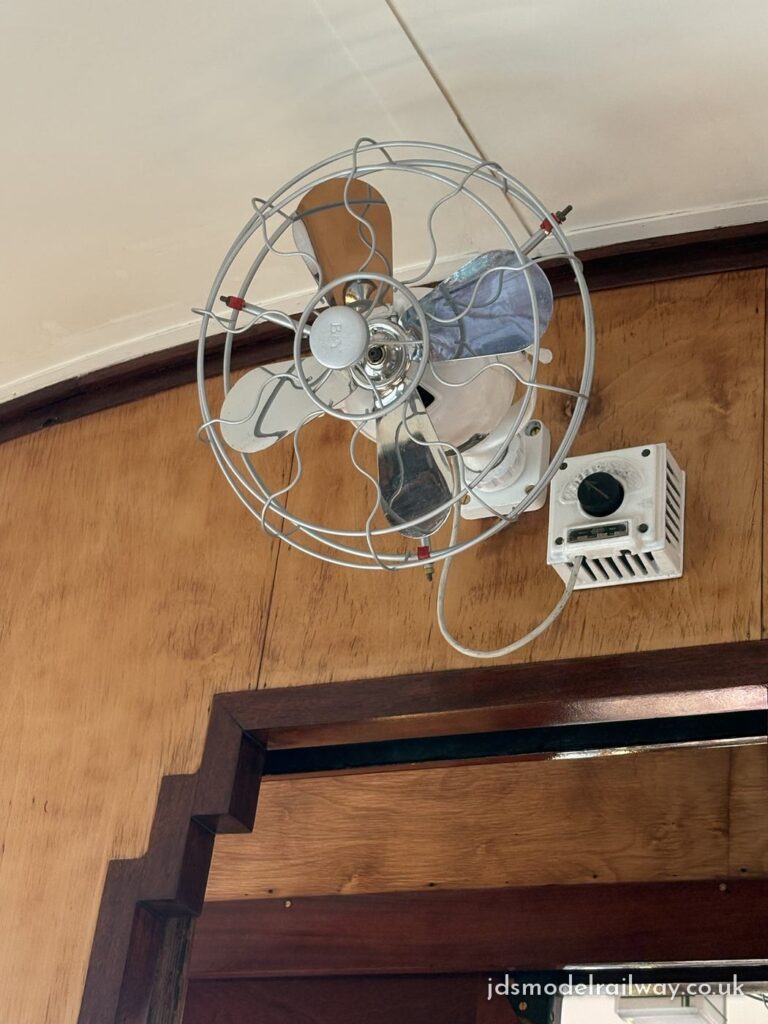
08604 "Phantom", in BR blue, coupled to coach 1289, with the guard waiting on the platform. 1289 is a Collett "Excursion" third from 1937.Inside 1289, all 1930s art deco: wood panelling, stepped mirror frames and lampshades to match.The lampshades, with the same three-bar pattern as the inlay on the panels.The heating control: Off, Half or Full.And a little electric fan over the doorway for the summer.
Phantom bringing our train into the platform, with its black and yellow "wasp stripes" leading.
Odds and ends
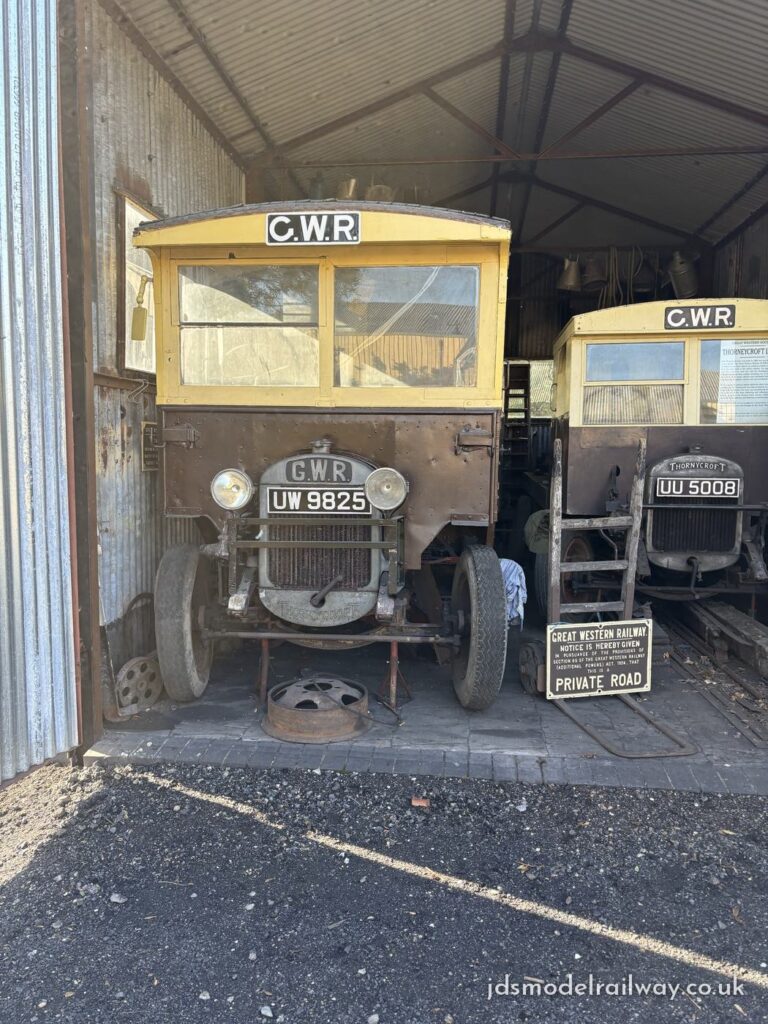
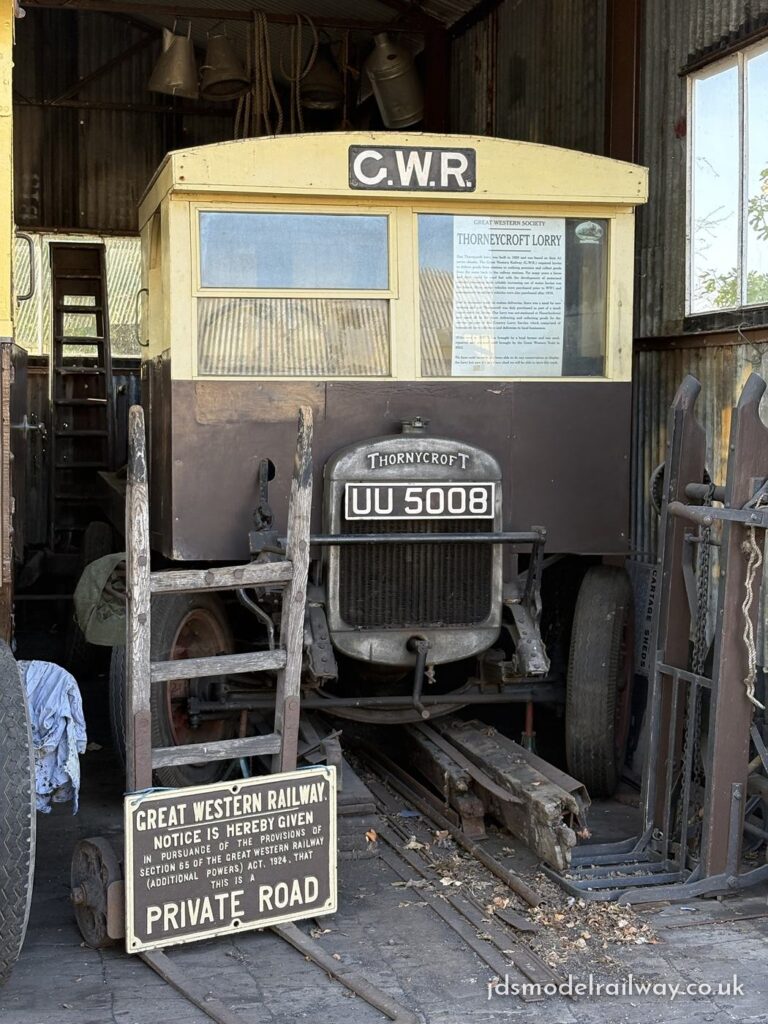
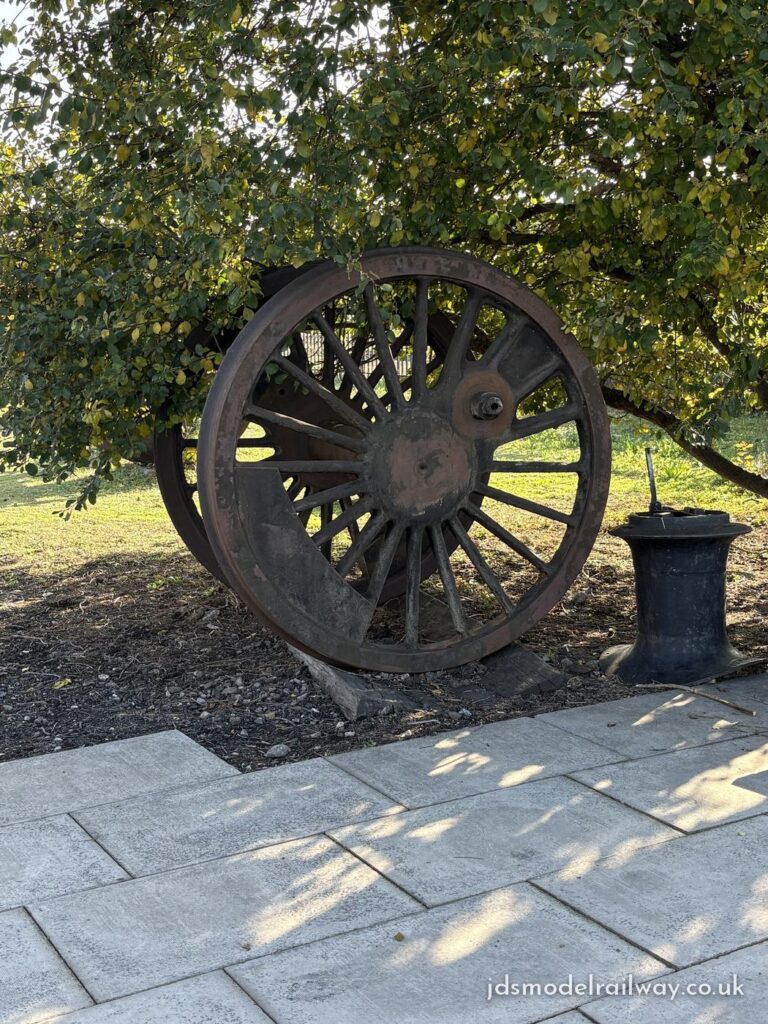
The Great Western ran lorries too. Here are two Thornycrofts, UW 9825 and UU 5008, in the road vehicle shed.UU 5008 up close. The board says it was built in 1929 and spent its working life at Haverfordwest on the GWR's country lorry service, collecting and delivering for local farms and businesses.A spare pair of big driving wheels under a tree, with the crank pin and balance weight on show. You don't realise how big they are until you stand next to them.
A brilliant day out, and I came home with loads of ideas for the layout. We'll definitely be back.